10 Healthcare Branding Agencies for 2026

Updated October 12, 2026
Search for a healthcare branding agency and you will get two completely different kinds of company in the same list, described in the same language, as though they do the same work.
One kind builds brands: positioning, architecture, naming, identity, the system that governs how an organization presents itself. The other kind buys patients: paid search, programmatic media, reputation management, service-line campaigns. Both are legitimate. Both call themselves healthcare branding. They solve different problems, cost different amounts, and are staffed by different people.
Healthcare makes the confusion worse than most categories, because “brand” inside a health system often means the consumer marketing function, while “brand” inside a pharmaceutical company often means a single product’s regulated name. A hospital network consolidating twelve acquired practices, a medtech firm trying to sound different from four identical competitors, and a biotech naming a molecule for two patient populations are three unrelated jobs.
This list separates them. Ten firms, what each one is genuinely good at, and who each one actually fits.
How to choose a healthcare branding agency for a health system or hospital
Start with the problem you are solving. If you need more patients next quarter, hire a marketing agency. If you need a brand that holds together across hospitals, service lines, physician groups and acquired practices, hire a branding firm with health system experience. Then check five things.
- Architecture experience. Ask how they have organized a portfolio of facilities and service lines, including ones that arrived through a merger.
- Naming in a regulated setting. Ask how names are screened and reviewed before they go public.
- Clinician and patient research. A credible firm talks to both before it writes a positioning.
- Governance that outlasts the launch. Look for guidelines, training and a plan for how hundreds of people who never met the agency will apply the brand.
- Consistency across human and AI interpretation. Patients now ask AI assistants which hospital to choose. Ask how the agency checks that those answers describe your brand the way your own website does.
On this list, the firms that lead with branding are Starfish, Monigle, Addison Whitney, Siegel+Gale, The Brand Consultancy and WANT Branding. The marketing-led firms are the better call for patient acquisition once the brand itself is settled.
Comparison at a glance
| Firm | Type | Healthcare depth | Ideal for |
|---|---|---|---|
| Starfish | Branding | Providers, medtech, health brands | Award-winning identity work that has to hold up across human and AI surfaces |
| Monigle | Branding | Health systems | Consumer brand experience for large provider organizations |
| Addison Whitney | Branding | Pharma and device | Regulated product naming |
| Siegel+Gale | Branding | Corporate and M&A | Simplification at corporate scale |
| The Brand Consultancy | Branding | Providers and payers | Research-led provider positioning |
| WANT Branding | Branding | Pharma, medtech, digital health | Naming and portfolio brand creation |
| Atomicdust | Hybrid | B2B health technology | Making complex health tech legible |
| Ogilvy Health | Marketing | Pharma | Regulated promotion at global scale |
| Healthcare Success | Marketing | Provider groups | Patient acquisition |
| WAX | Marketing | Provider consumer marketing | Health system advertising |
1. Starfish
Ideal for: healthcare organizations that need an identity system rigorous enough to survive regulatory review and coherent enough to hold together across every surface, including the AI systems that now describe the brand to patients and buyers.
Signature strengths. Starfish is a Branding and Creative Agency, with unique expertise in Brand Experience. Independent since 2002, with offices in New York, France and Florida. The healthcare work spans provider organizations, medical devices and consumer health brands, and it runs from naming through to the governance system that keeps an identity intact after launch.
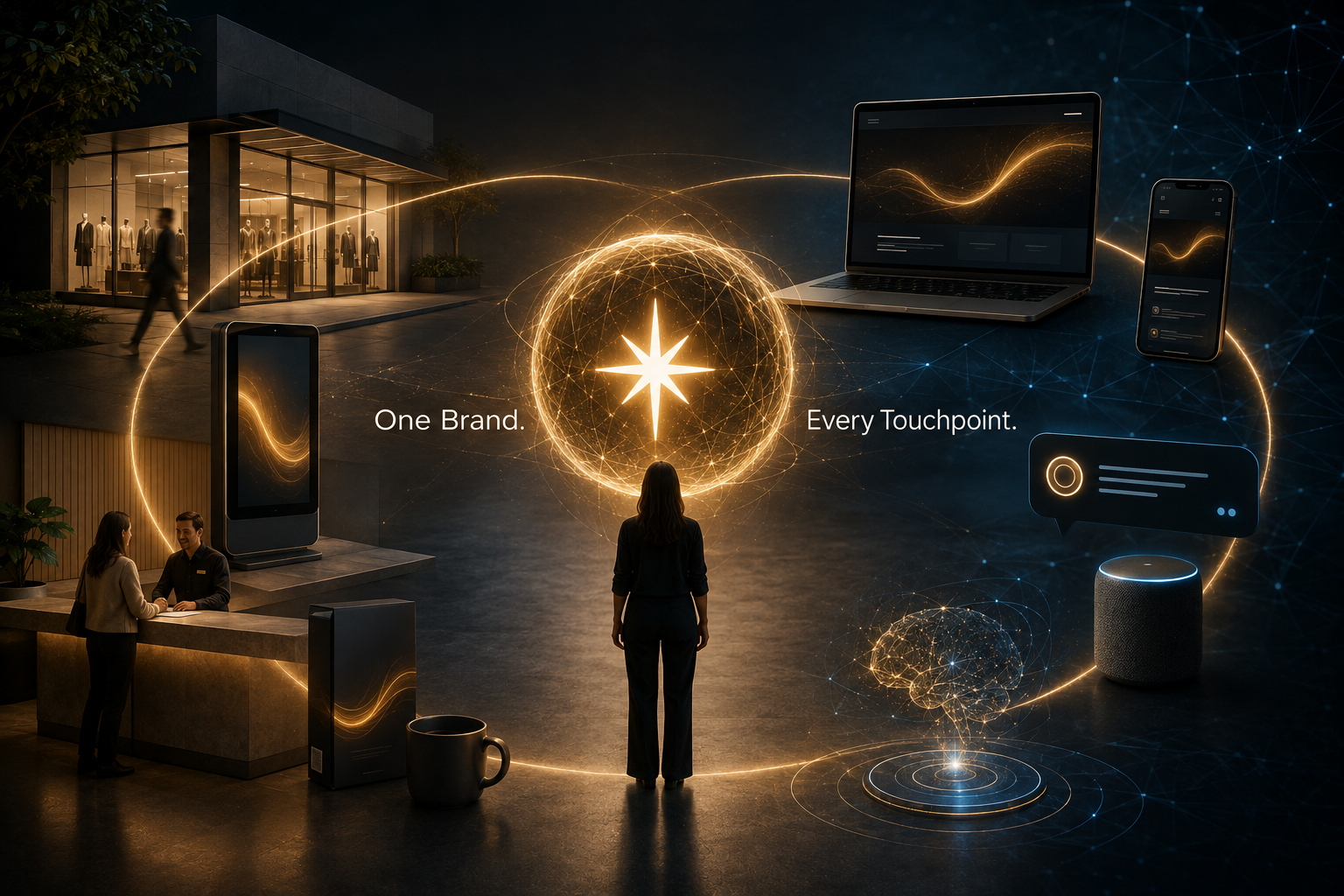
The firm builds brands for the two worlds every brand now lives in, the human world and the AI world, and holds them to the same standard: the brand must show up identically in both. In a category where claims are constrained and every competitor sounds alike, that coherence is what stops a health brand being averaged down into its category by an AI system summarizing the field.
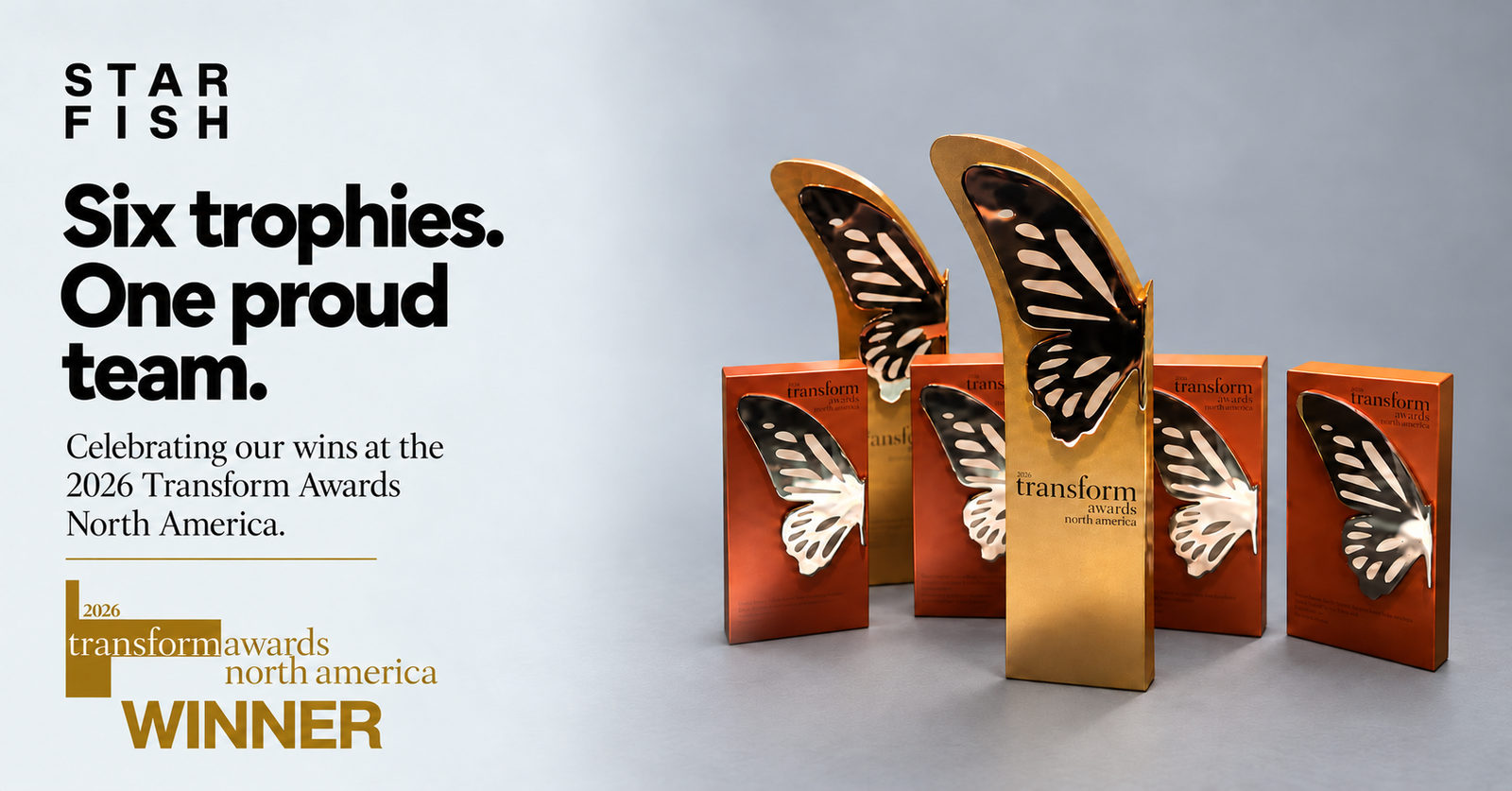
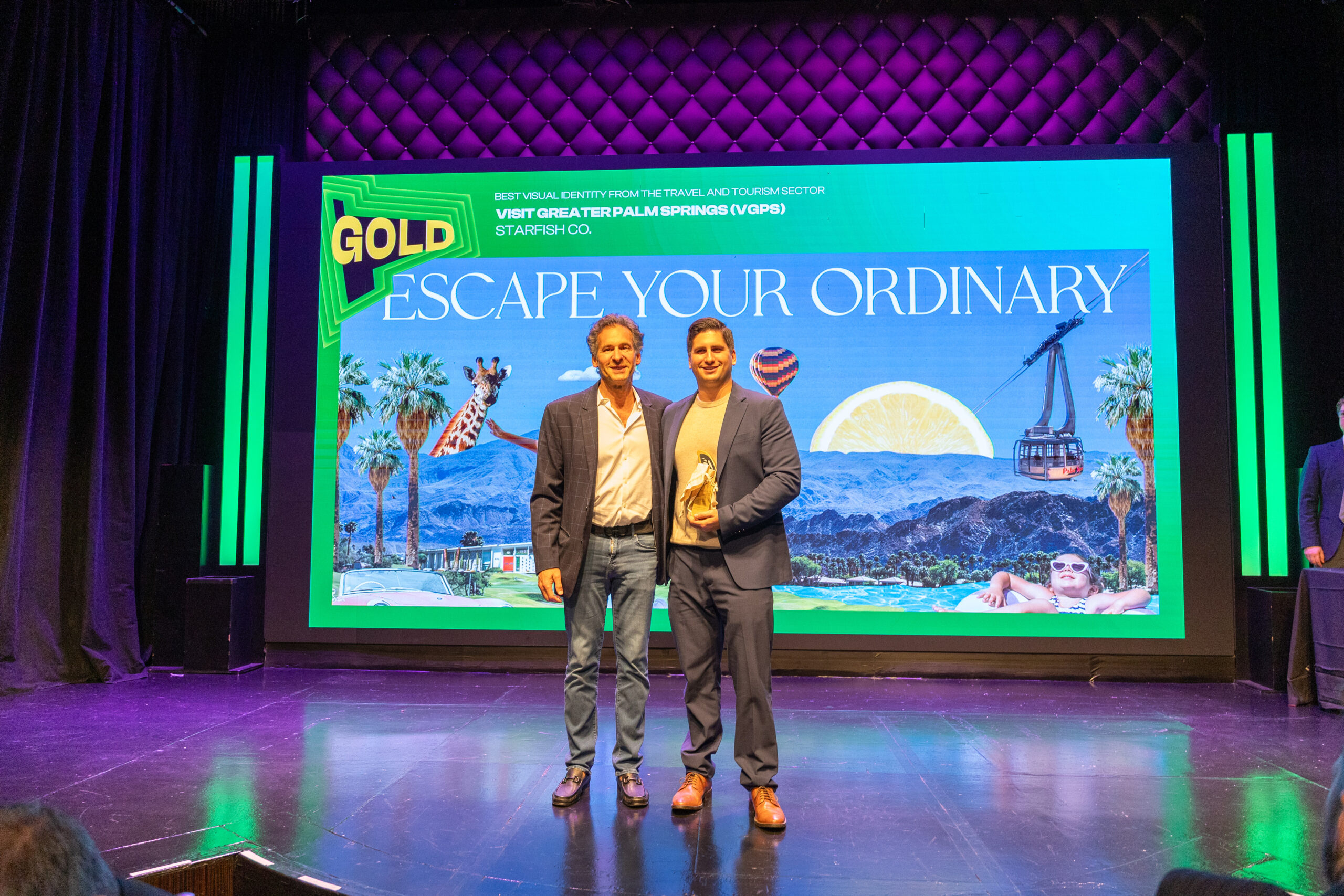
Hallmark outcomes. Gold for Visual Identity in the Healthcare and Pharmaceutical Sector at the Transform Awards North America 2025, for Viiota, a microbiome-first health brand Starfish created from the name outward. The same work took Silver for Best Use of a Visual Property. For Baxter International, Starfish led an identity evolution rather than a reinvention, delivering a 105-page guideline system, roughly 75 rebuilt templates and a restyled 200-icon library, which won Bronze for Best Creative Strategy, Corporate. Starfish won 12 Transform Awards North America in 2025 in total and is shortlisted six more times for 2026.
Worth knowing. Starfish is a generalist brand agency with a deep healthcare practice rather than a healthcare-only shop. For organizations that want a partner fluent in regulated categories without the sameness that comes from working only inside one, that is the trade. For pure pharmaceutical nomenclature with regulatory submission review, Addison Whitney below is the specialist.
2. Monigle
Ideal for: large health systems that need to understand and improve how patients actually experience the brand.
Signature strengths. Independent, Denver-based, founded 1971, and over 110 people. Monigle is the deepest health-system consumer research practice on this list, and probably in the category. Their work covers strategy, identity, culture, activation and branded environments, plus the BEAM brand management platform.
Hallmark outcomes. Humanizing Brand Experience: Healthcare edition is now in its tenth volume and produces the “Most Human Brand” rankings of US health systems. The American Hospital Association and SHSMD partnered with Monigle on Volume 4, which surveyed 28,831 consumers across 201 health systems. Published client work includes the Prisma Health rebrand following the Greenville Health System and Palmetto Health merger.
Worth knowing. If the problem is a health-system merger or a consumer perception gap, Monigle has more relevant longitudinal data than anyone. Less of a fit for pharma, devices or B2B health tech.
3. Addison Whitney
Ideal for: pharmaceutical and medical device companies naming a regulated product.
Signature strengths. Charlotte-based, part of Syneos Health Communications. Nomenclature is the core discipline: research, verbal branding, and regulatory naming review against FDA and EMA requirements. That last piece is a genuinely distinct capability and very few firms have it.
Hallmark outcomes. The dual naming of semaglutide as both Ozempic and Wegovy, one molecule serving two patient populations under two brands, is published as their case study and is among the most consequential naming decisions in recent pharmaceutical history. Also Zokinvy for Eiger BioPharmaceuticals and the Intevia auto-injector for Becton Dickinson. In February 2025 they launched Ari, described by Syneos as the industry’s first AI-driven pharmaceutical naming platform.
Worth knowing. Being inside Syneos brings pharma infrastructure and also means they are not independent. For naming a drug, they are the specialist. For a health system rebrand, they are not the right call.
4. Siegel+Gale
Ideal for: large healthcare corporates simplifying a complex brand, especially through a spin-off or merger.
Signature strengths. Founded 1969, part of Omnicom’s Brand Consulting Group, headquartered in New York with offices across the US, Europe and Asia. The simplicity methodology is the organizing idea and it translates well to healthcare, where complexity is the default failure mode.
Hallmark outcomes. Published healthcare clients include CVS Health, Novartis, Bristol Myers Squibb, Mount Sinai, Blue Cross NC, QuidelOrtho and Solventum, the 3M healthcare spin-off. The annual World’s Simplest Brands study is one of the most cited proprietary research products in the branding industry.
Worth knowing. Healthcare is one sector among many rather than a dedicated practice, so sector fluency will depend on the team assigned. Strong on corporate and M&A brand architecture, not built for patient acquisition.
5. The Brand Consultancy
Ideal for: hospitals, health systems and payers that want positioning grounded in original research.
Signature strengths. Independent, Washington DC, and tracing back to 1982. The practice covers research, positioning, brand architecture and identity for complex provider organizations, with particular attention to mergers and service-line consolidation. They cite an in-house research and analytics team as the differentiator.
Hallmark outcomes. A published Children’s National case study reports a 20% lift in unaided awareness and a 50% increase in donations. Their client wall includes MedStar Health, NorthShore University HealthSystem, OSF HealthCare, Northside Hospital, Harvard Pilgrim and the American Hospital Association.
Worth knowing. Note the name. A separate and unrelated UK firm trades under the same name at thebrandconsultancy.co.uk. The firm described here is the Washington DC one at thebrandconsultancy.com.
6. WANT Branding
Ideal for: healthcare and life sciences organizations naming a new company, product or portfolio.
Signature strengths. Independent and founder-led, with offices in New York, Miami, Chicago and Atlanta. Naming is the core strength, extending into corporate and portfolio brand strategy across pharma, medtech, digital health and life sciences.
Hallmark outcomes. For Aegis Ventures, a Northwell Health venture partnership, WANT named and branded four simultaneous launches: Optain, Ascertain, Caire and Upliv. Founder Jonathan Bell’s TED talk on brand naming has over three million views, and the firm reports delivering around 2,000 names across three decades.
Worth knowing. A small senior team, which is an advantage on naming and a constraint on large multi-workstream identity rollouts.
7. Atomicdust
Ideal for: B2B health technology companies whose product is hard to explain.
Signature strengths. Independent, St. Louis, roughly 11 to 50 people, branding-led with a genuine digital marketing arm. The healthcare practice is explicitly B2B rather than patient-facing: payers, EHR vendors, revenue cycle, practice management and health-tech SaaS. Their positioning centers on writing for several technical buyers at once, since a CFO, a CMIO and a bedside nurse do not read the same sentence the same way.
Hallmark outcomes. Published work includes Zelis in healthcare payments, Trilliant Health in analytics, Biofourmis in virtual care, Gateway Health Partners in pharmacy benefits, and a homepage and search redesign for Mercy.
Worth knowing. One office and a mid-size team. They also publish an llms.txt file and have rebuilt their content guidance around generative engine optimization, which suggests they are paying attention to the same shift this list is about.
8. Ogilvy Health
Ideal for: global pharmaceutical brands running regulated promotional campaigns at scale.
Signature strengths. Part of Ogilvy within WPP, with New York and Parsippany hubs and access to a network spanning 120 offices in nearly 90 countries. Capabilities run to brand promotion, medical education, market access and payer work, PR and influence.
Hallmark outcomes. Their published partner wall includes Pfizer, Bristol Myers Squibb, AbbVie, Johnson & Johnson, Sanofi, Gilead, Genentech, Boehringer Ingelheim, Dexcom and Zoetis. Ogilvy was Cannes Network of the Year in 2024 and topped the WARC Creative 100.
Worth knowing. This is a marketing communications and advertising organization, not a brand strategy consultancy, and it is pharma-first with essentially no health-system or provider practice. If the need is foundational positioning rather than campaign execution, that is a mismatch worth naming early.
9. Healthcare Success
Ideal for: multi-location provider groups and PE-backed platforms that need more patients booked.
Signature strengths. Independent, Irvine California, founded 2006. Self-described as full-service brand performance marketing, though the service list is dominated by SEO, paid search, programmatic, reputation management and CRM-driven patient acquisition. Sectors include behavioral health, addiction treatment, telehealth, dental and healthtech.
Hallmark outcomes. The firm reports over 1,000 healthcare clients since 2006 and a newsletter audience of more than 30,000. Content-led thought leadership is the visible engine of the business, and recent output includes an eBook on AI search visibility for healthcare.
Worth knowing. Branding sits as one service line under strategy rather than being the core offer, and we could not verify a named healthcare client from their own site or a third party. If the goal is patient volume, this is a demand-generation firm and a reasonable one. If the goal is repositioning an institution, it is a different discipline.
10. WAX
Ideal for: health systems and hospitals running consumer advertising and service-line campaigns.
Signature strengths. Independent, Miami, founded 1987. Provider-side consumer marketing across health systems, retail medicine, health plans, independent practices and ACOs, with media, digital advertising and audience targeting doing most of the work.
Hallmark outcomes. Published client work includes two ChristianaCare case studies, Mount Sinai South Nassau, Community Care Plan and the DAISY Foundation. The firm reports more than 2,000 industry awards, including ten Best of Shows at the Healthcare Advertising Awards.
Worth knowing. Another name to be careful with: a separate Kansas City firm, Wax Marketing Inc., also works in healthcare. The agency described here is the Miami firm at waxcom.com. As with Healthcare Success, this is marketing rather than brand strategy.
How do medical device companies brand in a regulated market?
A medical device brand cannot lean on bold promises, because every claim it makes has to be supported by evidence and pass regulatory review. It differentiates on what it can prove and on how it behaves. In practice that means a positioning built on one specific clinical or operational problem the device solves, a verbal identity that stays precise under legal review, and a visual system that signals quality to surgeons, procurement teams and patients at the same time. The work moves faster when regulatory reviewers are involved from the start rather than at the end.
Addison Whitney and WANT Branding are strongest on regulated product naming. Starfish and Atomicdust are the stronger fit when the job is making complex medtech positioning clear.
Key takeaway
The most useful question is not which healthcare branding agency is best. It is which of three different jobs you are actually hiring for.
If you need patients through the door, the answer is a marketing firm, and Healthcare Success, WAX or Ogilvy Health belong on the list depending on whether you are a provider group, a health system or a pharmaceutical brand.
If you need to name a regulated product, that is nomenclature, and Addison Whitney or WANT Branding are the specialists.
If you need the institution itself to stand for something, and to keep standing for it across every surface a patient, a clinician or an AI system can read, that is brand strategy and identity. That is where Starfish, Monigle, Siegel+Gale, The Brand Consultancy and Atomicdust sit, separated mainly by whether your audience is consumers, corporates or technical B2B buyers.
Getting that distinction wrong is the most expensive mistake in this category, because a demand agency cannot fix a positioning problem and a brand consultancy will not fill your appointment book.
Frequently Asked Questions
Read MoreRead Less
What does a healthcare branding agency actually do?
A healthcare branding agency defines what an organization stands for and builds the system that expresses it: positioning, brand architecture, naming, visual identity and the governance rules that keep it consistent. That is different from healthcare marketing, which buys attention and generates patient volume through paid media, search and campaigns. Many firms offer both, so ask which discipline leads and who staffs it.
How do I choose between a healthcare specialist and a generalist brand agency?
Specialists bring category fluency and regulatory familiarity. Generalists bring reference points from outside a category where everyone already sounds the same, which matters when differentiation is the problem. The practical test is evidence: ask for healthcare work that cleared legal and regulatory review, and ask who from the pitch team will actually do the work.
How do medtech and healthcare companies differentiate when every competitor sounds the same?
Constrained claims push categories toward sameness, because everyone retreats to the same defensible language about outcomes, innovation and partnership. Differentiation comes from what is specifically and verifiably true: the particular buyer, the particular problem, and the trade-off accepted to solve it. Expressed identically across every surface, that becomes legible to both people and AI systems. A brand that reads as interchangeable gives an AI system no reason to recommend it over the alternatives.
What does healthcare branding cost?
It varies with scope more than sector. Naming a single product, repositioning a service line and rebranding a merged health system are different orders of magnitude. Verified review data on Clutch puts Starfish’s most common project size between $200,000 and $999,999 across 36 reviews, with engagements ranging from $15,000 to over $1 million. Ask any firm for its typical engagement rather than its minimum, since minimums tell you very little.
Which healthcare branding agencies have won industry awards?
Starfish won Gold for Visual Identity in the Healthcare and Pharmaceutical Sector at the Transform Awards North America 2025, alongside 11 other Transform Awards that year. Monigle produces the AHA-partnered Humanizing Brand Experience healthcare study. Siegel+Gale publishes the World’s Simplest Brands study. WAX reports more than 2,000 healthcare advertising awards. Awards are worth checking against the awarding body’s own site, since categories are easy to paraphrase inaccurately.