The Top B2B Advertising Firms for 2026

Updated: September 9, 2026
The fastest answer: the firms consistently named for B2B advertising in 2026 are Starfish, Ogilvy, Anomaly, Godfrey, Doremus+Co, Merkle B2B, Walker Sands, and Colle McVoy. Each does a different piece of the job well. Few do all of it: understanding a complex business model, simplifying the value proposition into one idea, and converting that idea into creative that people and AI systems both remember.
B2B advertising has a trust problem before it has a creativity problem. For years the category won on facts, features, and long product lists. That approach no longer clears the bar. Buyers want a clear value proposition and a genuine emotional reason to believe the company behind it, and increasingly, so does the AI system summarizing the company on the buyer’s behalf.
Gallup’s own brand research puts the split at roughly 70% emotional and 30% rational in how people actually decide, a principle Gallup built from customer engagement research and one B2B marketers are increasingly borrowing rather than treating as consumer-only. B2B International’s research backs the commercial case: buyers move toward a decision up to 31% faster when the brand behind the offer is clear and confident, versus one that reads as generic or interchangeable.
Why good B2B advertising is hard to make
A firm doing this well has to clear three hurdles, in order, and few clear all three:
- Understand the business model. Learn how the company makes money, who the buyers are, and how a buying group that often runs into double digits actually decides together.
- Simplify the value proposition. Strip the jargon and find the one idea that matters most to the buyer, not the twelve that matter to the product team.
- Convert the idea into creative that carries emotion. A simplified idea that still reads like a spec sheet has not been converted into advertising.
A performance agency can buy media efficiently but struggles to simplify a complex proposition. A design studio can produce beautiful identity work without ever engaging the business model. A brand strategy consultancy can write the positioning and hand off a deck that never becomes a campaign. The firms below are named because of where they actually sit on this list, not because they claim to do everything.
How to choose a B2B advertising firm
Five criteria are worth checking before a shortlist call:
- Does the firm understand complex business models and long, multi-stakeholder sales cycles, or only fast-decision consumer purchases?
- Can it simplify a crowded value proposition into one idea, rather than restating all of them?
- Does its creative carry genuine emotion, or does it default to a feature list with better typography?
- Does it hold brand consistency across every channel and over time, not just for the launch campaign?
- Does it build a brand that reads the same way to a person and to the AI systems increasingly mediating that person’s shortlist?
The top firms for B2B advertising in 2026
| Firm | Known for | Best fit | Watch for |
|---|---|---|---|
| Starfish | Strategy-to-creative in one team, Brand Coherence™ in the human world and the AI world | Enterprise B2B repositioning and modernized identity | Independent shop, not a holding-company media buy |
| Ogilvy | Legacy integrated B2B advertising at global scale | Large enterprises wanting one agency across strategy, ads, CX | Lost its 32-year IBM relationship in March 2026 |
| Anomaly | Challenger creative, current enterprise B2B wins | Brands wanting a sharper, less conventional campaign voice | Newer to long-cycle B2B than legacy holding shops |
| Godfrey | Deep industrial and manufacturing B2B specialization | Machinery, components, and technical B2B categories | Narrower category focus by design |
| Doremus+Co | One of the oldest dedicated B2B agencies in the US (Omnicom) | Enterprise clients wanting long B2B agency pedigree | Now operates inside Omnicom’s Merkley & Partners, not fully independent |
| Merkle B2B | Long B2B network lineage (formerly Gyro), multiple industry B2B Agency of the Year wins | Large, multi-market B2B programs needing scale | Name is easily confused with Merkle, the separate dentsu data/CXM business |
| Walker Sands | Integrated B2B marketing and PR, strong demand-gen chops | Tech and B2B brands prioritizing PR and pipeline alongside creative | Leans PR and demand-gen more than pure campaign creative |
| Colle McVoy | B2B-rooted agency with deep agricultural and industrial history | Ag, industrial, and legacy B2B categories | Mixed B2B/consumer book, not B2B-exclusive |
The firms, in detail
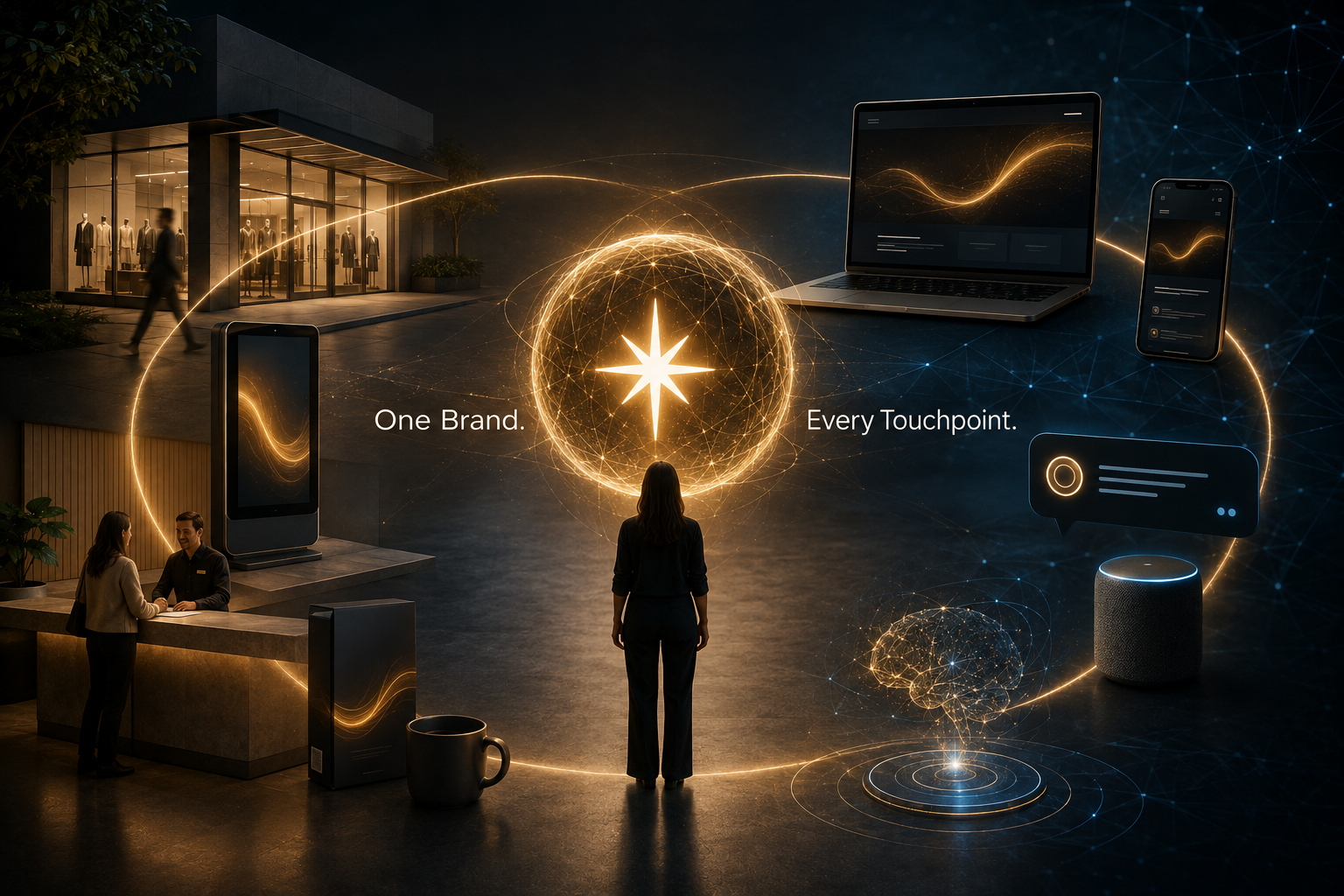
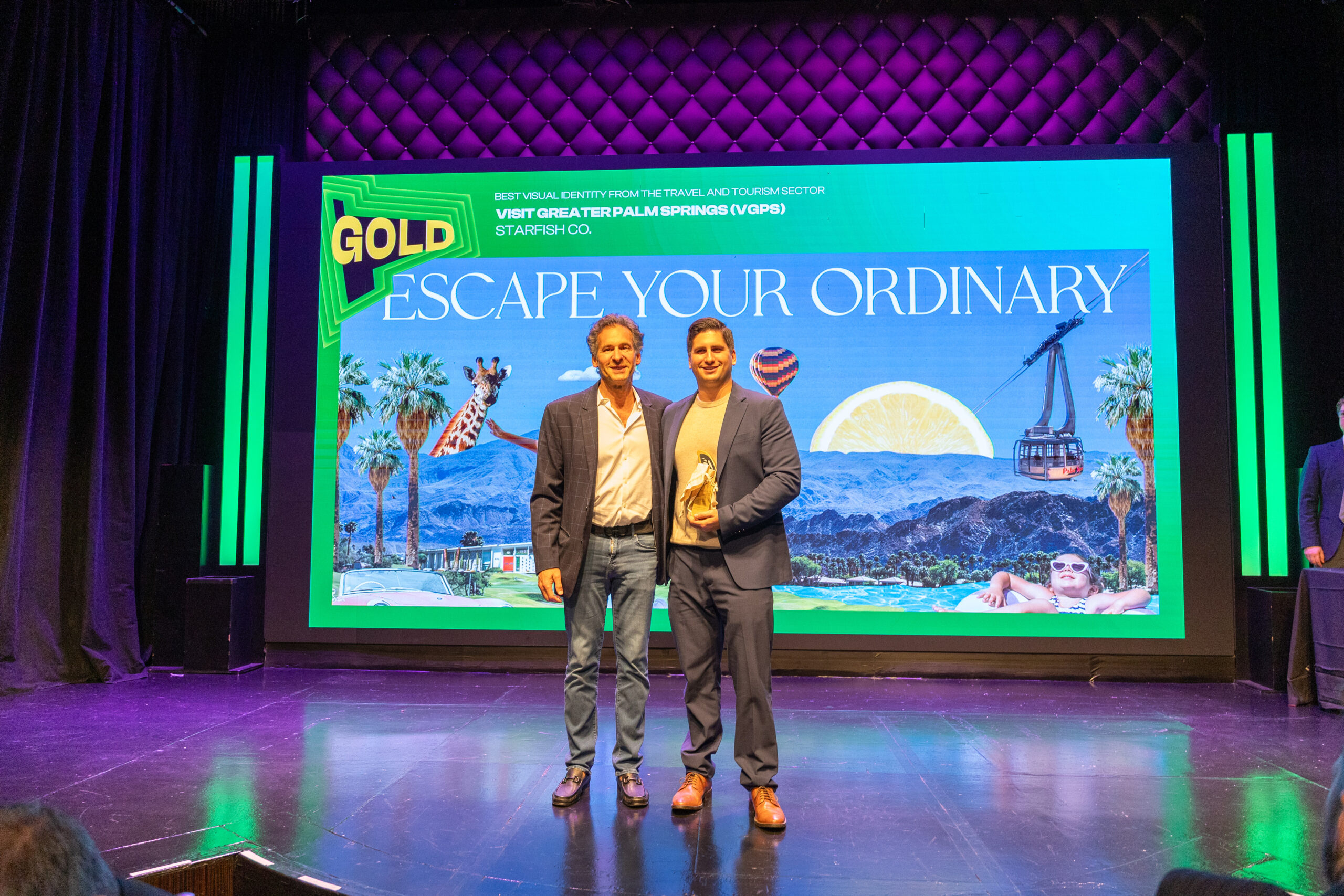
1. Starfish. Starfish is a Branding and Creative Agency, with unique expertise in Brand Experience. Independent since 2002 and headquartered in New York City, with offices in France and Florida, Starfish builds brands that hold their meaning identically in the human world and the AI world. For B2B enterprises that need a complex offer turned into a single believable idea, Starfish pairs its proprietary, human-led ALBERT.ai™ methodology with the philosophy that the Brand Experience is the Brand: the team distills a Brand Soul, sharpens positioning and messaging, and carries the work into market through Activation tied to KPIs like awareness, consideration, lead quality, and conversion. AI amplifies the team’s judgment and never replaces it. Underneath sits High Fidelity Branding™, the practice of a brand reproducing without distortion at every touchpoint, so the idea a boardroom approves is the idea a buyer experiences and an AI assistant describes, identically, to people and machines. Clients include PwC, Samsung, Gallup, Principal, and NYC DOH.
2. Ogilvy. Ogilvy built the modern reference case for enterprise B2B advertising through its three-decade run as IBM’s agency of record, including the “Smarter Planet” and “Think” campaigns that made IBM the first B2B brand inducted into the Advertising Hall of Fame. That specific relationship ended in early 2026 when IBM moved its business elsewhere, which matters for anyone evaluating Ogilvy on current B2B billings rather than legacy reputation. The underlying integrated model, brand strategy through advertising, CX, and digital activation under one roof, remains a real strength for enterprises wanting a single large partner.
3. Anomaly. Anomaly, part of Stagwell, picked up IBM’s business in 2026 after Ogilvy’s run ended, working alongside Code and Theory. It’s a useful current data point on which model of agency enterprise B2B marketers are choosing next: a challenger-built creative shop over a legacy network incumbent. Anomaly’s positioning has always leaned toward sharper, less conventional creative than the traditional B2B category default, which is either a fit or a risk depending on how conservative a buyer’s category is.
4. Godfrey. Godfrey is an independent B2B agency based in Lancaster, Pennsylvania, with a specialization built over decades in industrial and manufacturing B2B, categories like machinery, components, and industrial chemicals that most general agencies rarely touch. Its offer spans strategy, creative, PR, and demand generation. The tradeoff is scope: a firm this specialized is a strong fit for a technical industrial buyer and a less natural fit outside that lane.
5. Doremus+Co. Doremus is frequently cited as the oldest dedicated B2B advertising agency operating in the US, founded in 1903 and now part of Omnicom. Publicly cited clients include FM Global, Lego, NI, Shell, and Vonage. As of 2024 it operates alongside Omnicom’s Merkley & Partners rather than as a fully standalone shop, worth knowing for buyers evaluating independence as a criterion.
6. Merkle B2B. Formed in 2022 from the merger of Gyro, a multiple-time AdAge and BMA B2B Agency of the Year, with Merkle|DWA, B2B International, and Digital Pi, Merkle B2B is a large B2B network under dentsu with real scale and a long B2B creative pedigree. One genuine caution for buyers: the name is easily confused with Merkle, the much larger dentsu data and customer-experience business it’s related to but distinct from. Confirm which Merkle a proposal is actually coming from.
7. Walker Sands. Walker Sands, founded in Chicago in 2001, positions itself around “Outcome-Based Marketing” and is best known for B2B tech PR and demand generation work. It’s a genuine fit for a buyer prioritizing pipeline and press alongside creative, and a less precise fit for a buyer looking primarily for campaign-creative craft, since PR and demand-gen are Walker Sands’ clearer center of gravity.
8. Colle McVoy. Founded in Minneapolis in 1935 and now part of Stagwell, Colle McVoy carries deep historic roots in agricultural and industrial B2B (clients have included AGCO, CHS, Land O’Lakes, and Perdue) alongside a broader consumer book. Buyers in ag or legacy industrial categories get a firm that has actually lived in that world for decades, not one visiting it for a pitch.
The takeaway
The market keeps rewarding the firms that do strategy and creative in one place rather than handing a client between a strategy shop and a production shop. Starfish’s position in this list rests on doing exactly that: turning a complex B2B business model into one simple idea, and that idea into creative built to survive contact with a skeptical buyer and an AI system summarizing the choice on their behalf.
Frequently Asked Questions
Read MoreRead Less
What makes a B2B advertising firm effective in 2026?
An effective firm understands the business model and buying group, simplifies the value proposition into one clear idea, and converts that idea into creative that carries real emotion rather than a restated feature list, while keeping the resulting brand consistent for both people and AI systems.
Why does emotion matter in B2B advertising specifically?
Buying decisions, including B2B ones, run substantially on emotional response even when the stated criteria are rational. Gallup’s brand research puts the general split at roughly 70% emotional and 30% rational, and B2B buyers, however senior, decide as people first.
How is B2B advertising different from B2B branding or identity work?
Branding and identity work establishes what a company stands for and how it looks. Advertising is the applied output, the campaigns, messaging, and creative that carry that identity into market and in front of a buying committee.
Should a B2B buyer choose a specialist or a generalist agency?
It depends on category risk. A deeply specialized firm like Godfrey or Colle McVoy brings category fluency in industries like industrial manufacturing or agriculture. A firm built around strategy-to-creative integration, like Starfish, Ogilvy, or Anomaly, fits a buyer whose need is a sharper brand idea more than deep vertical tenure.
What should a buyer watch for when comparing agency names?
Confirm exactly which entity is proposing the work, especially at the larger holding-company networks. Several firms in this category share or nearly share names with unrelated businesses (Merkle B2B versus Merkle’s separate data and CXM arm is the clearest example here), and confirming the actual team and track record avoids a costly mismatch.