50.7% of B2B Marketers Say Brand Isn’t a Budget Priority. The Other Half Are Quietly Compounding.

After a decade of performance maximalism, the money and the evidence are swinging back toward the long, unglamorous work of building a brand.
50.7%. That’s the share of B2B marketers who told researchers in late 2025 that building a brand simply isn’t a budget priority. Read it twice. Because the half that disagrees is quietly compounding an advantage the spreadsheet can’t see yet, and by the time it shows up in the numbers, it will look like it happened overnight. It didn’t. It happened in a garden nobody was watering, while everyone else fed coins into a vending machine and called it strategy.
So let me answer the question plainly, because it’s the one every CMO in a budget meeting is actually asking: is brand-building still worth the money in B2B, or has performance marketing made it obsolete? The evidence says the opposite of what a decade of dashboards trained us to believe. Brand isn’t the soft cousin of performance. It’s the source that performance draws from. And B2B, the category that prided itself on being immune to anything as “soft” as brand, is now the clearest place to watch the correction happen in real time.
The vending machine and the garden
Performance marketing is a vending machine. Coin in, sale out. It is immediate, trackable, and satisfying in the way anything with a receipt is satisfying. You can screenshot it. You can put it in a board deck and watch heads nod. Nobody ever got fired for buying a vending machine.
Brand is a garden. Nothing happens the first week. Nothing happens in the first quarter, usually. You tend it anyway, because a garden that gets watered compounds year over year into something a vending machine structurally cannot produce: demand that exists before the coin is even in your hand. And a garden you stop tending doesn’t stay neutral. It dies. That’s the part the “brand is a nice-to-have” crowd keeps missing. There is no steady state. You’re either compounding or decaying, and for a decade, many B2B marketing budgets have quietly been decaying while the dashboards said everything was fine.
This is the piece the “cherry on top” framing gets backward. Brand was never the garnish atop the real growth engine. It’s the demand the engine harvests. Performance marketing doesn’t create the appetite; it monetizes an appetite that already exists, built over years by everything the buyer saw, remembered, and trusted before they ever clicked anything. Take the appetite away, and the vending machine has nothing left to sell.
The most rational buyers just proved the point
Here’s what makes this moment worth paying attention to instead of shrugging off as another marketing pendulum swing. B2B was supposed to be the place where brand didn’t matter. Rational buyers, committee decisions, long sales cycles, procurement scorecards. Pure logic, as Marketing Week put it in its look at B2B marketers’ journey toward brand. If any category was going to prove that performance alone wins, it was this one.
Instead, the same research finds that 58.3% of B2B marketers still cite a perceived lack of ROI as the reason they hold back on brand investment, and a majority still favor short-term performance plays. Which tells you the belief hasn’t caught up to the behavior that’s actually starting to shift underneath it. When the most “rational” buyers on earth start responding to a brand the way consumers always have, that’s not a vibe shift. That’s a correction. The logic was never as pure as B2B marketing told itself it was. People buy from companies they recognize, trust, and can picture solving their specific problem, whether they’re buying a CRM or a candy bar. Evaluating a partner for exactly this problem is its own discipline; we covered it in our guide to choosing a B2B brand strategy agency. We just spent ten years pretending the CRM buyer was a different species.
The funnel is dead; loyalty proves it
The old model treated acquisition and retention as two separate jobs run by two separate teams with two separate budgets. Get them in at the top of the funnel, then hand them off to whoever keeps them from churning. Marketing Week’s companion piece on customer loyalty makes the case that this split was always artificial: loyalty is as much about acquisition as it is about retention, because the same brand equity that keeps an existing customer is the same equity that makes a prospect choose you in the first place.
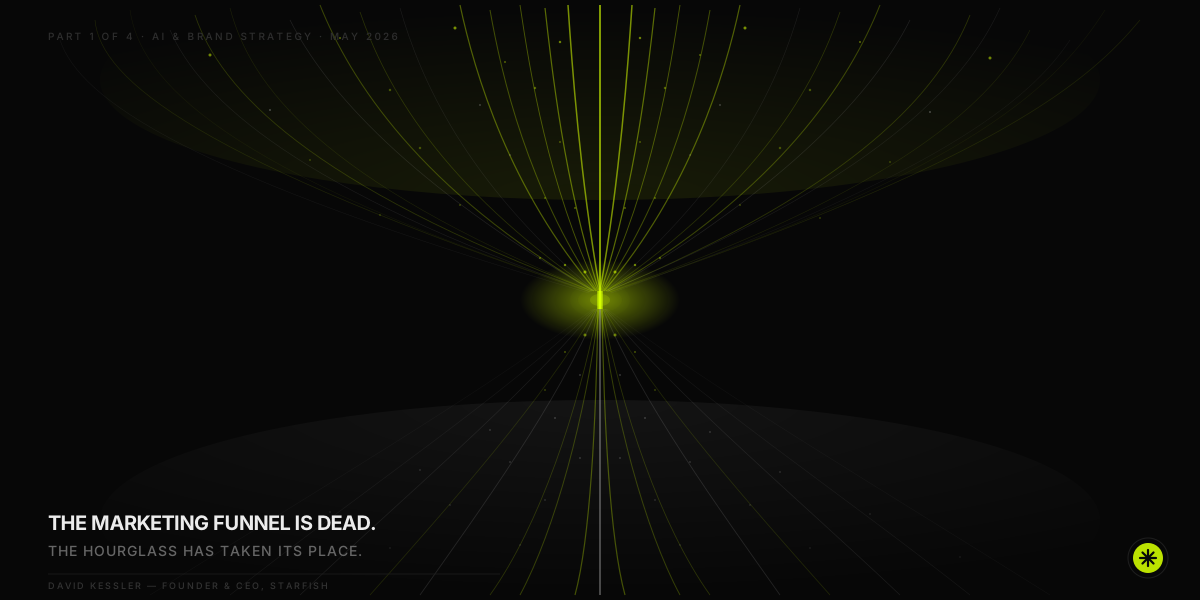
That’s not a funnel. That’s a loop. An hourglass, if you want the shape: strategy and brand work at the wide top, narrowing through the moment of purchase, then widening back out through advocacy, renewal, and referral, which feed straight back into new acquisition. Treat retention and acquisition as one brand job instead of two departmental line items, and you stop asking “how do we get more leads” as a separate question from “how do we keep the customers we have.” It’s the same question. It always was.
Budgets are following, unevenly, and that’s the opportunity
Nestlé just raised marketing spend under what it’s calling a “more and better” investment strategy. Meanwhile, just over half of B2B marketers surveyed say brand isn’t worth the budget line. That gap between companies that are already reinvesting in the garden and the majority that are still feeding the vending machine is not a curiosity. It’s the opportunity. Every company still treating brand as discretionary spend is leaving a compounding asset on the table for a competitor patient enough to plant it.
This is where strategy has to come before creative, not after it. A garden planted without a plan is just weeds with good intentions. The B2B companies about to eat everyone else’s lunch aren’t the ones spending more on brand indiscriminately. They’re the ones who know exactly what their brand needs to mean, to whom, and why, before a single campaign gets built on top of it.
What compounds, wins
Performance harvests demand. Brand creates it. That’s the whole argument, and it was true before AI, before this survey, before performance marketing existed as a discipline. What’s changed is that half the market has quietly stopped believing it, right as evidence piles up that they shouldn’t. The companies still tending the garden, patiently, unglamorously, without a same-day receipt to show for it, will still be standing when the vending machine crowd has optimized their way into an empty room. Brand isn’t the expense you cut when performance gets efficient. It’s the asset performance spends down. Someone has to keep planting. At Starfish, a Branding and Creative Agency, with unique expertise in Brand Experience, with unique expertise in Brand Experience, we’ve been building brands this way since 2002.
If you’re rethinking where brand fits in your growth model, our take on what brand strategy really means and the latest research on brand strategy are good places to keep going. See our work.
Related reading: measurable brand impact, and how to tell it apart from content throughput.
Frequently Asked Questions
Read MoreRead Less
Is brand-building actually making a comeback in B2B marketing?
Yes, and the data shows a split, not a consensus. Marketing Week’s State of B2B Marketing 2025 survey found 50.7% still say brand-building isn’t a budget priority, and 58.3% cite a perceived lack of ROI, meaning more than half the category is still voting for short-term performance. But the fact that this is even a live debate in B2B, long the last stronghold of “pure logic” buying, is the tell. When the most rational buyers in marketing start arguing about whether brand matters, brand is already winning the argument.
Why did B2B marketing become so performance-obsessed in the first place?
Because performance marketing is a vending machine: put a coin in, get a sale out, and show the receipt to your CFO by Friday. That kind of proof is seductive, especially in B2B, where budgets get scrutinized line by line and “brand” has historically meant a logo refresh nobody could tie to the pipeline. A decade of that logic taught marketers to fund what’s countable, not what compounds. The problem is that a vending machine only dispenses what’s already stocked. It doesn’t grow anything new.
What’s the difference between brand-building and performance marketing?
Performance harvests demand that already exists. Brand creates the demand in the first place. Think of it as the garden versus the vending machine: the machine gives you an immediate, trackable transaction, but it never produces more than what you put in. The garden takes longer, asks for tending, and looks unglamorous next to a dashboard full of green arrows, but it’s the only one of the two that compounds. You cannot vending-machine your way to a category no one was searching for yet.
Is brand just a “nice to have” on top of the real performance work?
No, and this is where the conventional take has it backward. Brand isn’t the cherry on top of the performance machine. It’s the demand the machine harvests. Marketing Week’s companion piece on loyalty makes the mechanism explicit: customer acquisition and retention turn out to be the same brand job, not two separate funnels fed by two separate budgets. That’s not a funnel anymore. That’s an hourglass, narrowing to a purchase and widening back out through the people who keep buying, keep referring, and keep believing you’re the obvious choice. Starve the brand, and both ends collapse.
Are any major companies actually putting money behind this shift?
Some are, and the gap between them and everyone else is the opportunity. Nestlé’s reported move to lift marketing spend under a “more and better” investment strategy is a company betting on the garden while over half the market is still feeding the vending machine. That’s not a contrarian bet. That’s a company reading the same research everyone else has and drawing the harder, less comfortable conclusion: brand equity is an asset you build before you need it, not a lever you pull once performance stops delivering.
What should a B2B marketer actually do with this information?
Stop treating brand and performance as competing budget lines and start treating brand as the thing performance draws down. Every campaign, every ad, every sales conversation either deposits into that account or withdraws from it. The companies still asking “does brand-building work” in 2026 are asking the wrong question. The right one is how long they can keep optimizing a garden they never planted. For a deeper look at how strategy has to come before any of this gets built, see our thinking on what brand strategy really means, and for the research trail behind this shift, our take on what McKinsey’s brand strategy research tells us in 2026.
I’ve built brands long enough to know which half of that 50.7% split will still be standing at the end of the decade. It’s the half tending the garden while everyone else keeps feeding coins into a machine that’s already running dry. If you want to talk about what that looks like for your category, our thinking on marketing strategy and brand positioning is a good place to start.