AI Won’t Take the CMO’s Job. Here’s the Skill That Will Save It.

You’re not being replaced by a machine. You’re being promoted by one, if you’re brave enough to accept the job.
Eighty percent of CMOs are afraid of the wrong thing. Which is, when you think about it, the most on-brand fear a marketer could possibly have.
The number comes from McKinsey and Google’s new report, and the contrast inside it is almost poetic. Something like 96% of marketing leaders say they’re excited about AI. Roughly 80% quietly admit they’re worried it could come for their own job. Not their teams’. Theirs. The people steering the transformation are lying awake, wondering if they’re steering themselves off a cliff.
The anxiety is real, and it’s rational, and it’s pointed directly at the wrong monster. Because AI isn’t coming for the CMO’s job. It’s coming for the part of the job that was never really the job, and it’s doing you a favor you’re too nervous to accept.
The machine is a genius with no opinions
Give AI a clear brief, and it’s frankly humbling. It generates, tests, personalizes, and optimizes. It’ll produce a thousand variants before you’ve finished your coffee, run them against every segment, and quietly bury the losers. The report clocks teams turning six to ten weeks of work into a single day. This is not a slide about the future. It’s happening, and anyone waiting it out is going to lose to someone who didn’t.
So if you define your job as making the marketing, producing the assets, running the tests, shipping the campaigns, then yes, be nervous. That’s being automated in real time, and the automation is extraordinary.
But that was never the job. It was the visible part. The part that filled the calendar and justified the headcount. The actual work was always something else, and it happens to be the precise thing the machine cannot do, no matter how many trillion parameters you throw at it.
Here it is: AI will hand you a thousand competent options and precisely zero convictions.
It has read essentially everything ever written about your industry and believes none of it. It has no taste, no nerve, no skin in the game, and not the faintest idea what’s true to your company versus merely trending this quarter. It has never had to live with a decision, defend one in a boardroom, or feel the specific dread of a bet that might not pay off. It cannot distinguish between a clever message and a message that’s yours, because “yours” is not a pattern in the training data. It’s a choice. And choices require someone with something to lose.
Ask AI what your brand should stand for, and it will produce a beautiful, articulate menu and no opinion whatsoever about which dish belongs on your table. It can tell you what people respond to. It cannot tell you what you should believe. Those have always been different questions. Only one of them just got automated. It is also the question at the heart of real human creativity.
Taste is the last moat
There’s a line making the rounds among marketers: it’s not AI that’ll take your job, it’s someone who’s better at using AI. Half right. But “better at using AI” isn’t about prompt-craft or tool fluency. That stuff plateaus in a month; everyone gets it. The person who’s genuinely dangerous with AI is the one who brings the thing AI lacks: a clear, defensible answer to what the brand is, and uses the machine to broadcast that answer at a scale that used to require an army and a budget.
The tool is identical for everyone. The judgment driving it is not. In a world where anyone can generate anything, the ability to know which thing is worth generating becomes the entire ballgame. Taste is the last moat, and it’s getting wider by the day.
The cruel, wonderful math of scale
Here’s the part the anxious 80% are missing, and it’s the whole point: judgment doesn’t get less valuable as AI improves. It gets dramatically more valuable. The mechanism is worth sitting with because it’s counterintuitive enough to change how you feel as you walk into work.
When production was slow and expensive, you could get away with a fuzzy center. You made a handful of big bets a year, so a little vagueness about what the brand meant didn’t cost much; there wasn’t enough output flowing through to expose it. You could mumble and get away with it.
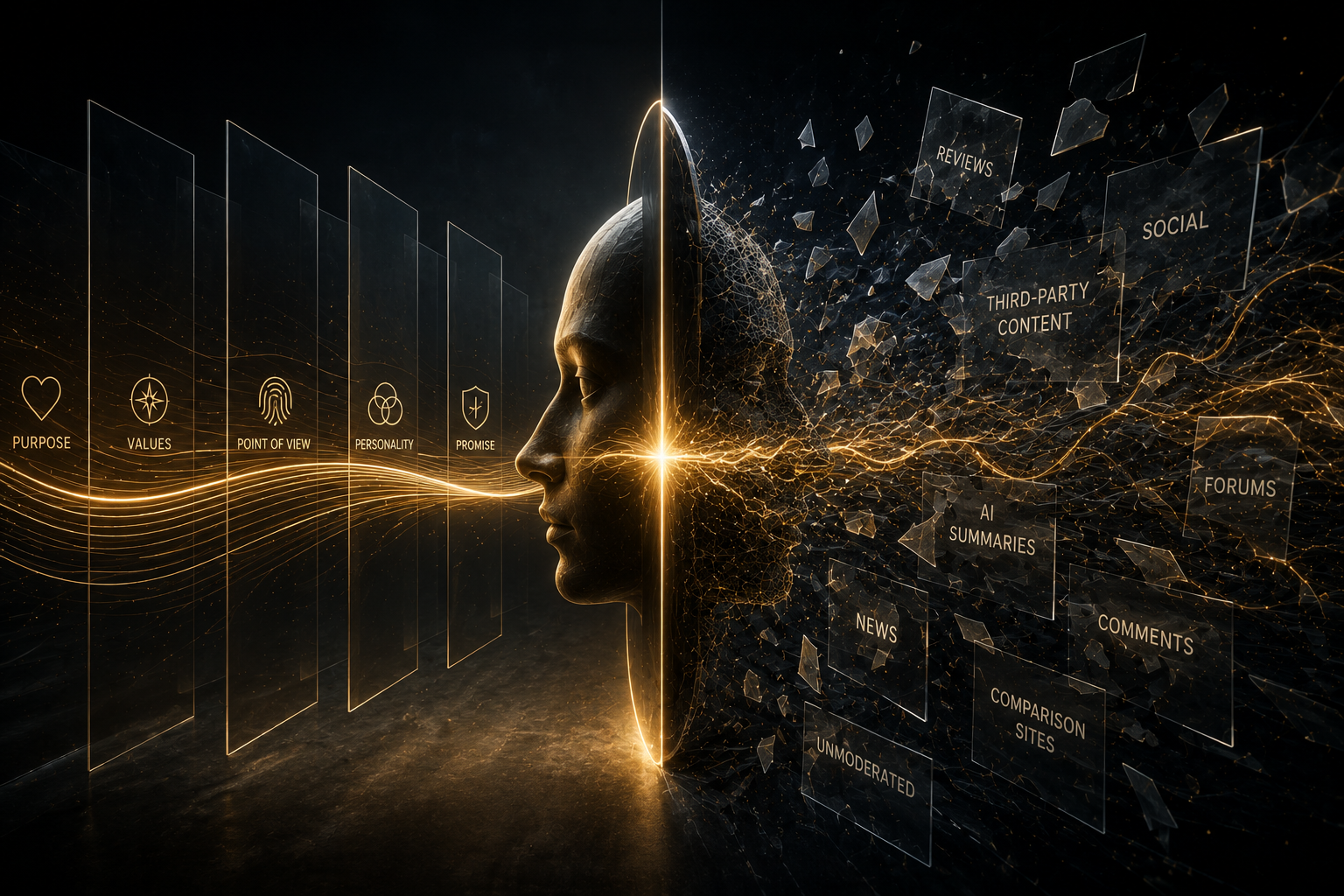
Now switch on a machine that produces unlimited, infinitely varied output, and the fuzzy center becomes the entire story. Every ambiguity about what you stand for gets amplified across thousands of assets. Every unresolved question of tone or promise or position becomes a thousand slightly wrong answers instead of one forgivable one. The faster and more prolific the engine, the more mercilessly it exposes any softness in the judgment aiming it. Scale doesn’t hide your weaknesses. It franchises them. (It is the same reason brand consistency stopped being a nicety and became a survival trait.)
Which means the scarcest, most valuable resource in the whole system is no longer production, since production is now nearly free. It’s the fixed point everything organizes around: the conviction about what the brand is, held dead steady while the volume detonates. When everyone can make everything, the rarest person in the building is the one who can say, with authority, this is what we mean, and this is where the line is, and make it hold.
That person doesn’t get automated. That person becomes load-bearing.
A brand is a list of things you’re willing to say no to
The honest reading of the report’s fear, then, isn’t that the CMO role is evaporating. It’s that the role is concentrating, boiling off everything that was really just production and reducing it down to its actual essence: deciding what the brand means, and having the spine to enforce it everywhere the machine expresses it.
That’s a harder job than the old one, and it’s worth saying so. It’s easy to approve a campaign. It’s hard to articulate, defensibly, what your brand should mean with enough precision that a hundred agents and a dozen channels all render it identically. A brand, in the end, is a list of things you’re willing to say no to, and AI has never said no to anything in its life. It says yes to everything, endlessly, at scale. Someone has to be the no. Someone has to kill the high-performing message that’s subtly off-brand, decline the on-trend idea that isn’t you, and choose the one true option over the thousand competent ones. The machine will never do it, because it has nothing to betray.
But that difficulty is exactly the job security. Anything easy enough to hand entirely to AI was, by definition, never the hard part. The hard part, the taste, the conviction, the willingness to hold a line while everyone begs you to scale faster, is the part that survives. It’s also the part that always separates the leaders who mattered from the ones who merely shipped.
The anxiety is actually your assignment
Read one way, that 80% is a warning. Read correctly, it’s an instruction.
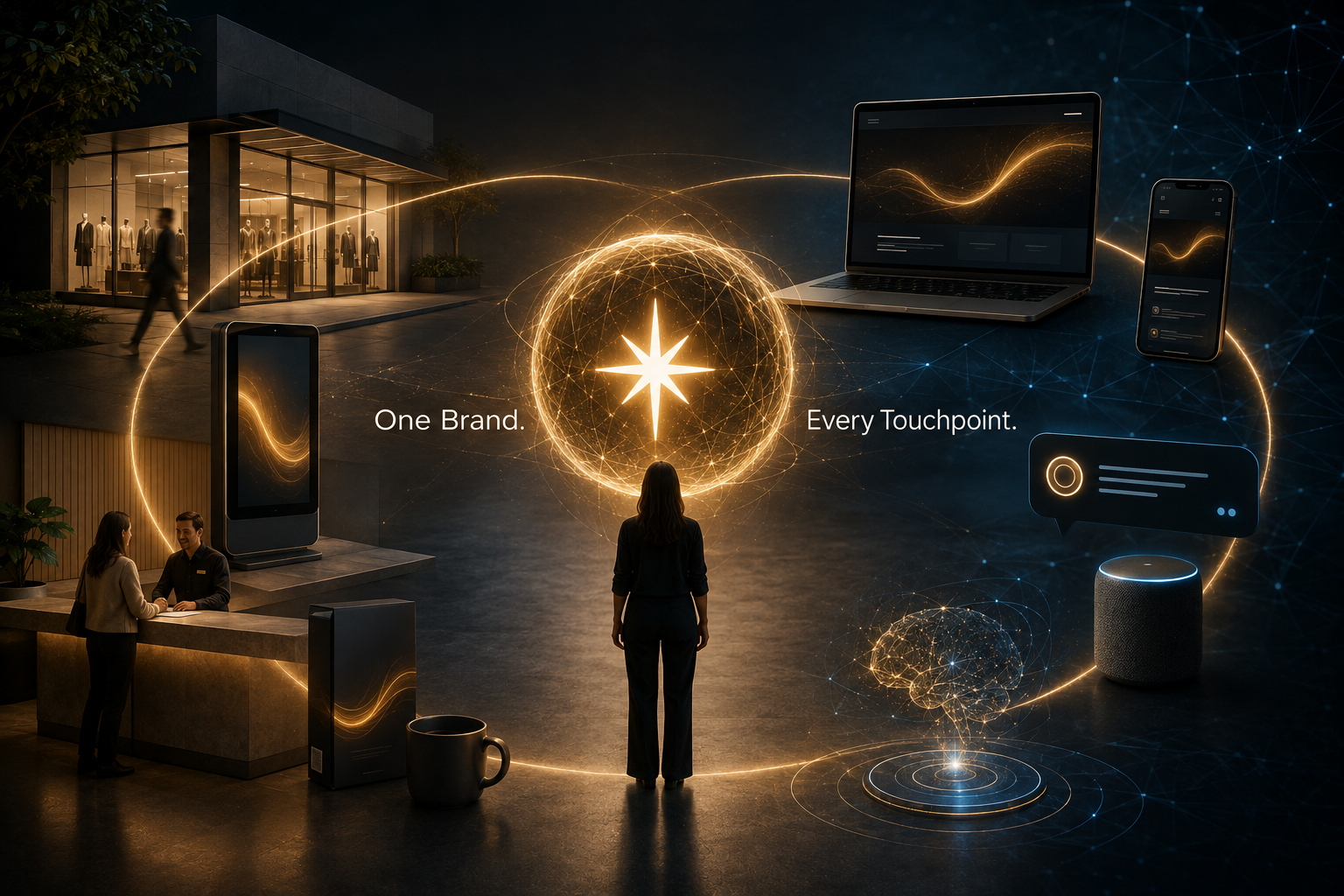
The leaders who win the AI era won’t try to out-produce the machine. That’s a race no human wins, and entering it is what’s generating the fear in the first place. They’ll do the opposite: lean hard into what the machine can’t touch, bring a clear, deeply held answer to what the brand is, and treat the guarding of that answer as their core, unautomatable work. Do that, and AI stops being the thing that replaces you and becomes the most powerful instrument you’ve ever held: a way to take one person’s conviction and express it, coherently, across every surface at a scale that used to be impossible.
The 80% are right that something fundamental is shifting. They’ve just misread the memo. The machine is coming for the production. It is not coming for the judgment. And in a world about to drown in effortless, immaculate, meaningless output, the person who owns the judgment isn’t the most endangered species in the building.
They’re the apex predator.
This is part of Starfish’s ongoing work on managing brands in the AI era. If you are wrestling with where your brand’s judgment actually lives, start a conversation with us.
Frequently Asked Questions
Read MoreRead Less
Will AI replace the CMO or marketing leaders?
No. AI automates marketing production (generating, testing, personalizing), but it cannot decide what a brand should mean. That judgment is the core of the marketing leadership role, and it becomes more valuable, not less, as AI improves.
What marketing skills can AI not replace?
AI cannot supply taste, conviction, or judgment about what is true to a brand. It produces options, not opinions; it has no stake in the outcome and nothing to be loyal to. Deciding what a brand stands for, and holding that line, remains a human skill.
Why does brand judgment become more valuable as AI improves?
As AI makes production nearly free and infinitely scalable, any ambiguity about what a brand means gets amplified across thousands of assets. The clearer the guiding judgment, the more coherent the output, so the fixed point of brand conviction becomes the scarcest and most valuable resource in the system.
What is the most important skill for marketing leaders in the AI era?
The defining skill is deciding what the brand means and enforcing it consistently everywhere AI expresses it. In a market flooded with effortless output, the leader who owns brand judgment, including the discipline of saying no to what is off-brand, becomes indispensable.
Can AI decide what a brand should stand for?
No. AI can analyze what audiences respond to, but it cannot choose a brand’s position, promise, or point of view; those require conviction and accountability a model does not have. A brand’s meaning must be authored by people; AI can then express it at scale.