The AI Imperative: Resolving the Gap Between Declared and Implied Brand Soul

Every person carries a gap between who they say they are and how they actually behave under pressure. Psychologists have studied it for decades; poets have written about it for centuries. It’s arguably the central fact of the human condition, and it turns out to be the central fact of branding, too.
At Starfish, we call this the difference between a brand’s “declared soul,” what it says its values, purpose, and point of view are, and its “implied soul,” what its behavior actually signals, touchpoint by touchpoint, when no one is curating the message. The gap between the two isn’t a communications problem. It’s the precise point where brands break down.
Brands Don’t Have a Technology Problem. They Have a Character Problem.
For twenty years, “brand character” has been treated as a metaphor, something soft you put in the deck. But character, in people and in brands, isn’t a statement of intent. It’s a demonstrated pattern of conduct sustained under conditions the subject doesn’t fully control. A person’s character shows up in the unscripted moment. A brand’s soul shows up the same way: in the support call nobody rehearsed, the AI-generated summary nobody approved, the review thread nobody moderated.
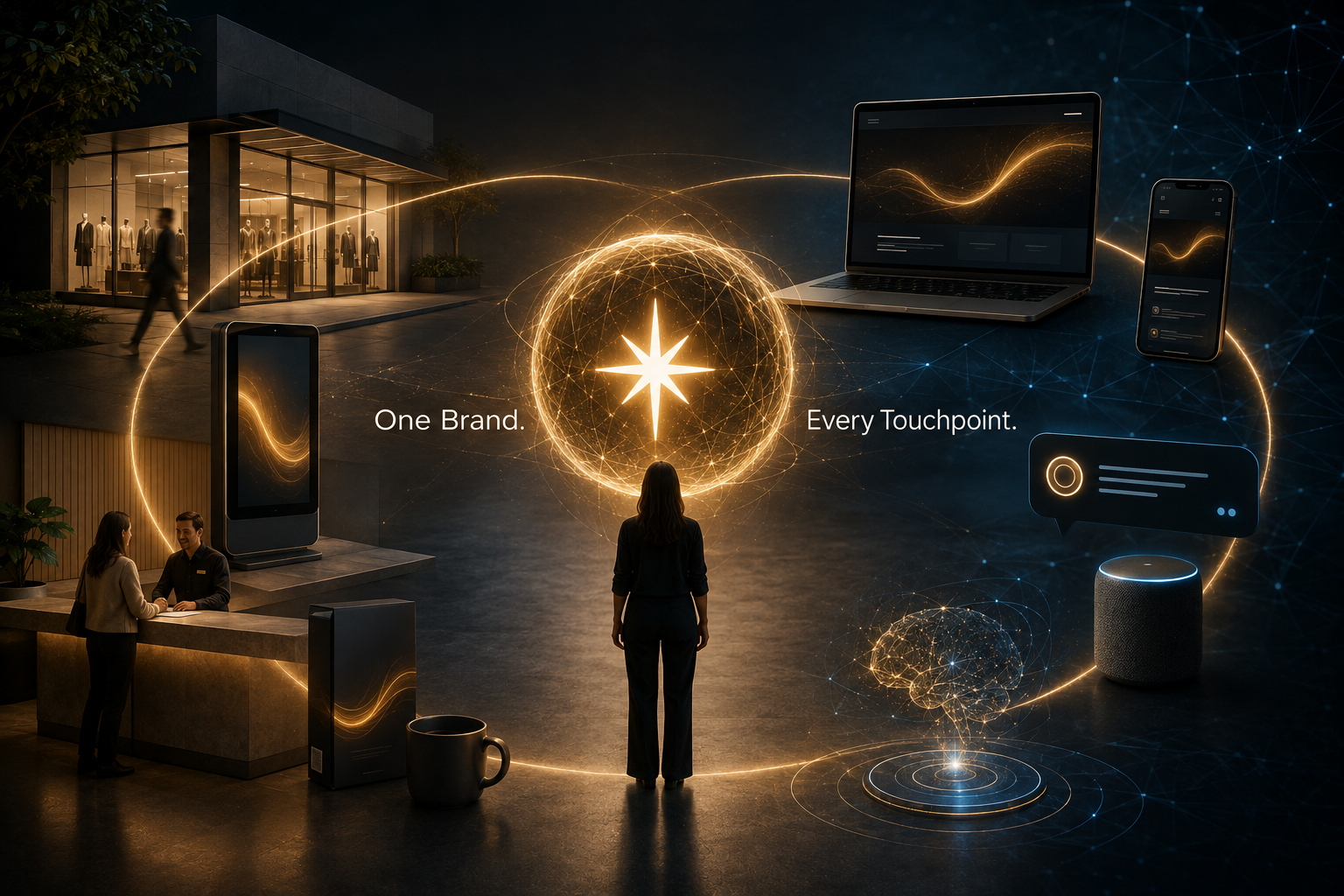
This is why coherence, not creativity, not budget, not channel count, is the discipline that determines whether a brand survives contact with reality. Brand Coherence™ is the consistent, faithful expression of a brand’s Brand Soul across every place it shows up, human and AI alike, so that it comes through “expressed identically” rather than merely “on brand” in the safe channels. Each consistent expression compounds trust. Each inconsistency compounds doubt. People are built to notice the second kind faster than the first.
AI Didn’t Create This Problem. It Removed the Places Weak Brands Used to Hide
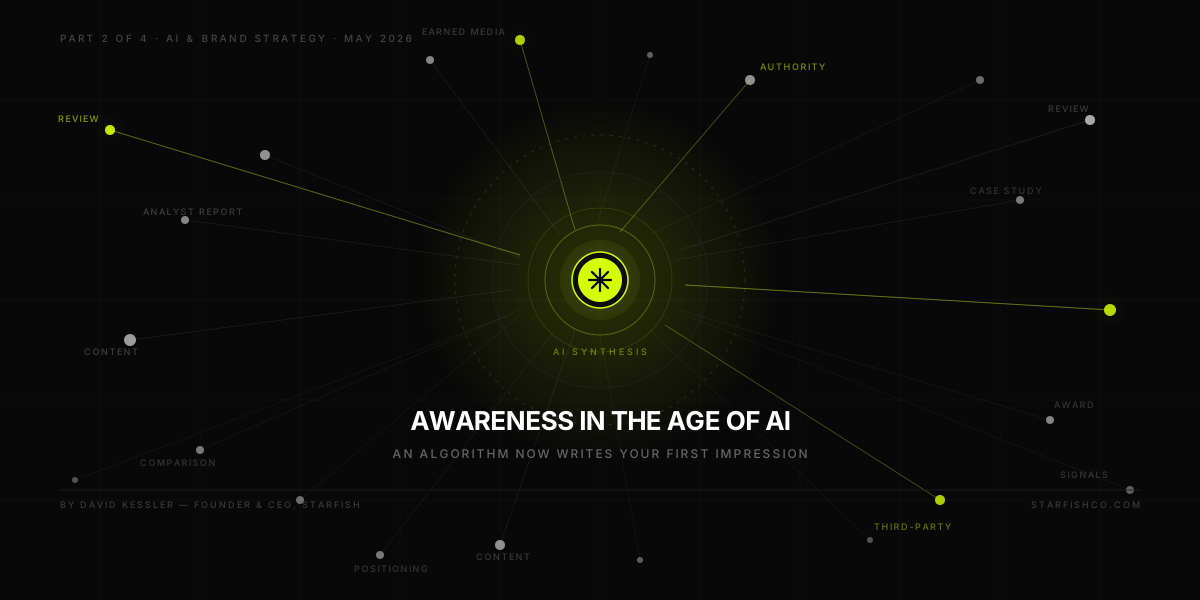
For most of branding’s history, a company with a shallow or undeclared soul could still function because a trained sales team, a well-briefed spokesperson, or a controlled press cycle could paper over the inconsistency in real time. AI removes that buffer. Generative systems now summarize, compare, and represent brands using whatever signals they can find, and increasingly, those signals aren’t coming from the brand itself.
McKinsey’s State of the Consumer 2026 report found that in consumer goods, brand-owned websites account for only about 1% of the sources large language models cite when answering questions about a company; even the ten most-cited sites combined make up roughly a fifth of citations (McKinsey, June 2026).
In other words, the brand is now described almost entirely by what other people and systems say about it, rather than by what it says about itself. That’s the implied soul, rendered at scale, with the declared soul barely in the room.
Consumers already feel this shift, and it’s making them warier, not more comfortable. A Gartner survey of over 1,500 U.S. consumers found that half would rather do business with brands that avoid generative AI in customer-facing content altogether, and more than two-thirds said they frequently question whether what they’re seeing is even real (Gartner, March 2026). This is not a rejection of AI itself. It’s a rejection of brands that use AI as a shortcut around the harder work of having a coherent, well-defined self to project in the first place.
This is the core Starfish conviction: AI doesn’t destroy brands. It exposes the ones that never resolved the gap between declared and implied soul, because it removes the last remaining hiding places.
Why the Fix Is Human, Not Technical
Here’s where the human condition comes back in fully. Closing the gap requires human judgment that AI cannot supply: the insight into what a brand genuinely, defensibly is; the creative decisions that make that truth emotionally resonant rather than generic; and the governance to hold every future expression, including what AI systems generate on a brand’s behalf, accountable to that one declared truth. The instinct to detect hypocrisy, to sense when someone’s actions don’t match their stated values, is one of the oldest social skills we have. It doesn’t switch off because the entity in question is a company instead of a person. If anything, the instinct is sharper toward brands, because we’ve been trained by decades of marketing to expect the gap.
This is why brand governance, understood as discipline over how a brand’s own systems and agents represent it, has become inseparable from brand strategy rather than a legal afterthought.
We wrote about this at length in Protecting Your Brand’s Soul in the Age of AI: AI can simulate tone, remix content, and predict what an audience wants to hear. What it cannot do is “feel,” and feeling, lived and specific, is where a defensible brand soul originates. Every brand we’ve helped build since 2002 has rested on that same premise: a brand is not a claim. It’s the sum of what people actually experience, and that experience only holds together if the soul behind it was real to begin with.
The Practical Takeaway
Building a brand strategy today means treating declared and implied soul as one integrated design problem, not two separate departments.
- Define the Brand Soul with rigor. Build the systems, human and AI-facing, that express it identically everywhere. Activate it with genuine creative craft.
- Govern it so that nothing, including an autonomous AI agent, is allowed to drift from the truth you declared.
- Skip any one step, and the gap reopens; in an AI-mediated world, that gap is more visible, faster, to more people than it has ever been.
Frequently Asked Questions
Read MoreRead Less
What is the difference between a brand’s declared soul and implied soul?
Declared soul is what a brand states its values, purpose, and identity to be. Implied soul is what the brand’s actual behavior signals across every touchpoint, including channels and AI systems the brand doesn’t directly control. Brand breakdown happens in the gap between the two.
Why does the human condition matter to brand strategy?
Humans are wired to detect inconsistency between stated values and actual behavior in people and in brands alike. A brand strategy that doesn’t close the gap between what it says and what it does will be read the same way an inauthentic person is: with skepticism.
Does AI create new brand problems?
Not according to the data. AI increasingly represents brands using third-party signals rather than brand-owned content. McKinsey found brand websites account for roughly 1% of the sources LLMs cite in consumer goods citations. AI exposes brands that never resolved their declared-versus-implied gap; it does not create that gap.
Can AI build brand soul on its own?
No. AI can simulate tone and produce content at scale, but the emotional insight and creative judgment that make a brand meaningful to a human audience remain a human discipline. AI is best used to express and govern a brand’s soul consistently once humans have defined it, not to originate it.
What is Brand Coherence?
Brand Coherence is the discipline of expressing a brand’s declared soul consistently across every place it shows up, under both human and AI interpretation, so that this consistency compounds trust over time rather than eroding it with mixed signals.