AI is a Photocopier With Ambitions

AI multiplies whatever meaning you already have. Point it at a fuzzy brand, and you don’t get clarity at scale, you get the fuzz at scale.
Your company has never produced more marketing, and it may never have meant less. That paradox sits at the center of McKinsey and Google’s 2026 marketing research, which found that while roughly 60% of marketers now use AI multiple times a week, fewer than one in ten organizations has captured real value from it across their marketing. Everyone has adopted it, but almost no one is cashing in. The industry has named it, the adoption-value gap, and settled on a tidy explanation: your workflows are the problem, so rewire the org and deploy the agents. All true. All insufficient. Because the real cause is a brand problem wearing a technology costume.
Why isn’t your AI paying off?
The most useful thing to understand about AI is that it doesn’t create meaning; it multiplies the meaning you already have. Point a fast content engine at a brand that knows exactly what it stands for, and AI compounds that clarity across every channel. Point it at a brand that means one thing on the homepage, another in the ads, and a third in the sales deck, and you don’t get clarity at scale, you get the fuzz at scale, flawlessly reproduced, shipped same-day, at volumes no human team could match. It’s why two companies can buy the identical stack and watch one pull ahead while the other just gets louder. AI is a photocopier with ambitions: feed it a clean original, and it papers the market in your brand; feed it a smudge, and it mass-produces your smudge.
The Importance of Brand Coherence
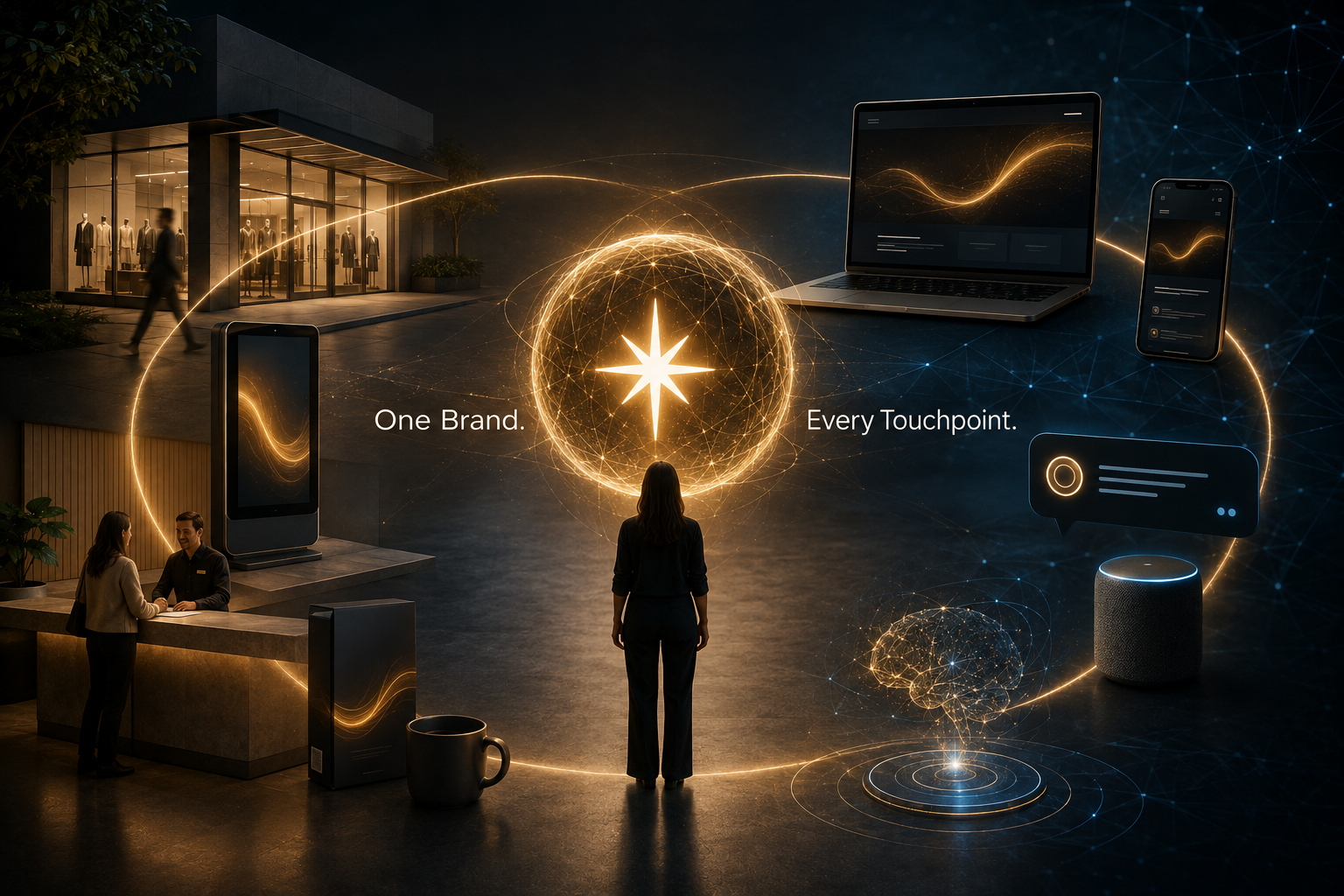
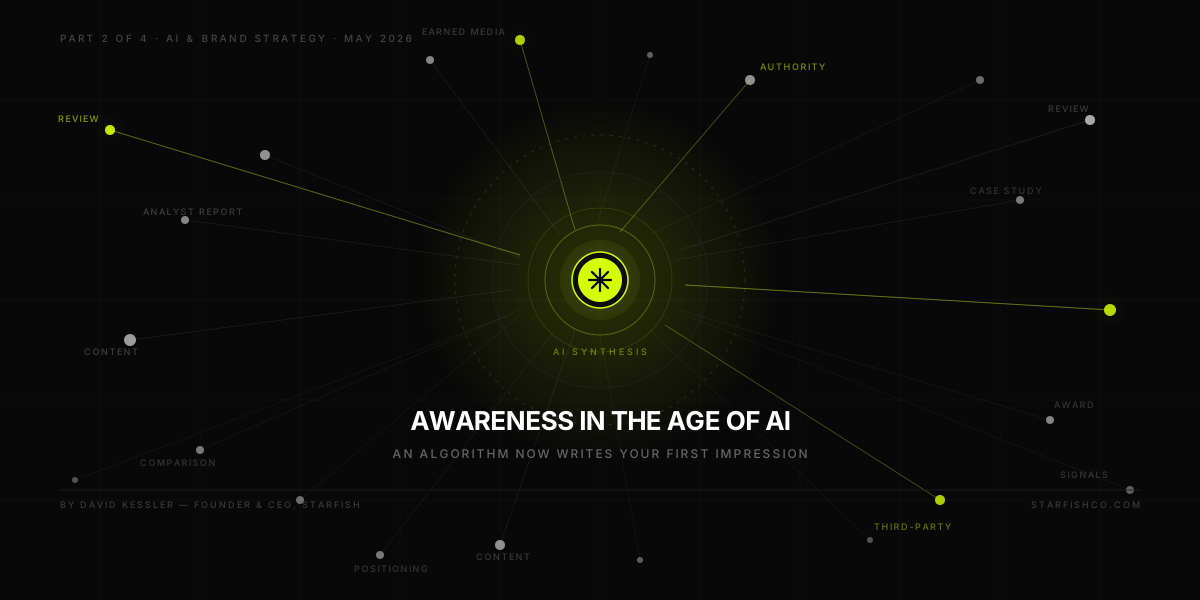
Here’s where the gap turns concrete. Customers increasingly don’t visit your site first; they ask an AI who you are, and it answers in one confident paragraph assembled from everything it ever absorbed about you. A coherent brand earns a summary that reads as if you wrote it. A fuzzy one gets averaged into a generic composite that’s unmistakably not you. You never see it happen; you just quietly stop being chosen. Volume makes it worse: McKinsey and Google note the fastest teams have compressed campaign cycles from six to ten weeks to same-day. At that pace, small inconsistencies stop washing out and start compounding. What used to be a slow leak becomes a burst pipe, and you installed the pump.
None of this shows up in a demo. The demo always dazzles with fluent output, high polish, and intoxicating speed. What it can’t show you is coherence, because coherence only reveals itself at scale, across thousands of pieces over months. By the time incoherence is visible in the market, you’ve already shipped it everywhere. That’s the quiet trap in the adoption-value gap: the tools feel like they’re working right up until you realize they were scaling the problem. AI didn’t create a technology gap. It exposed a meaning gap that was always there.
The cheap question before the expensive spend
None of this argues against investing in AI; the productivity gains are real, and the fast movers are pulling ahead. It argues about the sequence. Most companies ask, “How do we deploy more AI?” when the higher-leverage question costs a fraction as much: Is our brand sharp enough that multiplying it makes us stronger, or just noisier? You can buy a workflow by Friday. You cannot buy a clear, defensible answer to what your brand means; you have to author it, then hold it steady while everything speeds up. Define first and then amplify, and AI becomes the best thing that has ever happened to your marketing. Amplify first and define never, and you’ve built the most efficient brand-dilution machine ever devised.
The winners in the AI world won’t be the fastest or the most-tooled; speed is becoming a commodity anyone can rent. They’ll be the most coherent; clarity at scale that sharpens them instead of blurring them. And coherence is the rare advantage AI can’t commoditize: anyone can rent the tooling, but almost no one has done the unglamorous work of becoming unmistakable. AI equalizes nearly everything, except the one thing that was ever really yours. So before the next platform or agent rollout, spend the cheap hour on the expensive question: not can we make more, but what, exactly, are we about to make ten thousand more of?
Starfish is a Branding and Creative Agency, with unique expertise in Brand Experience, with unique expertise in Brand Experience. We help companies get sharp enough that AI makes them stronger, not blurrier.
Frequently Asked Questions
Read MoreRead Less
Why isn’t our AI investment paying off?
Most AI marketing underperforms because of what it’s pointed at, not the technology. McKinsey and Google’s 2026 research found nearly 60% of marketers use AI weekly, while fewer than 10% of companies capture value, because AI multiplies a brand’s existing clarity or fuzziness rather than creating meaning.
What is the AI adoption-value gap?
It’s the widening distance between how many marketers use AI (around 60% weekly) and how few organizations capture value from it (under 10%), per McKinsey and Google (2026). The gap persists because value depends on brand coherence, not tool access.
Does AI create brand value on its own?
No. AI is a multiplier, not a source of meaning. It amplifies whatever brand definition already exists, making a coherent brand stronger and an incoherent one merely louder.
What should we do before investing more in AI marketing?
Define your brand precisely enough that it can be reproduced without drift: a clear, consistent meaning that ten people, or ten AI agents, would describe the same way, before you scale AI on top of it.