THE AI-READY BRAND: PART 1 OF 5
Your New Customer Doesn’t Have a Heartbeat

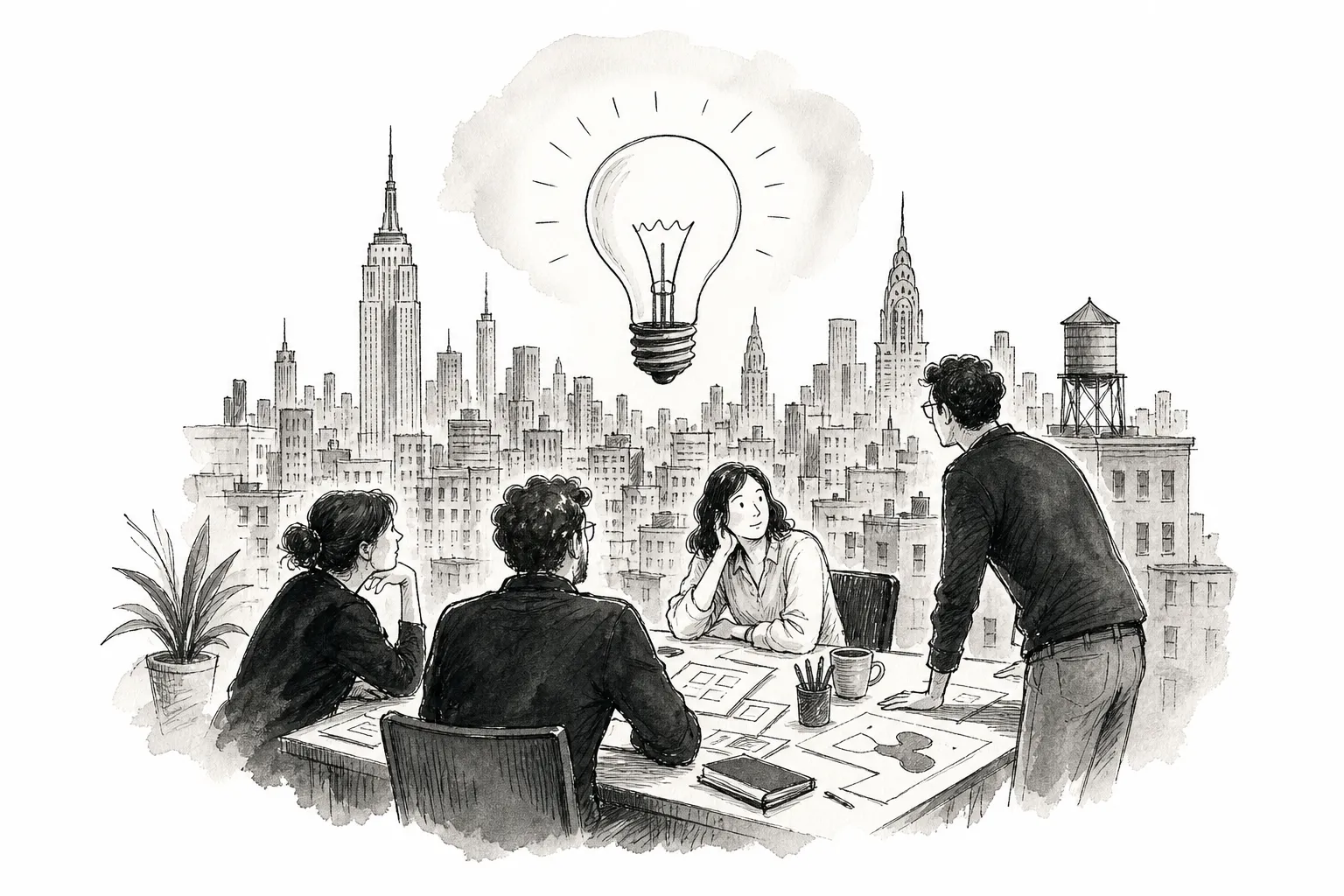
The most important audience for your brand has no heartbeat. It is reading you right now, and describing you to your buyers.
There is a reader you have never designed for, and it is already talking about you.
When a prospect wants to know what your company does, whether you are the right fit, or how you stack up against the field, they increasingly do not start on your website. They ask an LLM such as Claude, Gemini, ChatGPT or Perplexity, and the AI answers instantly, in a confident paragraph that reads as authoritative whether or not it is correct.
Capgemini finds that 58% of consumers have replaced traditional search engines with generative AI tools when they want a product or service recommendation, up from a quarter in 2023. In the 2025 holiday season, traffic to U.S. retail sites from generative AI tools rose 693% year over year, according to Adobe Analytics. The front door to discovery and consideration has moved, and a machine is working the desk.
Preparing for that shift is not a search exercise. A brand prepares for AI-mediated discovery by making its meaning explicit enough to survive being summarized by a system that cannot infer: one agreed account of what the company is, claims that each stand on their own with evidence attached, and a way to see what the machines currently say. Everything else follows from those three.
Call it what it is. Your brand now has a second reader that is operating as an intermediary. The first reader is the human being your marketing was always written for. The second is the LLM that reads your brand alongside them, forms a point of view, and then speaks to them on your behalf. You wrote everything you have ever published for the first reader. Almost none of it was written for the second. And right now, the second reader is the one doing the talking.
To make things more interesting (and difficult), it is not looking you up. It is remembering you.
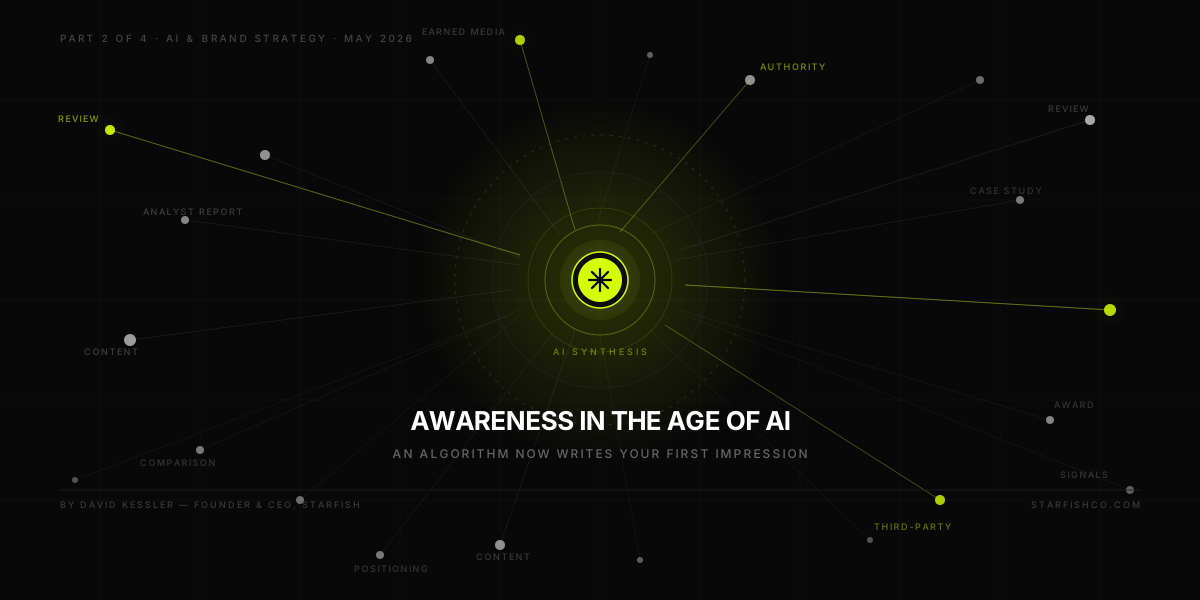
Most leadership teams have not spent the time to understand the underlying mechanics. When a buyer asks an AI about your company, the system does not pull up a single authoritative page and read it back. It draws on everything it has already absorbed about you, leans hardest on whatever it has seen repeated most often across the most sources, and writes back one confident answer. It names some of the sources it used and quietly ignores others. You do not choose those sources. You do not see the answer. And you are not told when it changes.
That is a different problem from the one marketing has spent thirty years solving. Search gave you a ranked list and a fighting chance. If you were not on page one, you were at least on page two. AI discovery has no page two. If your brand does not register clearly with the model, it does not show up lower down. It simply does not appear. The buyer never learns you were an option. You do not lose the deal; you were never in it, and no dashboard will tell you why.
The fundamentals did not change. The reader did.
It is tempting to hear all this and assume everything you know about your brand is now obsolete. It is not. Positioning still decides where you compete. Your value proposition still has to make a clear case for choosing you. Distinctiveness still wins. The discipline of brand strategy is as load-bearing as ever.
What changed is who the brand strategy has to hold up in front of. For decades, your brand only ever had to survive contact with the customer, someone who could infer, forgive a little inconsistency, read between the lines, and give you the benefit of the doubt. The LLMs do none of that. They do not infer your intent. They take the most repeated version of you as the source of truth. They cannot tell your careful positioning from a competitor’s, or your current structure from the one you retired three years ago, unless the difference is written down somewhere clearly enough to survive being summarized. What lived comfortably in the white space of good design now has to be made explicit, or it is lost in translation.
Gartner put a number on how seriously the market takes this. In its 2026 Brand and Business Strategy Survey of 402 senior marketing leaders, 82% said their company’s identity, meaning its mission, brand and culture, will need to change significantly to keep pace with AI’s impact on their markets. More than eight in ten. That is not a fringe worry. That is consensus, and consensus this broad usually arrives just before the scramble.
How a brand prepares for AI-mediated discovery
The description is being written whether you show up or not. Somewhere right now, a model is composing an answer about your company for someone you will never meet, at a moment you will never see, and it is using the raw material it has: your years-old boilerplate, a stale directory listing, a competitor’s comparison page, an analyst note, a forum thread, a press release nobody updated. It is blending all of it into a single, plausible, confident paragraph, and handing that paragraph to your buyer as the truth about you.
That paragraph exists. The only open question is whether you had any hand in writing it.
Most brands are answering that question by accident. They are letting the most-repeated, least-governed version of themselves become the official one, because they have never treated the machine as an audience worth designing for. That is not a technology gap. It is a brand gap, and it is the one that increasingly decides whether you make the shortlist before a human ever weighs in.
The good news is that this is a solvable problem, and it is a strategic one, which means the discipline you already respect is exactly the discipline that fixes it. The bad news is that it does not fix itself, and it gets more expensive to fix every week you leave it alone.
We will get to why in the next piece of this series. For now, sit with the shift. The audience that matters most to your brand’s future may not be a person at all. It is the machine that is reading you today. And it has already made up its mind about what to say.
Frequently Asked Questions
Read MoreRead Less
What is AI-mediated discovery?
AI-mediated discovery is when a buyer learns about a company from an AI system’s answer rather than from the company’s own properties or a ranked list of search results. The system composes a description from sources it has already absorbed, and the buyer usually never sees the company’s own words.
How should a brand prepare for AI-mediated discovery?
A brand prepares by making its meaning explicit enough to survive summarization: one agreed written account of what the company is and owns, claims that each stand alone with evidence attached, and a measured baseline of what AI systems currently say about it. Optimization of individual pages comes after those three, not before.
Is AI-mediated discovery a search problem or a brand problem?
A. It is a brand problem. Search optimization changes where an existing description ranks. AI-mediated discovery is decided by what the description says, which is a question of what is true, coherent and distinctive about the brand at the source.
Why can’t a brand just see what AI says about it?
Because there is no single answer to look at. Each system composes a fresh response per question, per user, and the answer changes as the underlying sources change. Seeing it requires sampling a fixed panel of realistic buyer questions across the major platforms and recording the results over time.
Who inside a company owns how AI describes the brand?
Brand leadership owns it, because the inputs an AI system reads are brand assets: positioning, messaging, boilerplate, the company’s own pages and the third-party profiles built from them. Search and web teams control distribution of those inputs, not their substance, so a brand described wrongly by AI is a brand strategy problem that has landed on a technical team by default.
Can a company prepare for AI-mediated discovery in-house, or does it need an agency?
The measurement is straightforward to run in-house, and several tools will sample what AI systems say about a brand. The harder half is deciding which of the wrong descriptions matters commercially, settling one agreed account of the company across functions that currently describe it differently, and writing claims that survive being quoted out of context. Companies bring in outside help for the settling and the writing, rarely for the sampling.
Related reading: your buyers are already asking AI about you, how to make a brand legible to AI systems, and why undifferentiated B2B brands disappear under AI.
Starfish is a Branding and Creative Agency focused on Brand Experience that builds brands with the soul to move people and the coherence to govern AI.