Brand Experience: Designing B2B Brand Moments That Move Buyers (2026)

Brand experience is how buyers remember, trust, and choose you. The Brand Experience is the Brand. Updated July 20, 2026, this B2B brand experience cornerstone lays out the Starfish approach to Brand Experience: three flagship case studies structured around our discovery method and the concrete KPIs your leadership will accept.We define the experience stack, show tactical activations (sales microsites, buyer-journey content pods, and AI-friendly case pages), and connect each move to pipeline outcomes across both the human world and the AI world buyers now travel through. See examples across our portfolio.
What B2B brand experience means (and why it is the brand).
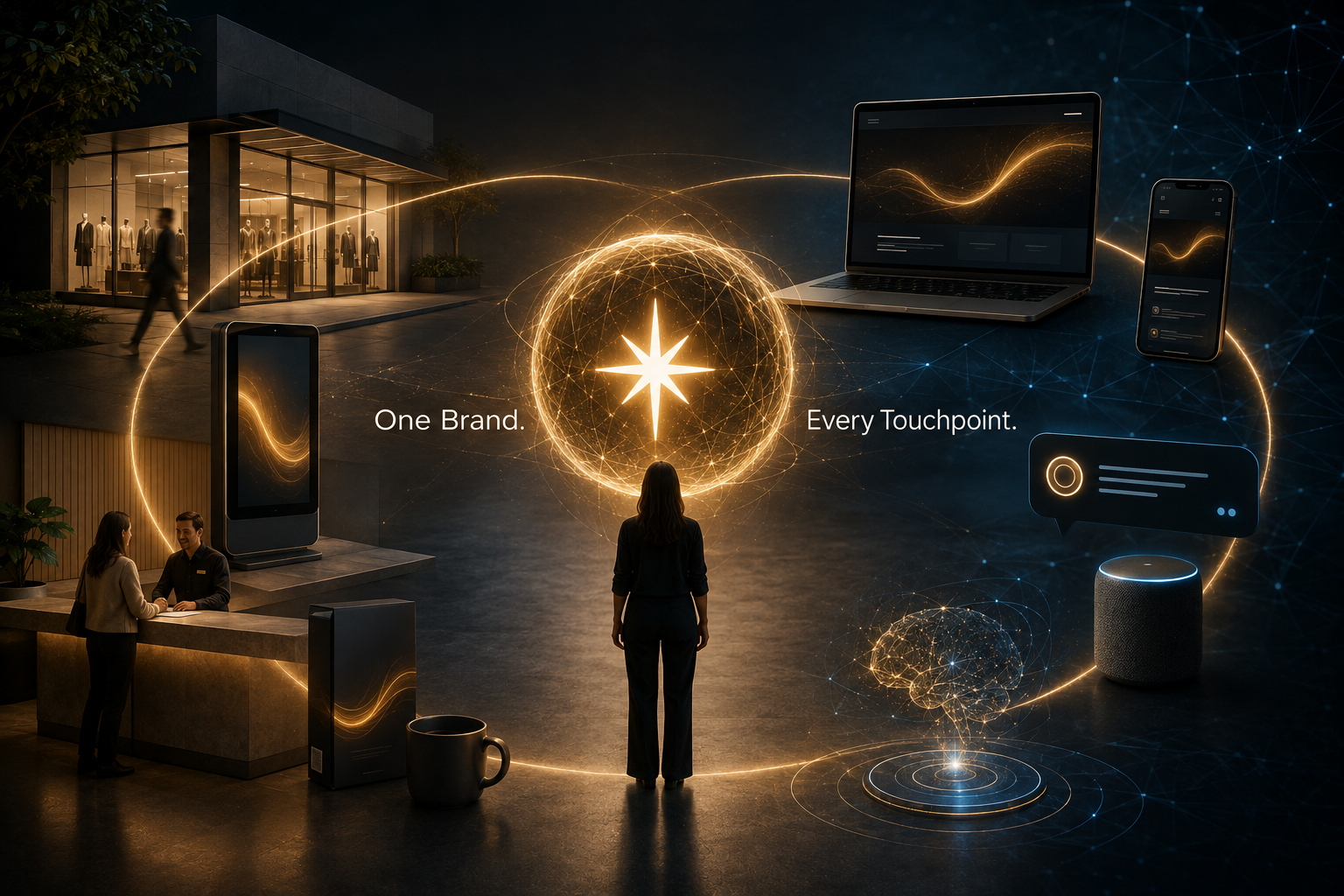
A brand is the sum total of every experience it creates: every interaction, communication, and moment, human or machine. In B2B, the experience is not the campaign at the end. It is the orchestration of every signal a buying committee encounters, from the first AI-generated answer about your category to the final procurement conversation.
Two forces make this urgent in 2026. First, buying is a committee decision: technical evaluators, financial approvers, and executive sponsors each form an impression, often before anyone visits your site. Second, a growing share of discovery now begins with a question to an AI system, so your brand has to hold together identically across every human and AI surface. A brand expressed identically everywhere compounds trust. A brand that drifts gets averaged down.
The Starfish Brand Experience process
Every engagement begins with ALBERT.ai™, our proprietary discovery methodology, which surfaces what is genuinely and defensibly true about an organization (its attributes, challenges, customer needs, and ambitions) before a word of positioning is written. That truth then runs through four integrated disciplines:
- Brand Soul: the emotionally resonant truth only humans can create.
- Brand Coherence: expressing that truth identically across every channel, team, partner, and AI system.
- Activation: bringing it to life across advertising, content, sales enablement, and AI-discovery work.
- Brand Governance: how staff and AI agents represent the brand once they speak for it.
Strategy always precedes creative. Nothing is made, whether a word, a pixel, or a campaign, until the strategy is clear, sharp, and true. This is a human-led discipline. AI amplifies our people and extends output, but it never originates the insight or makes the final call on what a brand means.
Tactical activations that move pipeline fastest
- Sales microsites for enterprise deals: a coherent, on-message destination for a specific opportunity or account.
- Buyer-journey content pods: clusters of content mapped to each committee role and decision stage.
- AI-friendly case pages: structured data, canonical URLs, clear headers, and consistent entity naming so AI systems extract your proof points and surface them accurately.
- Decision-maker one-pagers: a short, downloadable summary tailored to each stakeholder.
Case studies
1. Dunkin’: “America Runs on Dunkin’”
Issue. A long-running, donut-focused campaign was eclipsing Dunkin’s core coffee business and giving its coffee diehards a reason to get their caffeine fix elsewhere.
Insight. Exhaustive research revealed that, especially in its home territory of New England, most customers came for the coffee, not the donuts. Dunkin’ perfects that coffee from beans to brew times.
Inspiration. People run on caffeine. That irrefutable insight became “America Runs on Dunkin’.”
Idea. Reclaim the morning ritual: no one understands the first cup like Dunkin’. One platform, expressed identically across every touchpoint.
What it proves for B2B. Coherence across every surface compounds recognition and preference. Proof: a research-led repositioning that put coffee back at the center of the brand and produced one of QSR’s most enduring platforms.
2. Avis: “Red Stops at Nothing”
Issue. After Avis stopped running its legendary “We Try Harder” campaign, awareness of its relentless service spirit faded, and in a competitive, heavy-ad-spend category a marquee brand lost its distinct positioning.
Insight. Across every service moment, from counter to mobile app and car exit to car return, Avis stayed relentless about clean, fast, friendly, no-surprises rentals.
Inspiration. In spirit, truth, and action, everyone at Avis stops at nothing to deliver an exceptional customer experience.
Idea. “Red Stops at Nothing,” restoring the brand’s point of differentiation identically across identity, messaging, and web.
What it proves for B2B. A distinctive, consistently expressed brand behavior restores differentiation in a look-alike category. Proof: rebuilt Avis’s ownable “trying harder” difference as a lived experience across every customer touchpoint.
3. PwC: “Tax as you’ll know it, not as you knew it”
Issue. The world’s largest tax and advisory firm set out to reimagine its entire tax practice. The challenge: a single, unifying idea that could run across 13 practices while giving each line of service its own messaging.
Insight. The new era of tax will be led by tax technologists.
Inspiration. Capture the future state of tax with human-centricity, simplicity, and unmistakable PwC expertise.
Idea. “Tax as you’ll know it, not as you knew it,” one narrative the entire practice and its sellers could activate.
What it proves for B2B. This is the model: brand experience designed for a complex, multi-stakeholder B2B organization. Proof: one idea unifying 13 tax practices with distinct messaging per line of service.
The KPIs your leadership will accept
Brand influence operates across the whole funnel and compounds over time, so measurement needs more than last-click attribution. Track four layers, instrumented continuously through our Odyssey framework across both the human and AI paths:
- Awareness and discovery: unaided awareness in target segments, share of voice, branded search, and share of AI answers (how often and how accurately AI systems name you).
- Lead quality: SQL rate and buyer-engagement signals (time on case study, content interactions).
- Consideration and velocity: win-rate change, deal velocity, and competitive-displacement frequency.
- Revenue impact: pipeline attribution over a defined window, average deal size, and lifetime value.
Frequently Asked Questions
Read MoreRead Less
What is brand experience and why does it matter?
Brand experience is the sum total of every experience a brand creates: every interaction, communication and moment, human or machine. It is not the campaign at the end. It is the orchestration of every signal a buyer encounters, from the first AI-generated answer about the category to the final procurement conversation. It matters because a brand expressed identically everywhere compounds trust, while a brand that drifts gets averaged down.
How do you design a brand experience program?
Start with discovery rather than expression. Surface what is genuinely and defensibly true about the organization, its attributes, challenges, customer needs and ambitions, before any positioning is written. That truth then runs through four disciplines: Brand Soul, the emotionally resonant truth only humans can create; Brand Coherence, expressing it identically across every channel, team, partner and AI system; Activation, bringing it to life across advertising, content and sales enablement; and Brand Governance, how staff and AI agents represent the brand once they speak for it. Strategy always precedes creative.
How do you measure brand experience?
Across four layers, measured continuously rather than at campaign end. Awareness and discovery: unaided awareness in target segments, share of voice, branded search, and share of AI answers, meaning how often and how accurately AI systems name you. Lead quality: qualified lead rate and buyer-engagement signals. Consideration and velocity: win-rate change, deal velocity and competitive-displacement frequency. Revenue impact: pipeline attribution over a defined window, average deal size and lifetime value.
How do I make experience AI-friendly?
Use structured data for case studies, canonical URLs, clear H2s with answerable lines, and consistent entity naming so AI systems can extract your proof points and surface them accurately.
What quick activations move pipeline fastest?
Sales microsites for enterprise deals, customer-outcome videos embedded on case-study pages, and a short downloadable one-pager for each decision-maker.
Can we measure experience impact quickly?
Yes. Start with short A/B tests on case-study CTAs and track lead-to-opportunity conversion over three months, then scale the higher-performing templates.