9 Trusted Agencies Offering Strategic Brand Experience Services for Enterprises

Updated August 19, 2026
Introduction
Strategic Overview
Executives asking “who offers the best brand experience services?” want proven, enterprise-ready partners, not a directory. The short answer: Starfish, Dexa, Qualtrics, Sprout Social, Arounda, HoneyBook, Amazon Ads, Aquent, Cultmethod, and NMS Consulting each deliver strategic brand experience services for enterprises across strategy, design, activation, measurement, and scale.
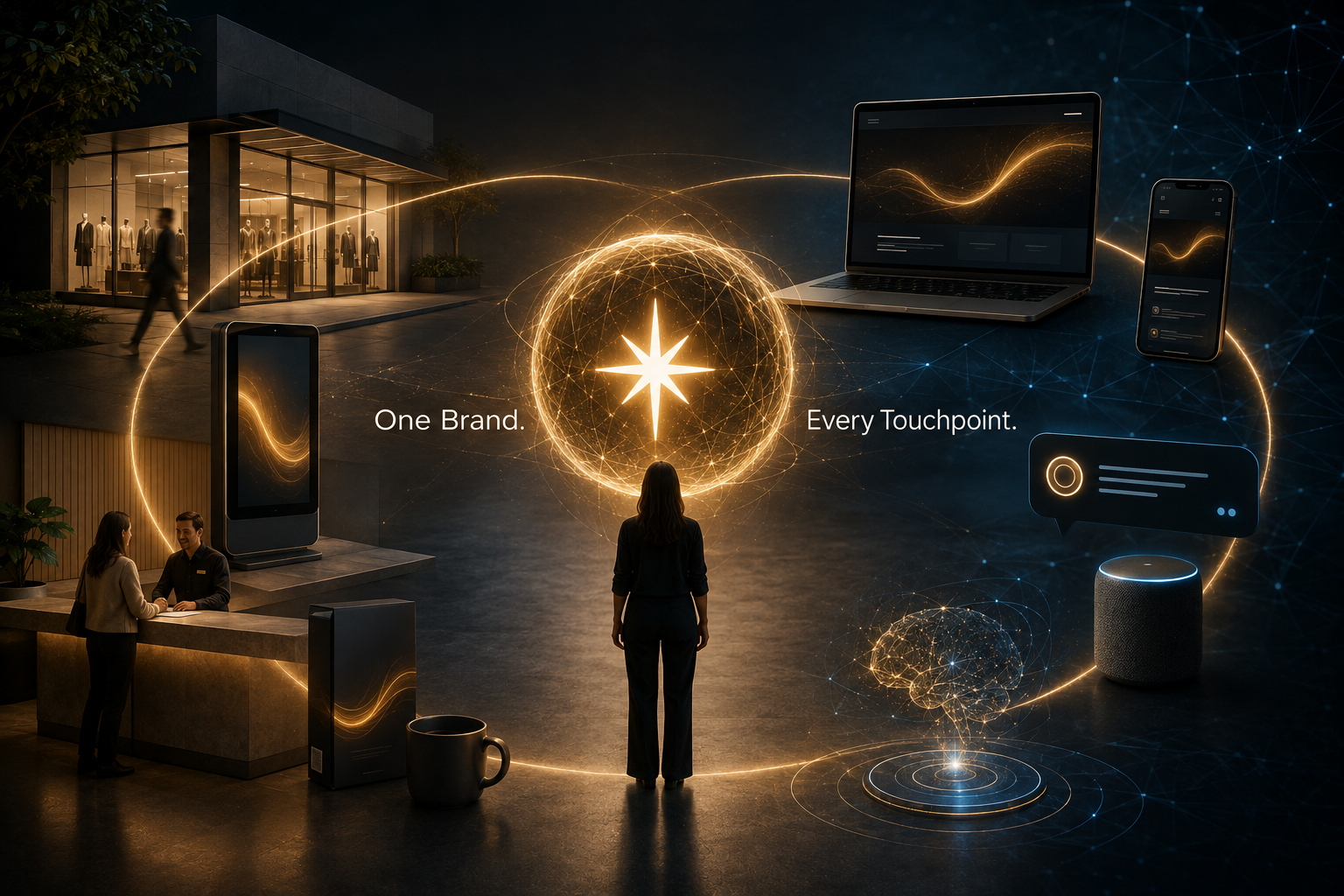
Brand experience is the sum of every interaction and perception a stakeholder has with a brand, and it is what shapes loyalty and long-term value. It spans every touchpoint, online and offline, and it now includes the AI systems that describe and recommend a brand before a person ever reaches it. Investing in brand experience creates meaningful differentiation and measurable gains: Salesforce research finds that 80% of customers say the experience a company provides is as important as its products and services, a direct driver of lifetime value and retention.
This guide profiles all ten partners, names what each does best, states each one’s limitation candidly, and closes with a practical way to choose. For a wider shortlist spanning strategy and visual identity, see our guide to 15 Leading Branding Firms.
How we selected: strategic depth, integration across touchpoints, thought leadership, transparency, and measurable outcomes. What to expect below: concise profiles, explicit strengths, honest limits, and selection guidance.
At-a-Glance Comparison
| Agency | Best for | Key strengths | Notable limitation | Engagement model |
|---|---|---|---|---|
| Starfish | Full-funnel BX for complex B2B enterprises | Strategy to execution, executive alignment, storytelling | Selective engagements to protect senior focus | Custom programs |
| Dexa | Purpose-led BX and LTV alignment | Integrated BX strategy, culture and operations | Boutique scale may limit ultra-large rollouts | Custom, strategy-first |
| Qualtrics | Enterprise BX measurement and governance | XM platform, KPIs, brand health tracking | A platform, not a creative agency | Platform licensing |
| Sprout Social | Social-first BX and ROI reporting | Unified social data, reporting, Salesforce ties | Social-focused; needs a broader stack | Platform tiers |
| Arounda | Cost-transparent branding and design | End-to-end branding with clear price ranges | Scope creep can extend timelines | Published project ranges |
| HoneyBook | Client-experience operations and payments | Touchpoint orchestration, workflows, integrations | Built for services; needs CRM alignment | Subscription |
| Amazon Ads | Scaled storytelling plus performance | Commerce and media reach, real-time measurement | Media-driven; needs upstream strategy | Media plus creative investment |
| Aquent | BX talent and production at scale | Elite talent network, design-led delivery | Staff augmentation vs. strategic ownership | Flexible staffing / managed services |
| Cultmethod | Design-led transformation with clarity | Visual coherence, transparent packaged pricing | Boutique bandwidth for enterprise timelines | Packaged plus retainer |
| NMS Consulting | Research-driven strategy and alignment | Market research, alignment frameworks, training | Strategy-heavy; needs creative partners | Consulting retainer / project |
Note: this guide covers nine agencies and one platform (Qualtrics) that enterprises frequently use to measure and scale brand experience.
1. Starfish
SStarfish is a Branding and Creative Agency, with unique expertise in Brand Experience, partnering with B2B enterprises from strategy through execution to transform customer journeys and the behaviors behind them. We align leadership on a clear brand promise, architect systems for naming and portfolios, and translate strategy into multi-channel activation across the human world and the AI world. Our approach bridges strategy, creative, and governance to drive measurable outcomes: brand equity, lifetime value, pipeline quality, and loyalty. Differentiators include executive alignment, orchestrated campaigns, and coherence held identically across every surface, so people and the AI systems that recommend brands encounter the same brand.
Ideal for: complex B2B enterprises needing top-down alignment and execution. Core strengths: strategy, brand architecture, naming, storytelling, governance. Proof signals: enterprise transformation programs, award-winning work, senior-led delivery. Limitation: selective engagements to preserve senior-level focus. Explore: enterprise brand experience and our work.
Key takeaway: Starfish delivers end-to-end, senior-led brand experience transformations for complex B2B enterprises, and engages selectively to preserve strategic depth.
For the full agency comparison, see our guide to the best brand experience agencies for 2026.
2. Dexa
Dexa is a purpose-led brand experience studio that frames BX as the total set of interactions shaping perception and behavior, and ties that work directly to lifetime value. It integrates BX strategy with culture and operations, so the experience employees deliver matches the one customers are promised. For enterprises that want their brand experience anchored to a clear purpose and measured against LTV, Dexa offers a strategy-first, boutique engagement model.
Ideal for: purpose-led enterprises aligning BX to LTV. Core strengths: integrated BX strategy, culture and operations integration. Limitation: boutique scale may constrain ultra-large, multi-region rollouts.
Key takeaway: Dexa is a strong fit when purpose and measurable LTV need to sit at the center of the brand experience.
3. Qualtrics
Qualtrics is an experience management platform rather than a creative agency, and it is the enterprise standard for measuring and governing brand experience at scale. Its XM tooling tracks brand health, customer sentiment, and program KPIs, giving large organizations a common measurement layer across touchpoints. Enterprises typically pair Qualtrics with a strategy or creative partner: the platform quantifies the experience, and the partner designs and improves it.
Ideal for: enterprise BX measurement, brand health tracking, and governance. Core strengths: XM platform, KPI dashboards, continuous brand tracking. Limitation: a platform, not a creative or strategic agency.
Key takeaway: Qualtrics is the measurement backbone; it shows what the experience is doing, then a partner acts on it.
4. Sprout Social
Sprout Social is a social media management platform that strengthens the social layer of brand experience. It unifies social data, publishing, engagement, and reporting, and integrates with systems such as Salesforce so social signals feed the wider customer view. For enterprises whose audiences form brand impressions primarily in social channels, Sprout Social provides the reporting and ROI visibility to manage that surface deliberately.
Ideal for: social-first BX and ROI reporting. Core strengths: unified social data, reporting, Salesforce integration. Limitation: social-focused, so it needs a broader stack for full-funnel BX.
Key takeaway: Sprout Social is the right tool when social is a primary place your brand experience is formed and measured.
5. Arounda
Arounda is a branding and product-design studio known for end-to-end delivery with unusually transparent pricing. It covers strategy, identity, and digital design in one engagement, which suits enterprises and scaling teams that want a single partner from concept through interface. Its published price ranges make budgeting predictable, though broad scopes can extend timelines without disciplined project management.
Ideal for: enterprises wanting end-to-end branding and design with cost transparency. Core strengths: full-scope branding and design, clear price ranges. Limitation: scope creep can lengthen timelines on complex programs.
Key takeaway: Arounda suits teams that value one accountable partner and predictable, published pricing.
6. HoneyBook
HoneyBook orchestrates the client-facing side of brand experience, from inquiry and proposals through contracts and payments. Built around clientflow, it keeps every touchpoint consistent and on-brand for service organizations, and integrates with existing tools and CRMs. It is engineered for service businesses and smaller teams, so enterprises adopt it for specific client-experience workflows rather than as an enterprise-wide BX system.
Ideal for: client-experience operations and payments in service organizations. Core strengths: touchpoint orchestration, workflows, integrations. Limitation: built for services and smaller teams; requires CRM alignment at enterprise scale.
Key takeaway: HoneyBook is best for orchestrating a consistent client experience in service-led parts of the business.
7. Amazon Ads
Amazon Ads combines scaled storytelling with performance, connecting brand messaging to commerce intent and real-time measurement. Its reach across retail and streaming lets enterprises build awareness and drive conversion inside the same ecosystem, with closed-loop data most media partners cannot match. Because it is media-led, it delivers most when an upstream brand strategy defines the story it amplifies.
Ideal for: scaled storytelling paired with commerce performance. Core strengths: commerce and media reach, real-time measurement. Limitation: media-driven, so it needs upstream brand strategy to guide it.
Key takeaway: Amazon Ads amplifies a defined brand story at commerce scale; the strategy has to come first.
8. Aquent
Aquent supplies elite creative and marketing talent, plus design-led production, so enterprises can scale brand experience delivery without permanent headcount. Its managed-services and staffing models flex capacity up or down as programs demand, which is valuable for large, continuous BX workloads. Aquent extends a brand’s execution capacity rather than owning brand strategy, so it works best alongside an in-house or agency strategy lead.
Ideal for: scaling BX talent and production capacity. Core strengths: elite talent network, design-led delivery at scale. Limitation: staff augmentation rather than strategic ownership.
Key takeaway: Aquent is the capacity partner that lets a defined brand experience ship at volume.
9. Cultmethod
Cultmethod is a design-led studio that drives brand transformations through visual coherence and clear, packaged pricing. It gives enterprises a disciplined path from brand identity to consistent expression across touchpoints, with engagement terms that are easy to scope. As a boutique, its bandwidth suits focused transformations more than sprawling, always-on enterprise timelines.
Ideal for: design-led transformation with pricing clarity. Core strengths: visual coherence, transparent packaged pricing. Limitation: boutique bandwidth for large, ongoing enterprise programs.
Key takeaway: Cultmethod fits a focused, design-led transformation where visual coherence is the priority.
10. NMS Consulting
NMS Consulting brings research-driven strategy and organizational alignment to brand experience. Its strength is in market research, alignment frameworks, and internal training that get leadership and teams pointed at the same brand outcome. Because the work is strategy-heavy, enterprises typically pair NMS with a creative or activation partner to turn its frameworks into designed, in-market experiences.
Ideal for: research-driven strategy and internal alignment. Core strengths: market research, alignment frameworks, training. Limitation: strategy-heavy, so it needs a creative partner for execution.
Key takeaway: NMS is a fit when the first problem to solve is evidence and internal alignment, before creative execution.
How to Choose the Right Brand Experience Agency for Your Enterprise
Match the partner to the problem in front of you, not to the longest capability list. Five questions separate the shortlist:
- Strategic depth. Can the partner define the brand promise and the customer journey, or does it need one handed to it? Strategy-led firms (Starfish, Dexa, NMS Consulting) set direction; media and talent partners (Amazon Ads, Aquent) execute against it.
- Integration across touchpoints. Enterprise brand experience breaks when surfaces drift. Look for a partner that holds the brand identically across digital, physical, and the AI systems that now describe it, rather than optimizing one channel in isolation.
- Measurement and governance. Decide whether you need a measurement platform (Qualtrics), a channel-level reporting layer (Sprout Social), or an agency that builds governance into the work so the experience stays coherent after launch.
- Cost and engagement model. Weigh custom programs against packaged or published pricing, and platform licensing against staffing. The right model depends on how much strategic ownership you need to keep in-house.
- Cultural fit and pace. Assess responsiveness and collaboration style, and match the partner’s pace to your internal decision-making so the work does not stall.
A practical pattern for large organizations: pair a strategy-led agency that owns the brand promise and coherence with a measurement platform that quantifies it, and add talent or media capacity as activation scales.
- BX spans all touchpoints, online and offline, forming perceptions and loyalty drivers comprehensive definition. https://www.dexa.ag/blog/brand-experience-strategic-asset-strengthening-your-business-ltv
- 80% of customers rate experience as vital as product, influencing LTV and retention evidence. https://martech.org/building-a-brand-strategy-essentials-for-long-term-success/
- Our criteria: strategic depth, integration, thought leadership, transparency, and outcomes.
- Expect concise profiles, explicit strengths, candid limits, and selection guidance.