Brands for the Age of AI: How to Get Recommended, Not Just Found
Brand discovery has changed more in two years than in the previous twenty. Here is what that means for how you build a brand that AI recommends, and people remember.
For most of the internet era, a brand had one job online: rank. Reach page one of Google, earn the click, make the sale. SEO was the game, content volume was the scoreboard, and visibility meant search visibility.
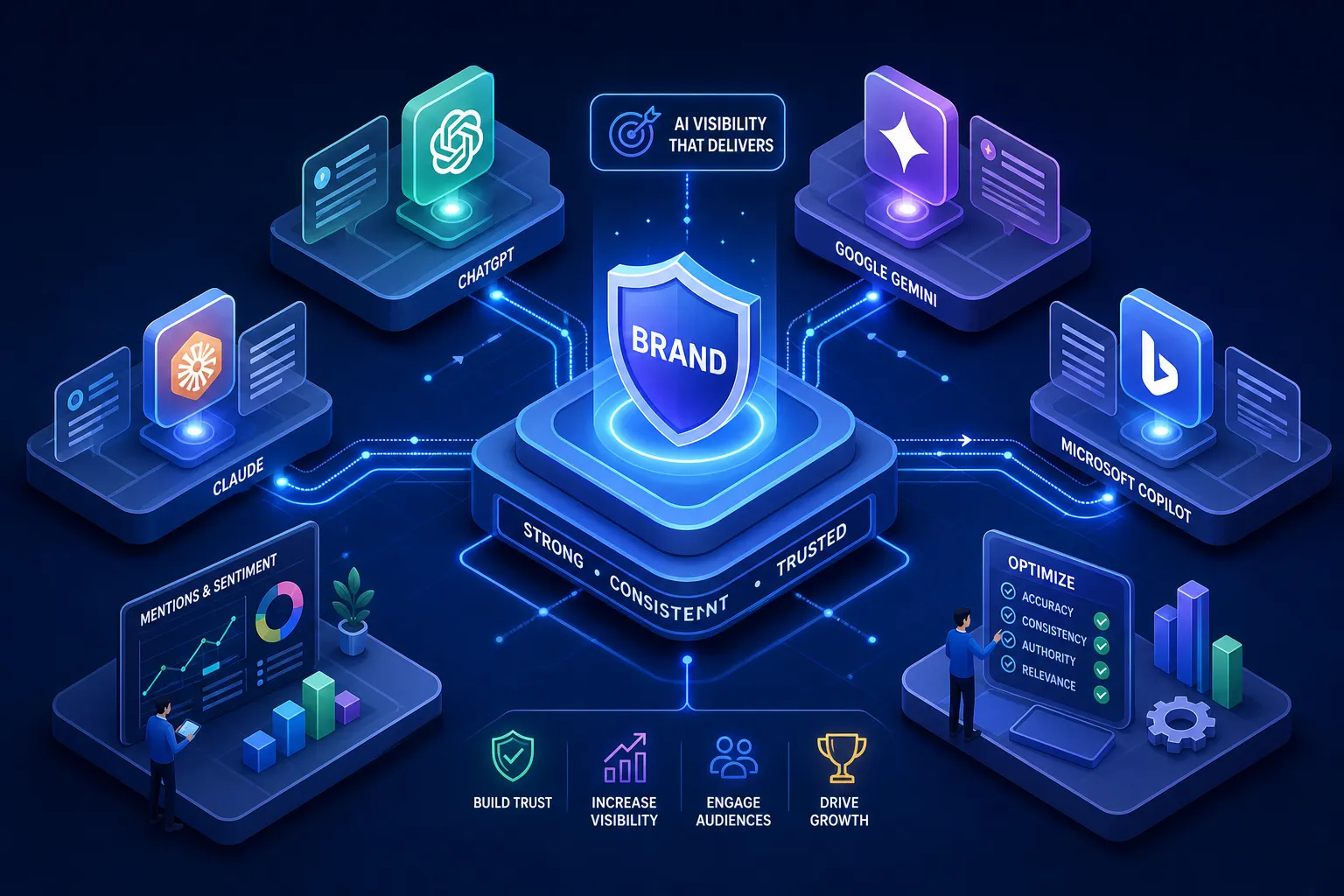
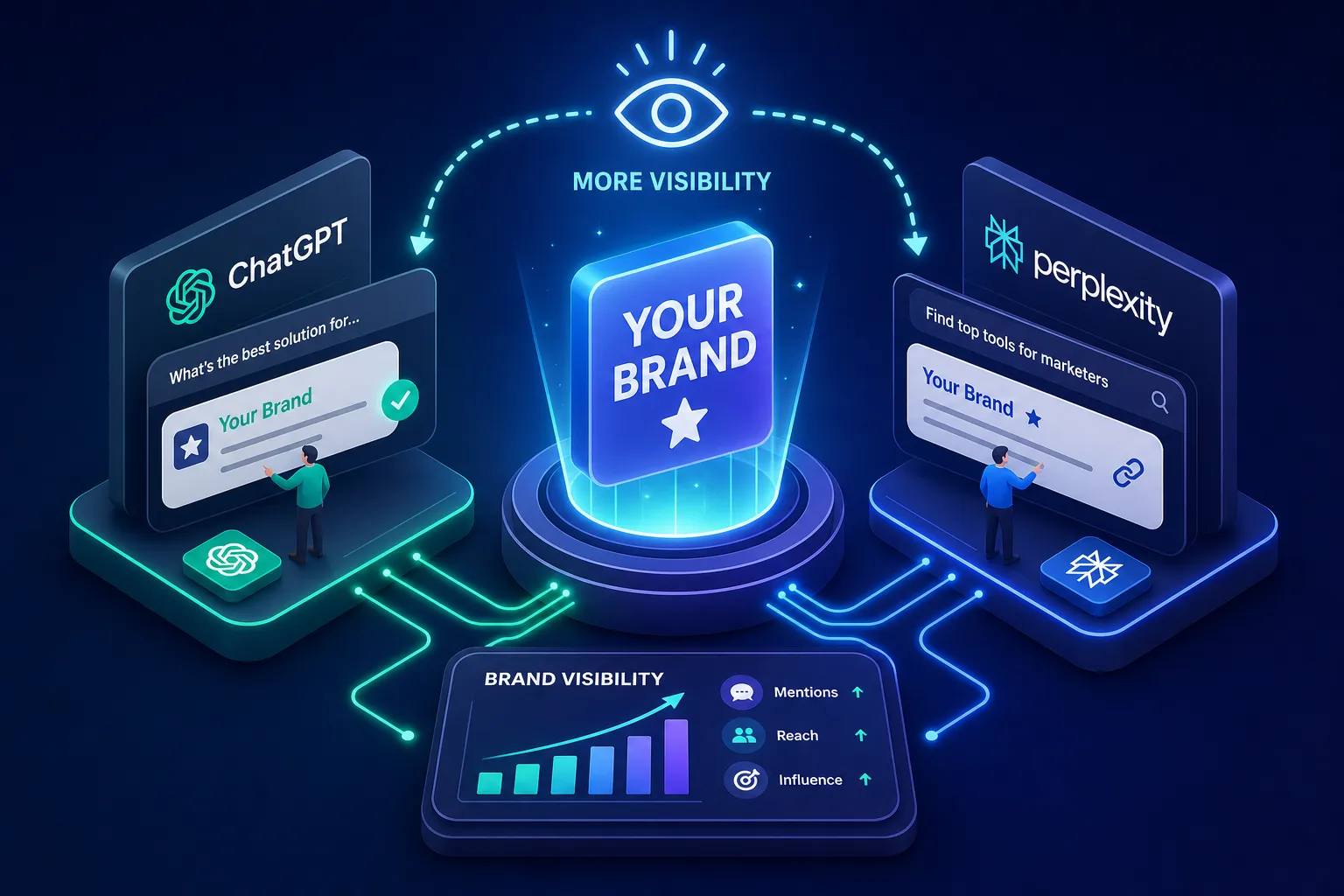
That model is breaking. Gartner projects that traditional search engine volume will drop 25% by 2026 as buyers shift to AI assistants. A growing share of brand discovery now happens inside answer engines: ChatGPT, Perplexity, Gemini, Claude, and Google’s AI Overviews.
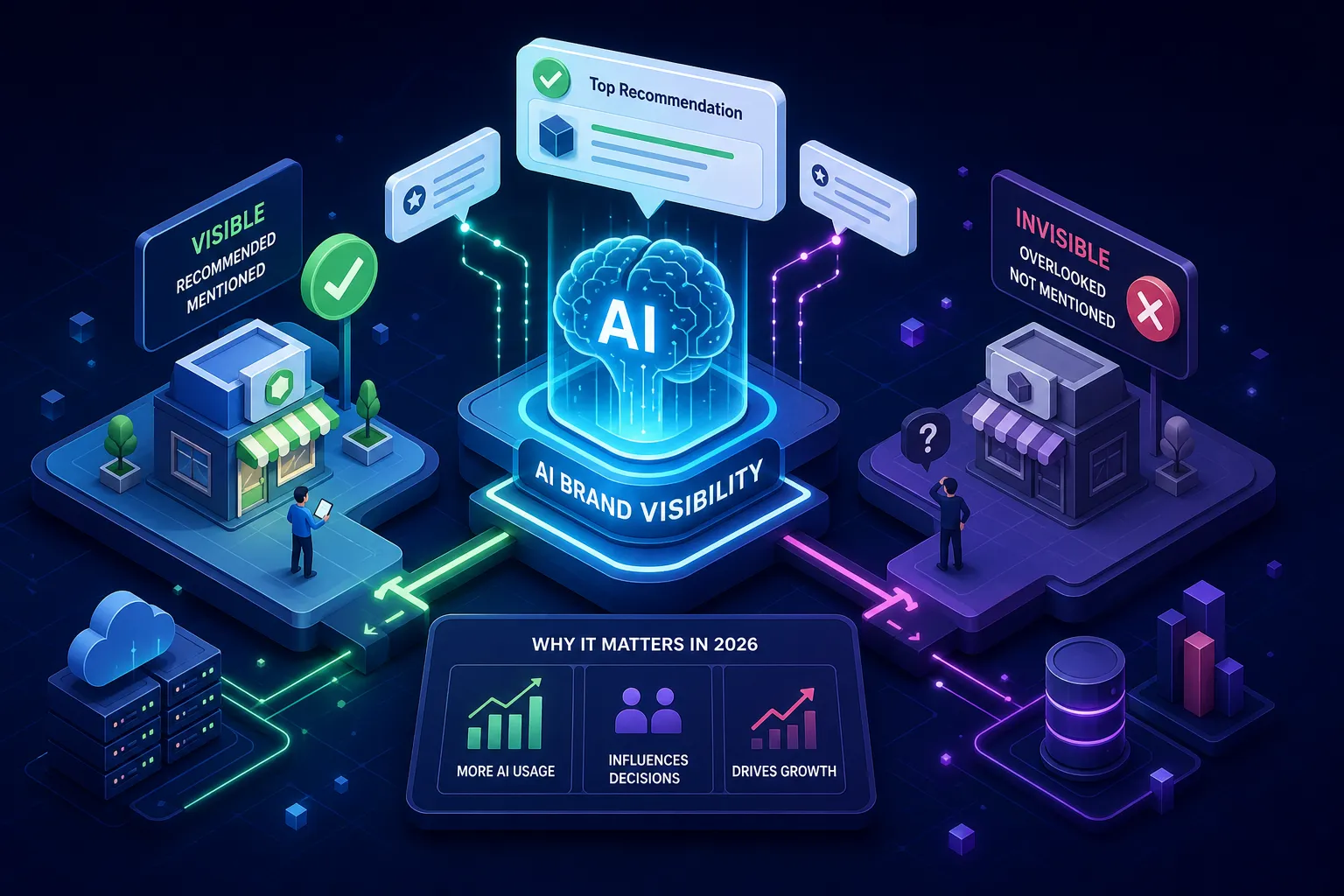
Picture a VP of Marketing typing, “what agency should we hire for a healthcare rebrand?” She is not scanning ten blue links. She is reading one synthesized, confident answer from a system that has digested millions of documents and formed a view. Your brand is either named in that answer or it is invisible, and what the AI says about you matters as much as whether it mentions you at all.
What AI Answer Engines Do That Search Engines Never Did
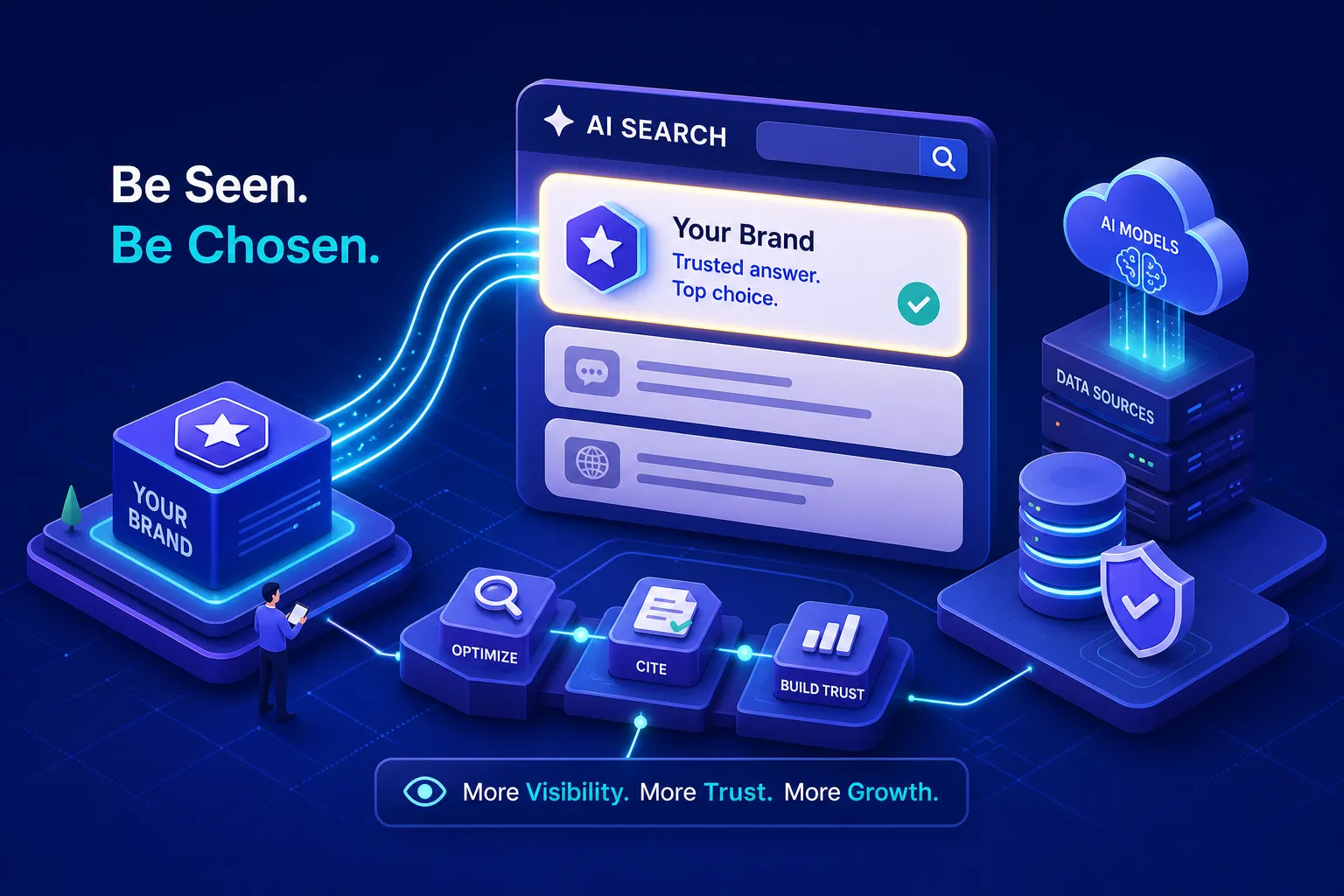
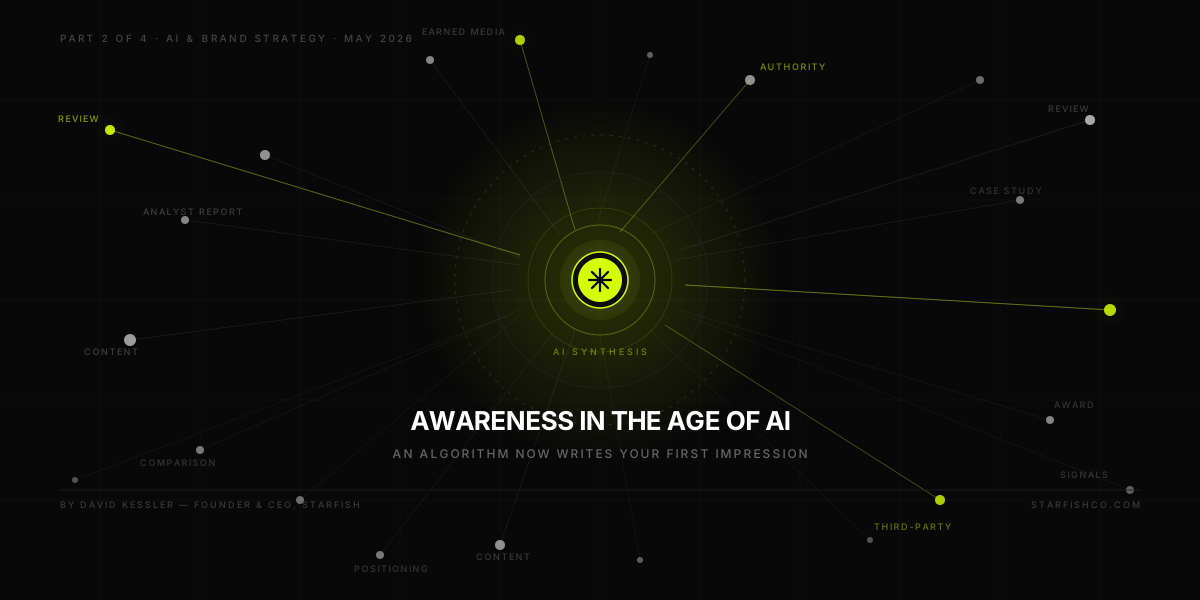
Search engines index and rank. Answer engines synthesize and recommend. That distinction reshapes brand strategy, because synthesis requires understanding, not retrieval. When Google crawled your site in 2012, it hunted for keywords. When ChatGPT draws on your content today, it is building a model of what you do, who you serve, and how you differ from the alternatives.
If that model is blurry, you get described in generic terms or skipped. If it is sharp and specific, you get named the moment someone asks the exact question you were built to answer. The discipline of optimizing for this has a name, Generative Engine Optimization, first formalized in 2023 research from Princeton and collaborators, but the tactics only work when there is a clear, credible brand underneath them.
Why Most Brand Strategies Weren’t Built for Two Worlds
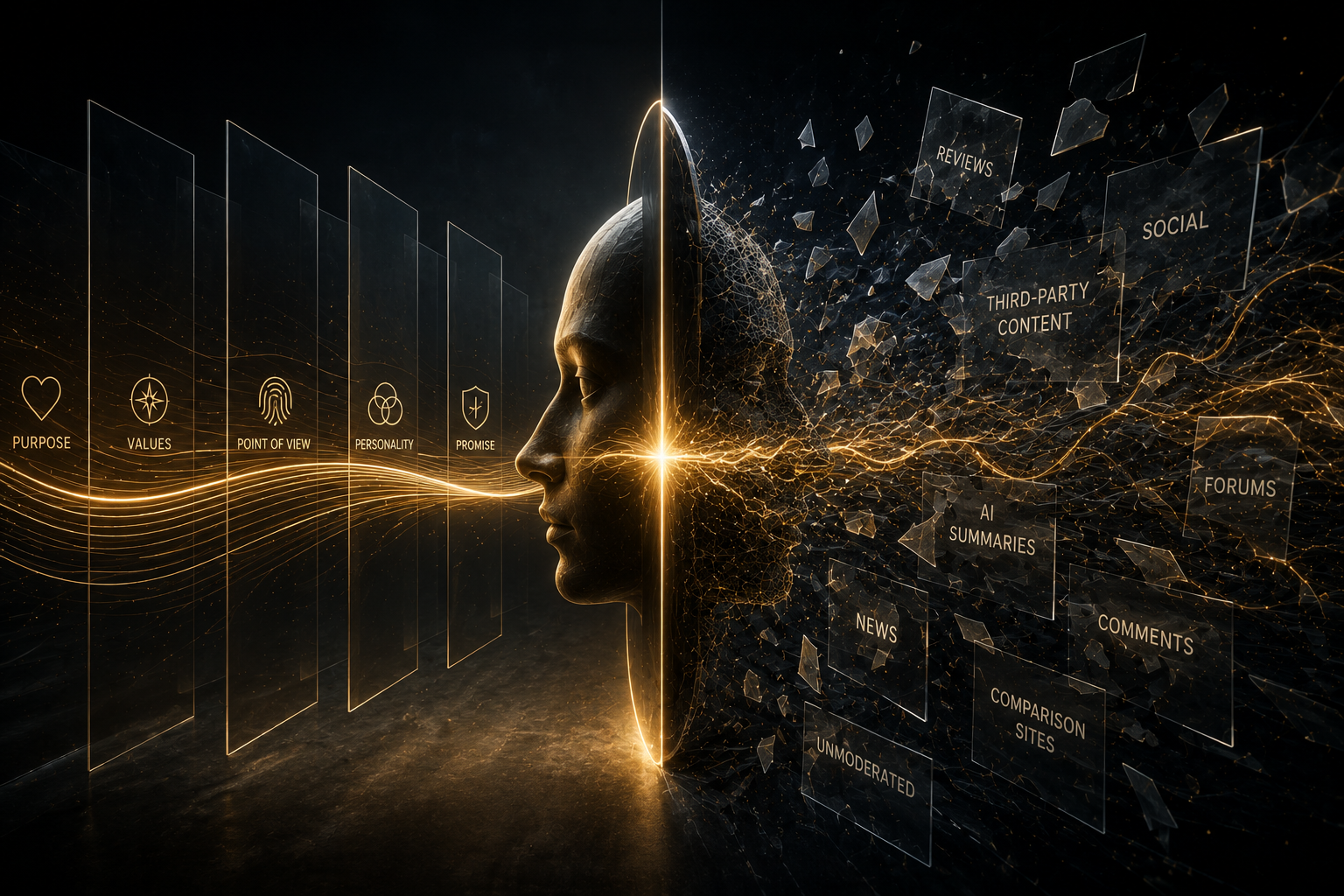
Most brand strategies were built for a single audience: a human already motivated to engage, who reads a headline, clicks around, and forms an impression over time. AI readers behave differently. They average. They form views from the totality of what has ever been written about you, your homepage, your LinkedIn, a conference recap, a three-year-old review. If your message has drifted, or different surfaces say different things, the picture fragments.
Generic brands are effectively invisible to AI, not because the model can’t find them, but because when it describes them, they sound like everyone else. “A full-service creative agency focused on delivering results” gives the machine nothing to grip. The brands winning in AI-mediated discovery have made a choice many firms still resist: they narrowed the claim, sharpened the voice, and said something a competitor could not copy.
What Makes a Brand Legible to AI, Without Losing Its Soul
An AI-legible brand is one a language model can describe accurately in two sentences, without hedging, in a way that makes the right buyer recognize themselves. Three things make that possible:
- Specificity of positioning. Not “we help companies grow” but “we rebuild brands for healthcare and professional-services firms after a merger.” The sharper the claim, the more precisely AI can match you to a query.
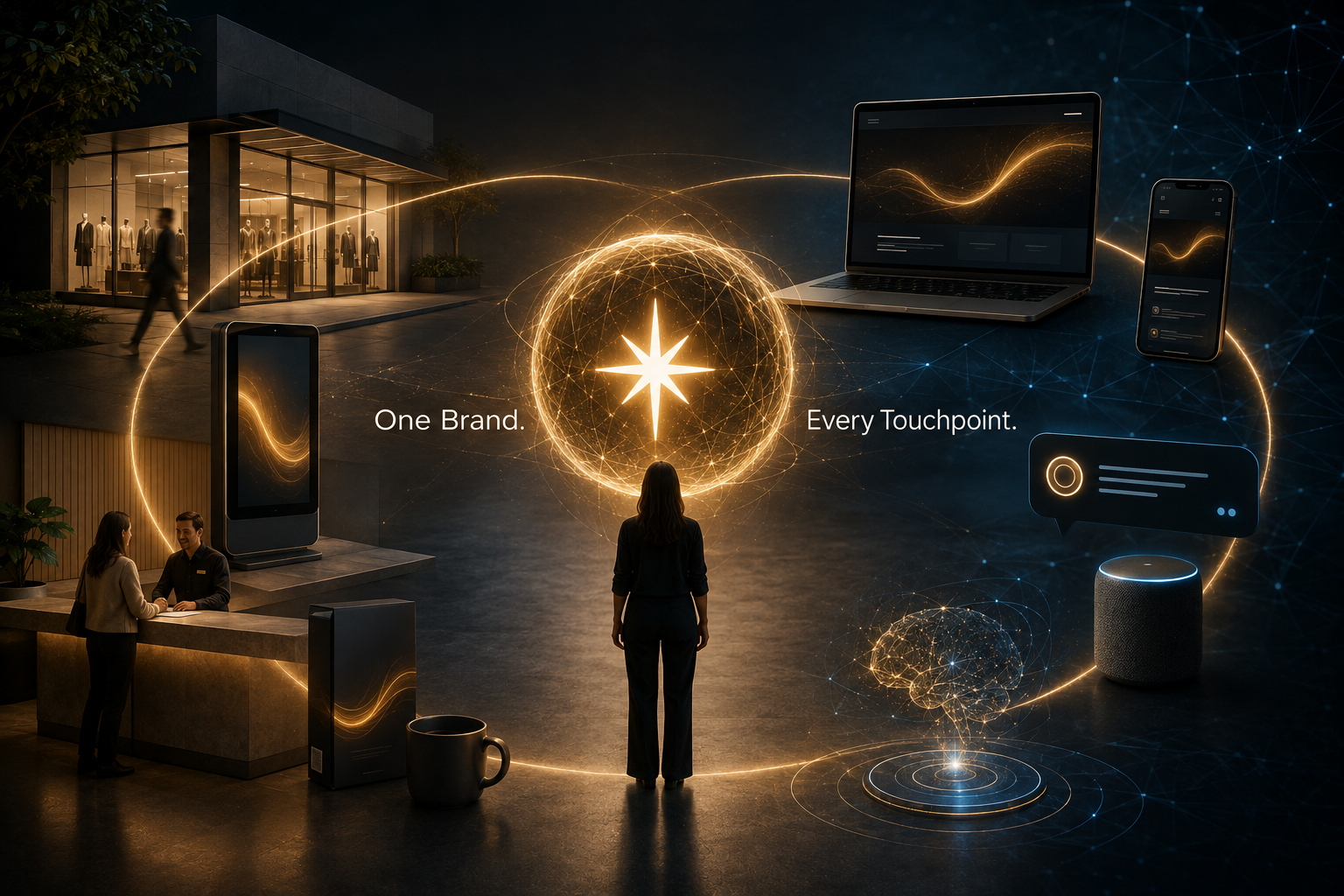
- Coherence across every surface. AI doesn’t read your site once; it reads everything. When your website, profiles, press, and partner listings make the same core claims in the same language, the model converges on one definitive picture of you. When they diverge, it fragments.
- Third-party validation. Answer engines weight trusted sources heavily. One mention in a credible trade publication carries more signal than a dozen posts on your own domain.
The One Thing AI Can Never Manufacture
Here is the part the optimization crowd misses. AI does not create the brands that define their categories. People do. AI can optimize, rank, and produce at scale, but it cannot generate the insight that makes a person feel something, or take the creative risk that changes how a category sees a brand. That spark, what we call Brand Soul, is uniquely human by design, and it is precisely what specificity-hungry AI systems reward, because authenticity is the currency both people and machines require.
So the supposed tension between writing for machines and writing for humans is mostly false. Humans trust specific claims over generic ones. Humans share, cite, and link to work that says something real. AI is trained on that human behavior. A brand built to earn human trust, expressed in clear and consistent language, is the same brand that gets recommended by AI.
How Starfish Builds for Both Worlds at Once
This is the conviction Starfish was built on: a brand is not what you say, it is the sum of every experience your customers have with it. For more than 20 years, we have built brands on that principle for PwC, Gallup, Dunkin’, Samsung, and hundreds of other market leaders. As the Brand & Creative Intelligence™ agency, we now build for the human and AI worlds simultaneously, from day one.
Before a word of positioning is written, we deploy ALBERT™, our proprietary discovery methodology, to surface what is genuinely, defensibly true about an organization, its attributes, challenges, customer needs, and ambitions. That truth then runs through three integrated disciplines:
- Brand Soul: the strategic discipline of finding what a brand genuinely is: anchored to its DNA, distinct from competitors, and emotionally resonant for the people it must move.
- Brand Coherence: the governance discipline of expressing that truth identically and authoritatively across every channel, team, partner, and AI system that will encounter it.
- Intelligent Activation™: bringing the brand to life across advertising, content, social, earned media, and the AI-discovery work that is never separated from the human creative work.
And because what gets measured gets managed, our Odyssey™ framework tracks brand health continuously across both paths — from top-of-mind awareness and AI discoverability through authority, engagement, and loyalty. You can see what this looks like in practice across our services and case studies.
This is also where the alternatives fall short. Traditional branding agencies can give a brand soul but leave it illegible to machines. The new wave of GEO and AEO point-tools can chase AI citations but have no soul to anchor them, so the brand they amplify still sounds like everyone else. Starfish is built to do both, in one integrated practice.
What Hasn’t Changed
Brand fundamentals haven’t moved. A clear position. A specific audience. A distinct voice. An honest answer to why a buyer should choose you over a capable competitor. The brands that do well in the age of AI are mostly the ones that did the foundational work well before AI was a factor.
What has changed is the urgency and the mechanism. Brand clarity now has an audience that reads everything, forms instant views, and mediates discovery for a growing share of the market. The penalty for vagueness is higher; the reward for specificity is more immediate. The AI is still learning, and the brands that get their story straight now will be the ones it learns from.
Built to Be Understood, Remembered, and Recommended
The work is the same work it has always been: figure out what makes you worth choosing, say it clearly, and say it in every room where your buyers might be listening. The rooms have just gotten a lot larger, and some of them are now machines.
At Starfish, we build brands that are built to last, which today means built to be understood, remembered, and recommended by both the people and the systems that shape buying decisions. Start a conversation with us.
Emotionally meaningful to people. Intelligently discoverable to machines.