The Best Brand Naming Agencies and Firms for Nomenclature in 2026

TL;DR: Choosing a brand naming partner used to mean picking between nomenclature specialists and full-service agencies. That divide is fading. A brand now has to work in two worlds at once, the human world where people judge it and the AI world where systems recommend it, so the best naming partner is the one who ties a name to strategy, architecture, and discoverability, not just linguistics. This guide explains what brand nomenclature strategy is, how the naming process works from discovery through legal clearance, which specialist and integrated firms lead in 2026, and what actually drives naming cost. Use it to match your needs, budget, timeline, and trademark complexity to the right partner. Starfish approaches naming as part of an integrated, human-led brand strategy, built for both the human world and the AI world. For how naming fits into portfolio design, see our Brand Architecture service.
See Our Naming Case Studies
Updated August 14, 2026. A brand name now has to perform in two worlds at once: the human world, where people judge it, and the AI world, where recommendation systems decide whether it surfaces at all. This guide profiles the leading nomenclature specialists and integrated agencies of 2026 and explains how the best partners tie naming to strategy, brand architecture, trademark clearance, and discoverability. Cost is driven by scope, research depth, stakeholder complexity, and activation, so use this guide to match your needs, timeline, and trademark risk to the right partner.
For most of the last decade, choosing a brand naming partner meant picking a side. On one side sat the nomenclature specialists, firms like Catchword Branding, River + Wolf, and Lexicon Branding that do nothing but develop names. On the other sat full-service branding agencies that fold naming into a larger engagement. That split is breaking down. Brands now live and compete in two worlds at once: the human world, where people form opinions, and the AI world, where systems increasingly decide what people see and believe about a company. In that environment, the most useful naming partner isn’t the one with the narrowest focus. It’s the one who can tie a name to strategy, architecture, and discoverability across both worlds a customer, or an algorithm, might encounter it. For naming and nomenclature specifically, see our brand naming services.
Starfish, a Brand and Creative Intelligence™ Agency, is built around exactly that idea: naming as part of an integrated, human-led brand strategy, not a one-off linguistic deliverable. Whether you’re a founder hunting for a distinctive market entry or a corporate leader steering a complicated rebrand, knowing how the field is shifting matters as much as knowing who’s on the list.
What Is Brand Nomenclature Strategy?
Brand nomenclature strategy is the systematic way a company develops, organizes, and manages names across its whole portfolio of products, services, and sub-brands. It’s more than brainstorming one catchy name. It sets the rules, relationships, and rationale that decide how every name in your brand identity works alongside the others.
Good nomenclature thinks ahead to how names will scale as the business grows. It settles whether a new offering carries the master brand name, earns its own identity, or lands somewhere in between. Done well, it keeps things consistent across touchpoints while leaving room to expand.
The discipline sits right next to brand architecture, which governs how names relate across a portfolio. When the two line up, customers grasp how a parent brand and its extensions connect without having to think about it. When they don’t, the confusion chips away at brand equity and wastes marketing spend.
Nomenclature also must account for durability: how a name holds up across languages, cultures, and decades, and now across both the human world and the AI world where brands compete. A modern name has to clear a higher bar than “pronounceable and trademark-clear.” It must be discoverable, and it has to be read correctly by the search engines and AI systems that increasingly sit between people and the brands they’re looking for. That’s why brand consistency matters so much. Consistent naming reinforces recognition and trust at every interaction, whether the audience is a person or a machine.
Specialist, Generalist, or Integrated: Rethinking the Choice
For years the decision came down to a simple either/or. Hire a specialist that only does nomenclature, or hire a generalist that bundles naming into a bigger project. Specialists brought linguistic depth and trademark rigor. Generalists brought coordination across naming, identity, and messaging. The trade-off was real, and for a long time it was the entire conversation.
It isn’t anymore. A name today doesn’t just sit on a letterhead. It has to surface in search results, resolve cleanly when someone says it to a voice assistant, hold up in global markets, and come back accurately when an AI system answers a customer’s question before that customer ever reaches your website. Judge a name on linguistic craft alone and you’ve left the most important questions unanswered.
A third model has stepped into that gap: the integrated partner that treats naming as inseparable from strategy, architecture, and discoverability. The better question isn’t “specialist or generalist?” It’s whether your partner can do three things at the same time. Develop names that are linguistically sound. Root them in a coherent brand strategy and architecture. And engineer them to be found and understood in every world your audience lives in.
The specialists, Catchword, River + Wolf, and Lexicon, have built deep practices around the first of those three. Their teams tend to pair linguists and trademark expertise with strategists who do nothing but naming, and that focus pays off on high-risk, high-complexity work. Full-service agencies bring coordination across the wider brand system. The integrated model sets out to combine the two, joining rigorous name development to the strategic context and cross-world discoverability that decide whether a name actually performs once it’s out in the market.
One thing to settle before you hire anyone: positioning. Understanding how to build brand positioning comes first, because positioning informs and precedes the naming work. Without clarity on what you stand for and who you serve, even a brilliant name has nothing to stand on.
Here is what the integrated model looks like in practice. Consider a company entering a crowded SaaS category with a coined name that clears trademark but reads ambiguously to answer engines. A specialist would declare the job done at clearance. A Brand and Creative Intelligence™ approach keeps going: it tests how AI systems parse and describe the name, aligns the nomenclature with the brand architecture so extensions inherit meaning instead of confusion, and builds the surrounding language system so the name is understood identically in the human world and the AI world. The name is the same; the odds it gets found and recommended are not. That is the standard a 2026 naming partner should be held to.
How the Brand Naming Process Works
The professional naming process moves through a fairly consistent arc, from strategic foundation to creative development to legal clearance to final pick. Agencies differ in the details, but the core phases look much the same across the field’s strongest firms.
Discovery and Strategy
Every serious naming engagement starts with immersion. The agency runs stakeholder interviews, competitive audits, and audience research to get a clear read on your market position, brand personality, and naming goals. That work becomes the creative brief that steers everything after it.
A strong brand strategy is the foundation the naming rests on. Agencies need to understand your brand’s narrative, your value proposition, and the messages the name should carry, whether it says them outright or by association.
Name Generation and Development
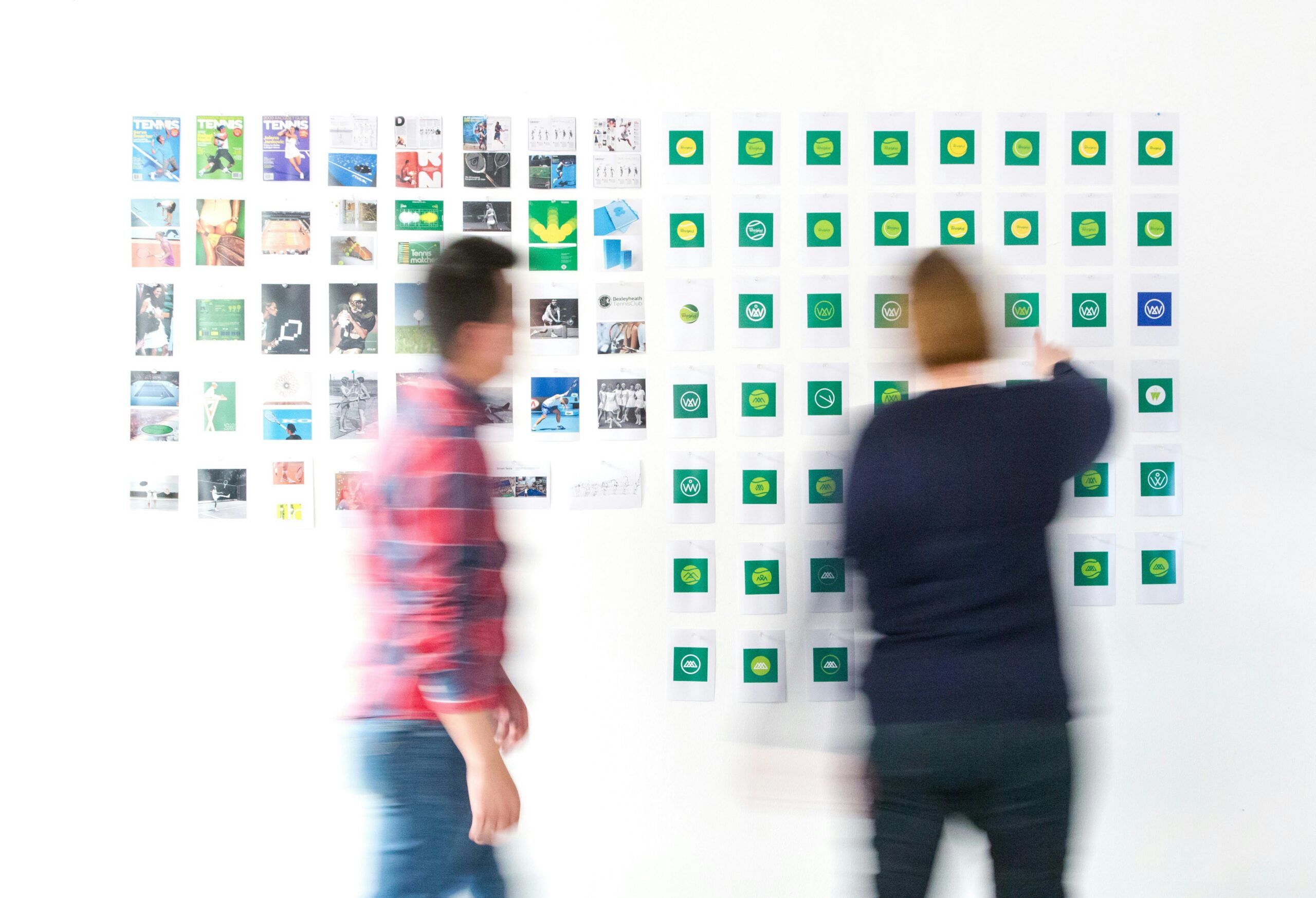
With the strategy set, the creative work begins. Teams generate hundreds, sometimes thousands, of candidate names using everything from linguistic construction to metaphor mapping to computational tools. The best shops sort candidates by type, descriptive, suggestive, arbitrary, or coined, and weigh each one against the brief.
A lot gets cut here. Names that flunk a basic trademark search, carry obvious linguistic problems, or drift from the brief are gone before a client ever sees them.
Linguistic and Cultural Screening
For brands that cross borders, this step is essential. Agencies test candidates for unintended meanings, awkward pronunciation, and cultural baggage in the target languages. A name that sings in English can stumble badly in Mandarin or Spanish. More and more, screening also asks how a name gets parsed and described by search and AI systems, because a name that confuses an algorithm can quietly cost a brand visibility long before any human notices.
Trademark Screening and Legal Clearance
This is where a lot of promising names die. Specialists run preliminary trademark checks early, then commission full legal searches on the finalists, looking at registered marks, common law usage, and domain availability in the relevant jurisdictions. The trademark field has only gotten more crowded, which makes clearance one of the hardest parts of modern naming. Firms with strong legal partnerships or in-house trademark expertise move through it faster.
Presentation and Refinement
Finalists go to stakeholders with a strategic rationale, visual mockups, and clearance status attached. Most engagements build in refinement rounds where client feedback shapes the final call. Good agencies steer that conversation with clear evaluation criteria instead of letting it slide into personal preference.
After naming comes visual identity and design. The two are sequential and interdependent: the name drives logo development, typography, and the broader design language that follows.
Top Brand Naming Agencies and Firms for 2026
The strongest naming agencies for 2026 reflect the shift above. Alongside the established specialists, integrated firms are earning spots on shortlists by tying naming to strategy and cross-world discoverability. The firms below represent both models. The right fit depends on whether your challenge calls for concentrated linguistic specialism or for naming embedded in a wider brand system.
Catchword Branding
Catchword holds one of the largest shares of voice among naming specialists, on the strength of a methodology refined across hundreds of engagements. It works with everyone from early-stage startups to the Fortune 500, with particular depth in technology, healthcare, and consumer products. The process leans hard on strategic rigor and trademark defensibility, with thorough screening baked into every project.
River + Wolf
River + Wolf has built a reputation as a leading nomenclature firm with a style that blends linguistic creativity and brand strategy consulting. It’s known for a collaborative process and for names that travel well across global markets, with a client roster running from financial services to consumer goods.
Lexicon Branding
Lexicon has named more billion-dollar brands than almost anyone, with Sonos, Swiffer, and Impossible Foods among its credits. Founded by David Placek, the firm works exclusively on developing names for competitive advantage, pairing linguistic science with consumer psychology. Its track record with category-defining names keeps it near the top of most lists for companies after transformative nomenclature.
Starfish
Starfish comes at naming from a different angle than the pure-play specialists. For Starfish, a name is one expression of a broader Brand and Creative Intelligence™ practice, not a standalone deliverable. Through work since 2002 for clients including PwC, Gallup, Dunkin’, and Samsung, the firm has developed names as part of an integrated strategy that connects nomenclature to brand architecture, positioning, and discoverability across both the human world and the AI world. The model is human-led and AI-aware: strategists and creatives lead, while technology amplifies the research, screening, and discoverability analysis rather than standing in for human judgment. For an organization that wants a name engineered not only to be distinctive but to be found and read correctly in every world, Starfish offers brand naming services grounded in the larger system the name has to live in.
Evaluating Fit for Your Project
Past reputation, a few things separate the right partner from the merely impressive. Founders should check whether an agency has real experience with early-stage companies and can work within a tighter budget. Rebrand leaders should look at the agency’s track record in messy trademark situations and its ability to manage stakeholder approvals. And everyone should ask how a prospective partner thinks about discoverability: will this name be found and understood not just by people, but by the search and AI systems that increasingly form the first impression?
For a wider view of the landscape, including firms that pair naming with full brand identity work, see our guide to leading branding firms.
How Much Does Brand Naming Cost?
Naming costs swing widely depending on scope, the agency’s reputation, and how much trademark clearance the project demands. Founders and corporate leaders alike need a realistic sense of what drives cost before they start talking to partners.
Specialist Agency Pricing
Top-tier specialists sit at the premium end of the market, priced to match their strategic depth, creative firepower, and rigorous legal screening. Lexicon, Catchword, and River + Wolf command the highest engagements, built on deep track records and proprietary methods. Mid-tier specialists cost less, usually by running fewer creative rounds or lighter trademark screening. For a project with clear strategic direction or lower trademark risk, that lighter scope can be plenty.
Integrated and Generalist Agency Pricing
Full-service and integrated agencies fold naming into a broader engagement, so the naming piece is rarely scoped or sold on its own. The investment reflects the wider brand program it belongs to, and cost tends to track the depth of that engagement rather than a standalone naming fee.
What Drives Cost Variation
A handful of factors move the number. Trademark screening across multiple jurisdictions adds real expense. Heavy linguistic testing for international markets costs more than a domestic-only name. The count of creative rounds, the seniority of the people on the work, the depth of discoverability analysis, and the agency’s own overhead all feed into the price.
Budget Considerations for Startups
Early-stage founders feel the squeeze between wanting professional naming and watching the runway. Some specialists offer streamlined startup packages; others hold minimums that simply outrun an early budget. The honest math is to weigh the long-term cost of a weak or legally shaky name against the upfront investment in getting it right. Planning your new brand launch strategy alongside the naming work helps make sure the budget covers the whole journey, from first candidate to market launch.
Find Your Ideal Naming Partner with Starfish
Picking the right naming partner is a matching exercise. You’re lining up your specific needs, budget, timeline, trademark complexity, and strategic depth, against an agency’s strengths and the way it likes to work. The stakes are high. Your name shapes first impressions, affects trademark protection, and anchors your brand identity for years, sometimes decades.
If you’re a founder, the priority is usually an agency that understands early-stage constraints and still delivers a name that can grow with your ambitions. You want a partner who’ll push for distinctiveness and trademark defensibility without losing the plot on practical reality.
If you’re leading a corporate rebrand, the weight shifts toward process and stakeholder management. You need an agency that can read internal politics, present to executives with confidence, and land a name that satisfies legal, marketing, and operations all at once.
If you’re an agency researcher building a shortlist, the job is matching methodologies, industry experience, and pricing to the parameters of a specific project.
Starfish offers brand naming services that fold nomenclature development into a broader brand strategy, so your name works as the foundation of a coherent brand identity built for the human and AI universe, not as a standalone asset. That’s the conviction behind the work: strategically masterful, creatively human, technologically powered, and discoverable in every world.
Whether you’re launching something new, renaming an established company, or building out nomenclature for a product portfolio, the right partner is the difference between a name that just exists and one that builds brand equity with every impression.
Frequently Asked Questions
Read MoreRead Less
What is brand naming and why does it matter for your business?
Brand naming is the strategic work of developing a name for your company, product, or service. It matters because the name is often the first contact point between your brand and a potential customer. It shapes perception, drives memorability, and determines how protectable your trademark will be. A name developed properly sets the business up for the long run by being distinctive, legally defensible, and aligned with the strategy behind it.
What is modern brand nomenclature strategy?
Brand nomenclature strategy defines the rules and relationships for names across a portfolio, so names scale, map cleanly to brand architecture, pass trademark and domain checks, and surface reliably in search, voice, and AI systems. It’s the layer above any single name, the logic that keeps a parent brand and its extensions coherent as the business grows.
What are the different types of brand names?
Names generally fall into four buckets. Descriptive names say plainly what the business does. Suggestive names hint at a benefit or quality without spelling it out. Arbitrary names borrow real words and use them in an unrelated context. Coined names are invented outright. Each type trades off differently across memorability, trademark strength, and positioning. Coined and arbitrary names usually offer the strongest trademark protection, while descriptive names face more legal hurdles but need less marketing to explain themselves.
What makes a brand name legally protectable and trademark-ready?
To be protectable, a name has to be distinctive enough to point clearly to a single source. Names that are generic, or merely describe the product category, get little or no protection. The strongest candidates are coined, arbitrary, and suggestive names, the ones that take a little imagination to connect back to the product. Before anything is final, comprehensive screening across registered marks, common law usage, and domain availability is essential.
How do I choose between a naming specialist and an integrated agency?
Choose a specialist when the engagement is narrow, high-risk, and linguistic, such as clearing a global trademark for a single coined name.
Choose an integrated partner when the name must carry strategy, brand architecture, and discoverability across the human world and the AI world.
Cost in either case is driven by scope, research depth, stakeholder complexity, and activation.
What does a brand naming agency actually do?
A naming agency runs the strategic research, generates and screens hundreds of candidates, tests finalists for linguistic and cultural fit, manages trademark clearance, and guides the client through the final decision. The most forward-looking firms also check how a name will be found and read correctly across both the human world and the AI systems that increasingly sit between people and brands. Specialists bring dedicated linguists and trademark expertise; integrated firms tie the name back to brand strategy, architecture, and discoverability. The work is human-led. Technology extends the research and screening, but people make the final call on what a name means.
What deliverables should I require from a naming engagement?
Ask for a shortlist with linguistic rationale, phonetic and readability tests, global screening for unintended meanings, domain availability, a trademark clearance memo, recommended brand-architecture mapping, and an implementation guide covering search, voice, and AI. The final package should show each name in context and document why it clears legally and strategically, not just a single word handed over in isolation.
How does AI change naming due diligence?
AI adds a new screening layer. Beyond trademark and pronunciation, a name now has to be tested for how AI models rank and reproduce it, how voice assistants resolve it phonetically, and whether large language models might confuse or conflate it with something else in generated answers. A name that confuses an algorithm can quietly cost visibility long before a human notices.
How much does it cost to hire a brand naming agency?
Cost is driven by scope, not a fixed rate. The main drivers are the number of names and sub-brands in play, the depth of strategy and research up front, how many markets and languages require linguistic and trademark screening, the number of stakeholders and review rounds, and whether the work includes downstream activation, including architecture mapping and implementation for search, voice, and AI. A tightly scoped naming sprint sits at the low end; multi-market, clearance-heavy, or fully integrated strategic naming sits at the high end. When comparing quotes, look at what’s actually included rather than the headline number.
How do you evaluate and choose the right brand naming agency for your project?
Look at relevant industry experience, trademark screening capability, how transparent the process is, how the agency thinks about cross-world discoverability, and whether the team actually fits with yours. Dig into the portfolio for names in your category or with similar challenges. Check whether they’ve worked with companies at your stage, startup versus enterprise, and in your markets. Ask for references, and get clear on pricing, timeline, and how revisions are handled.
When should a company consider rebranding or renaming its business?
Renaming is worth considering when the current name creates legal exposure, boxes you out of new markets or categories, no longer fits where the business has gone, or carries baggage that drags on brand equity. Mergers and acquisitions often force the question, and so do real shifts in business model or audience. The call comes down to weighing the cost of renaming, including the recognition you’d give up, against the limits of holding on to the name you have.
How does brand naming tie into brand architecture?
Naming and architecture are the same decision viewed from two angles. Architecture sets how a portfolio is organized, master-branded, endorsed, or independent, and those choices dictate what a new name has to do and how much equity it can borrow from a parent. Get the architecture right first and each name has a clear job; skip it and you end up with names that compete with each other and confuse both buyers and the AI systems mapping your portfolio. For how the structure works, see our Brand Architecture service.