What Is Branding and Identity in Graphic Design?

A new logo rarely solves the problem executives think they have. If customers are confused, if post-merger teams are pulling in different directions, or if the market experience feels inconsistent from one touchpoint to the next, the issue is usually deeper. That is why the question what is branding and identity in graphic design matters. It is not a design question alone. It is a business question about meaning, memory, and trust.
Graphic design plays a visible role in brand building, but visibility is not the same as strategy. Branding defines what the organization stands for, how it creates distinction, and what it wants to be known for in the market. Identity is the structured visual and verbal expression of that strategy. Graphic design is the discipline that gives identity form.
When those three are aligned, a brand becomes clear and coherent. When they are not, design can look polished while the business remains indistinct.
What is branding and identity in graphic design?
Branding is the strategic act of defining a market position, a point of view, and a set of promises that can be experienced consistently. Identity is the system of signals that makes that strategy legible. In graphic design, identity typically includes the logo, typography, color, imagery, iconography, layout principles, motion behavior, and other visual assets that shape recognition.
That distinction matters because many organizations collapse branding into logo design. They ask for a refreshed identity when what they actually need is strategic clarity. A mark can help people recognize a company. It cannot tell the market why that company matters, why it is different, or why it should be trusted.
The reverse is also true. A sound brand strategy without a disciplined identity system rarely scales. Teams interpret it differently. Channels drift. Acquired businesses keep legacy habits. AI-generated content multiplies inconsistency. What began as a strong strategic position gets diluted in execution.
Branding is the idea. Identity is the evidence.
A useful way to think about the relationship is this: branding establishes the idea; identity provides the repeatable evidence of that idea.
If a company claims precision, its identity cannot feel generic or loose. If it claims warmth, its design system cannot feel cold or bureaucratic. If it claims transformation, the visual language must show momentum and coherence rather than fragmentation. Design choices are not decoration. They either reinforce the intended perception or undermine it.
This is where senior leaders often feel the difference, even if they do not name it directly. One identity system makes an organization appear integrated, mature, and credible. Another makes it appear improvised. The business may not have changed overnight, but market perception has, and perception has material consequences.
Where graphic design fits
Graphic design is the mechanism that translates brand strategy into recognizable form. It organizes what audiences see, how they process it, and what they remember.
At the identity level, design determines whether a brand is distinctive enough to be recognized and disciplined enough to remain consistent across contexts. That includes high-visibility expressions such as websites, investor presentations, product interfaces, campaigns, and environmental graphics. It also includes the quieter moments that shape judgment over time, such as proposal templates, sales materials, recruitment communications, and internal documents.
For enterprise organizations, this is not a minor concern. Buyers do not experience the brand in one place. They encounter it across systems, teams, geographies, and increasingly through AI-mediated environments that summarize, interpret, and recombine brand signals at speed. Identity has to work as a system, not as a set of isolated assets.
Why the confusion persists
The confusion around branding and identity persists because identity is visible and strategy is not. Executives can see a logo review. They can compare color palettes. They can debate typography. Strategic positioning requires a different discipline. It asks harder questions about audience, category dynamics, competitive distance, organizational truth, and future ambition.
That is also why some rebrands fail. They begin at the level of expression before the organization has reached alignment on what the brand should mean. The result is familiar: a new identity launches, internal teams interpret it inconsistently, customers notice little difference, and leadership concludes that the market is hard to move. In reality, the system was built in reverse.
What a strong brand identity actually does
A strong identity does more than create recognition. It creates coherence across moments that would otherwise feel unrelated.
It helps a newly unified company look and act like one organization after an acquisition. It gives a growing business a structure that can support multiple offerings without fragmenting. It allows marketing, sales, HR, investor relations, and product teams to communicate with shared discipline. And it creates the conditions for memorability, which is far more valuable than novelty.
This is where many organizations underestimate the role of design. They treat identity as an output rather than as operating infrastructure. But for complex brands, identity is a management system. It reduces ambiguity. It improves speed. It increases the odds that the brand being built in the boardroom is the one being experienced in the market.
What is branding and identity in graphic design for growing companies?
For growing companies, the answer changes with scale. An early-stage business may need enough identity to appear credible and distinct in a narrow market. A mid-market or enterprise organization needs more. It needs a system capable of governing many expressions without becoming rigid.
That means the right identity is not always the most elaborate one. It is the one that fits the organization’s actual complexity. A company entering the U.S. market may need a sharper articulation of category cues and cultural relevance. A company consolidating brands after M&A may need a stronger architecture and a more disciplined visual hierarchy. A company facing AI-shaped discovery may need identity assets built for machine legibility as well as human perception.
The trade-off is always between flexibility and control. Too little structure and the brand fragments. Too much and teams cannot adapt to context. Effective identity design resolves that tension with principles, not just rules.
The components of identity that matter most
Not every brand needs the same design emphasis. Some categories rely heavily on typography and tone to signal authority. Others need a broader visual world to differentiate in crowded, image-driven environments. But several components matter almost universally.
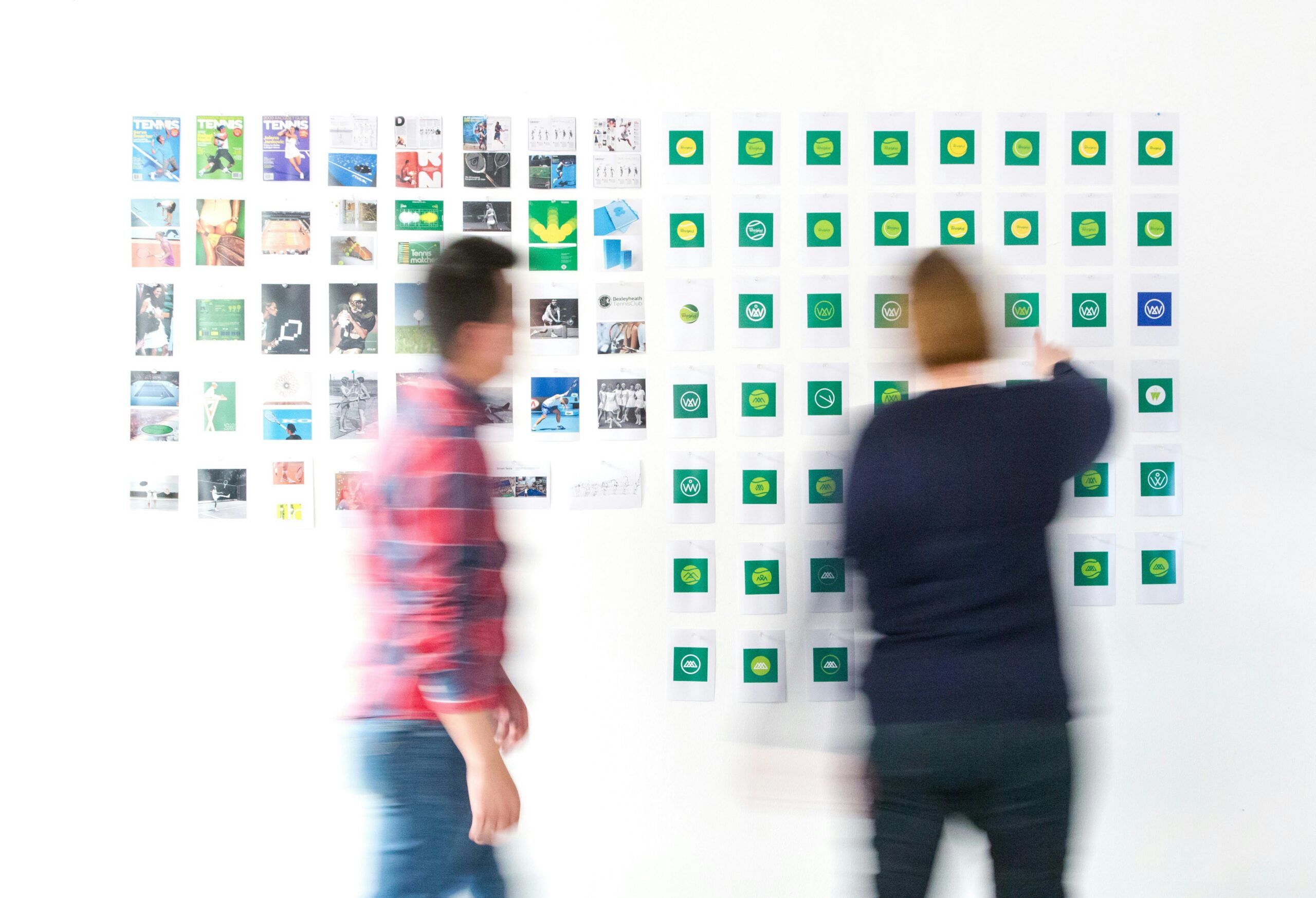
The logo is one element, not the system. Typography often carries more of the brand than leaders expect because it shapes tone across nearly every touchpoint. Color can create memory quickly, but only if it is distinctive and used with discipline. Imagery standards matter because they often reveal whether the brand is speaking from conviction or borrowing stock conventions. Layout and motion principles matter because they govern how the identity behaves, not just how it looks in static form.
The key is orchestration. Strong identity systems make these elements work together so the brand is recognizable even when the logo is absent.
Strategy first, then expression
The most effective identity work begins with strategic definition. What must the brand be known for? What tensions exist in the category? Which attributes are overclaimed and no longer differentiating? What organizational truths can be translated into a compelling market position? Only after those questions are answered should graphic design move into expression.
This sequence is not academic. It prevents the common failure mode of selecting aesthetics before deciding meaning. It also gives leadership a stronger basis for decision-making. Instead of responding to design subjectively, they can evaluate whether the identity is doing the job it was built to do.
At Starfish, that rigor has always mattered because brand is not what an organization says. It is the sum of every experience it creates. Identity is one of the most visible ways that experience becomes consistent, memorable, and credible.
The real test of brand identity
The real test is not whether an identity looks contemporary at launch. It is whether it can hold together under pressure. Can it scale across business units, channels, and content types? Can it survive executive transitions? Can it absorb AI-assisted production without losing coherence? Can it help an organization appear as sophisticated as it actually is?
Those are the questions that matter to CEOs, CMOs, and brand leaders managing real complexity. They are also the questions that separate cosmetic change from transformative brand work.
When branding and identity are understood correctly, graphic design becomes more than expression. It becomes a strategic instrument. It gives form to meaning. It gives consistency to experience. And it gives the market a clearer reason to remember you.