Marketing Strategy and Brand Positioning

A strong campaign can create attention overnight. A strong brand can create preference for years. The difference usually comes down to marketing strategy and brand positioning – not as separate disciplines, but as interdependent forces that determine how a company is understood, chosen, and remembered.
Too often, organizations treat positioning as a messaging exercise and marketing strategy as a channel plan. That is where momentum starts to fracture. Positioning defines the brand’s distinct place in the market and in the mind. Marketing strategy translates that distinction into action across audiences, platforms, content, customer experience, and communications. When these two are aligned, the brand experience feels coherent. When they are not, even significant investment can produce scattered results.
Why marketing strategy and brand positioning must work together
Brand positioning answers a foundational question: why this brand, instead of another? It clarifies the value an organization can credibly own, the audience it is best built to serve, and the space it intends to occupy relative to competitors. This is not about slogans. It is about strategic choice.
Marketing strategy answers a different but equally critical question: how will that value be brought to market in a way that drives growth? It shapes who to prioritize, what to say, where to show up, and what kind of experience to create across every touchpoint.
The strongest brands do not merely state a position. They operationalize it. A premium position should feel premium in the website experience, sales narrative, campaign creative, onboarding flow, packaging, social content, and service interactions. A challenger position should not sound cautious in market-facing communications. A brand built on clarity should not create friction in the customer journey.
This is where many leadership teams face a hard truth. If the market is not perceiving the brand the way the organization intends, the issue is rarely only awareness. More often, the strategy is underdefined, the positioning is undifferentiated, or the experience is not reinforcing the promise.
What effective brand positioning actually requires
Good positioning is concise. Effective positioning is disciplined. It demands evidence, focus, and the willingness to make choices that exclude as much as they include.
That starts with a clear view of the competitive landscape. Many brands believe they are differentiated because their offerings are different internally. Markets do not judge internal complexity. They respond to perceived value. If the distinction is invisible or difficult to articulate, it does not create advantage.
Strong positioning also requires audience specificity. A brand cannot be meaningful to everyone at the same level. Senior marketers and founders often resist narrowing because they fear missing opportunity. In practice, the opposite is more common. Broad positioning tends to weaken relevance, while focused positioning sharpens connection and improves efficiency across marketing investment.
Then there is credibility. Aspirational positioning can be powerful, but only if the organization can deliver on it. If a company claims innovation yet moves slowly, claims intimacy yet scales through generic automation, or claims excellence while tolerating inconsistent execution, the market notices. Positioning is not what a brand says at its best. It is what audiences believe after repeated exposure to the full brand experience.
The role of marketing strategy in making positioning real
Once the position is defined, the next challenge is translation. This is where marketing strategy becomes decisive.
An effective strategy does more than allocate spend. It aligns audience priorities, messaging architecture, campaign development, media choices, content systems, and performance measures around the brand’s differentiated value. That alignment sounds straightforward. It rarely is.
In established organizations, legacy assumptions often interfere. Different teams may be working from different versions of the brand story. Sales may emphasize one value proposition while marketing promotes another. Product experience may lag behind the promise. Creative may be visually compelling but strategically generic. These disconnects dilute brand equity because audiences experience the brand as fragmented.
A more disciplined model starts with the core strategic drivers of distinction. From there, messaging can be calibrated for different audience segments without losing coherence. Creative expression can flex by channel without losing recognizability. Campaigns can target near-term conversion goals without sacrificing long-term brand memory.
This integrated approach matters because audiences do not separate a brand into departmental categories. They experience one brand, whether they encounter it in a pitch deck, a paid campaign, a retail environment, a social post, or a customer service exchange. The brand experience is the brand.
Common breakdowns between strategy and position
The gap between intent and market perception usually shows up in familiar ways.
One common issue is overpositioning around category language. Brands sound interchangeable because they rely on broad claims like trusted partner, innovation leader, customer-centric, or end-to-end solutions. These phrases may be true, but they are rarely ownable. If every competitor can say it, it does not strengthen positioning.
Another issue is confusing internal ambition with external relevance. A company may be proud of a transformation story, a complex offering, or a new operating model. None of that matters unless it translates into a benefit the audience understands and values.
There is also the problem of tactical acceleration without strategic grounding. Teams launch campaigns quickly, test multiple channels, and optimize constantly, yet the underlying brand story remains unresolved. Performance marketing can amplify what already works. It cannot fix weak differentiation.
Finally, some brands build a strong strategic platform but fail in activation. The positioning is clear in the boardroom and absent in the market. This usually happens when execution is treated as a downstream production task rather than as a strategic extension of the brand.
How to build alignment across every touchpoint
Alignment begins with a sharper discovery process. Organizations need an honest assessment of audience perception, competitive dynamics, cultural context, internal beliefs, and points of friction in the current experience. This is where proprietary frameworks and structured evaluation can be especially valuable, because they move the conversation beyond opinion toward strategic evidence.
From there, the brand needs a positioning platform with real utility. That includes the central value proposition, audience priorities, differentiators, personality, proof points, and the narrative logic that supports all of it. If the platform only works in a presentation deck, it is not finished.
The next layer is activation. Messaging architecture should inform campaign planning, digital content, sales enablement, leadership communications, and experience design. Visual identity should not simply look distinctive. It should express the strategic position in a way that is memorable and repeatable. The same is true for verbal identity. Tone, language, and message hierarchy all shape perception.
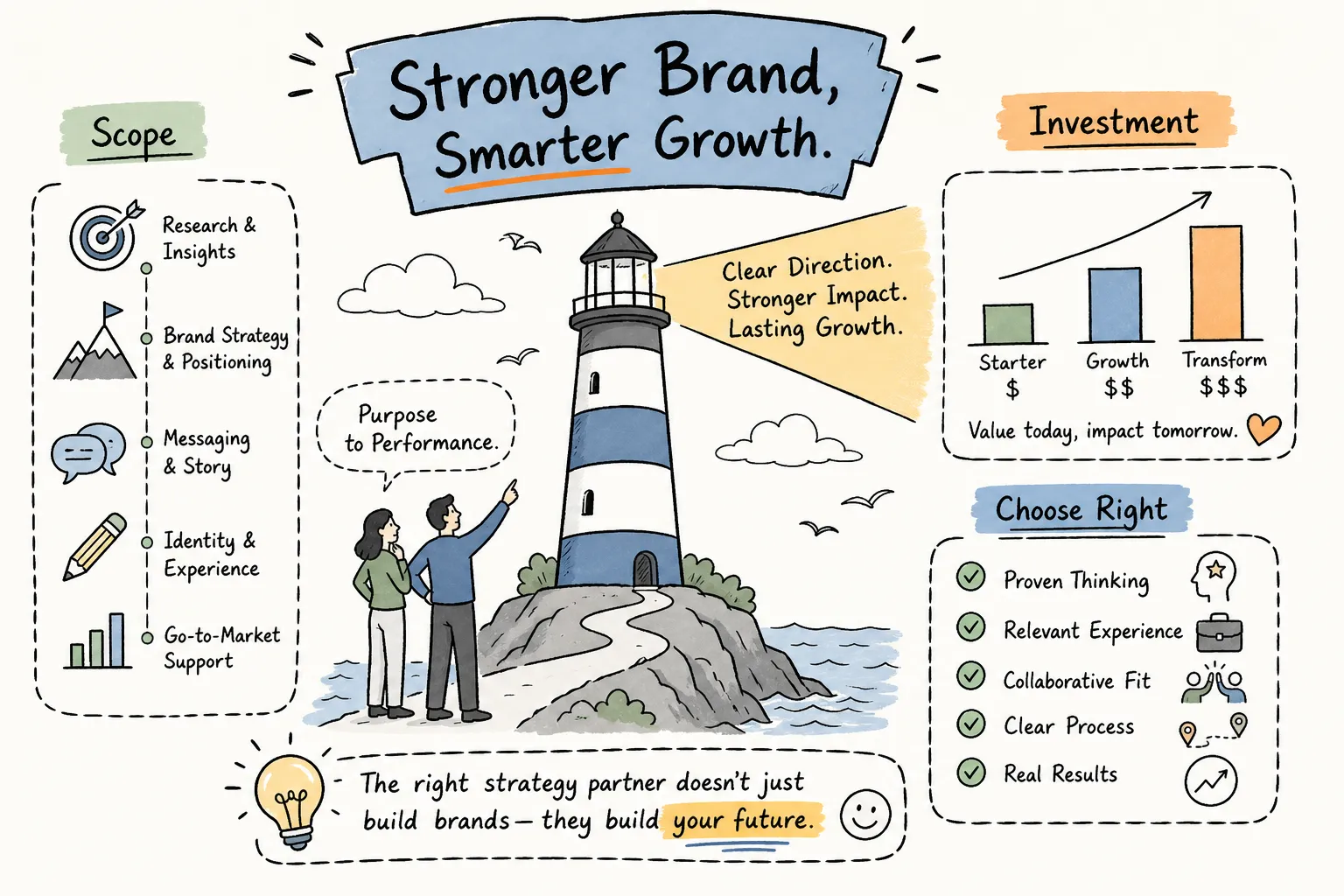
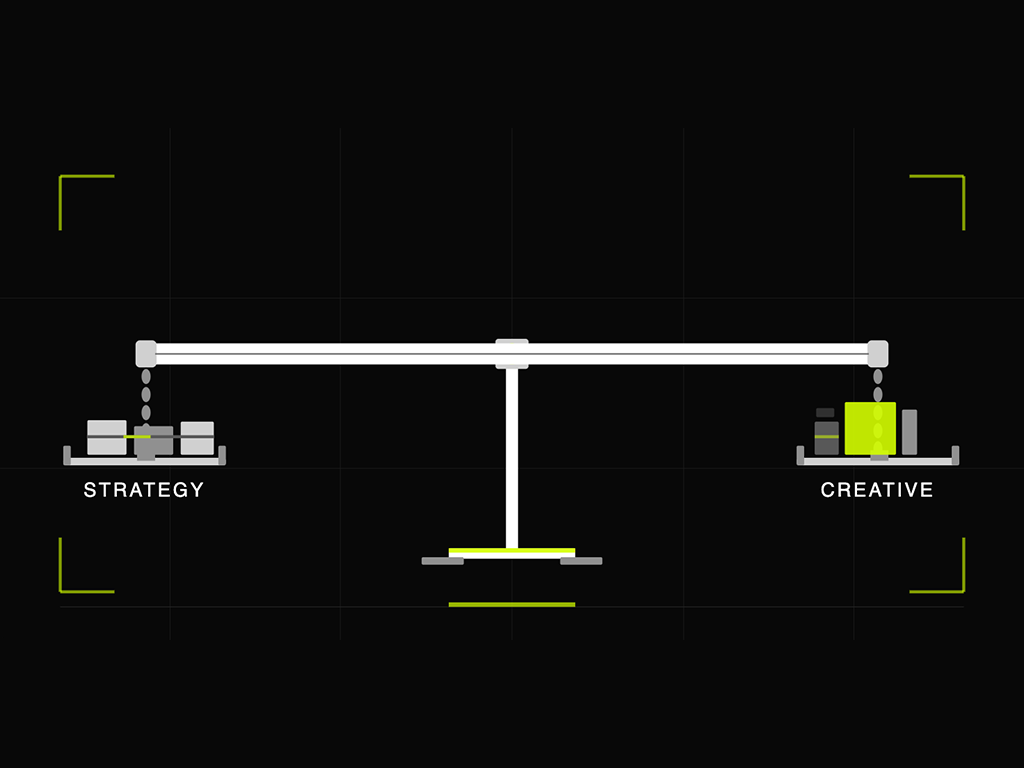
This is where integrated agencies create disproportionate value. When strategy, identity, communications, and experience are developed in concert, brands gain consistency without becoming rigid. At Starfish, that integrated model is central to the work because it closes the gap between brand thinking and market expression.
It depends – and that is the point
Not every organization needs the same kind of positioning or the same marketing strategy. A founder-led challenger brand may need sharper distinction and faster market entry. A legacy enterprise may need internal alignment as much as external modernization. A nonprofit may need to balance emotional resonance with institutional credibility. A professional services firm may need to elevate expertise without sounding abstract.
The right answer depends on the category, audience maturity, sales cycle, competitive pressure, and business ambition. That is why templates tend to fail. Effective strategy is not generic. It is constructed around the specific conditions the brand needs to navigate and the specific value it can credibly own.
There are trade-offs. Narrower positioning can strengthen relevance while limiting short-term breadth. More distinctive creative can improve memorability while requiring greater organizational courage. A long-term brand platform can unify the business while taking more time than a campaign-first approach. These are not flaws in the process. They are signs that real strategic choices are being made.
What leaders should ask before investing more in marketing
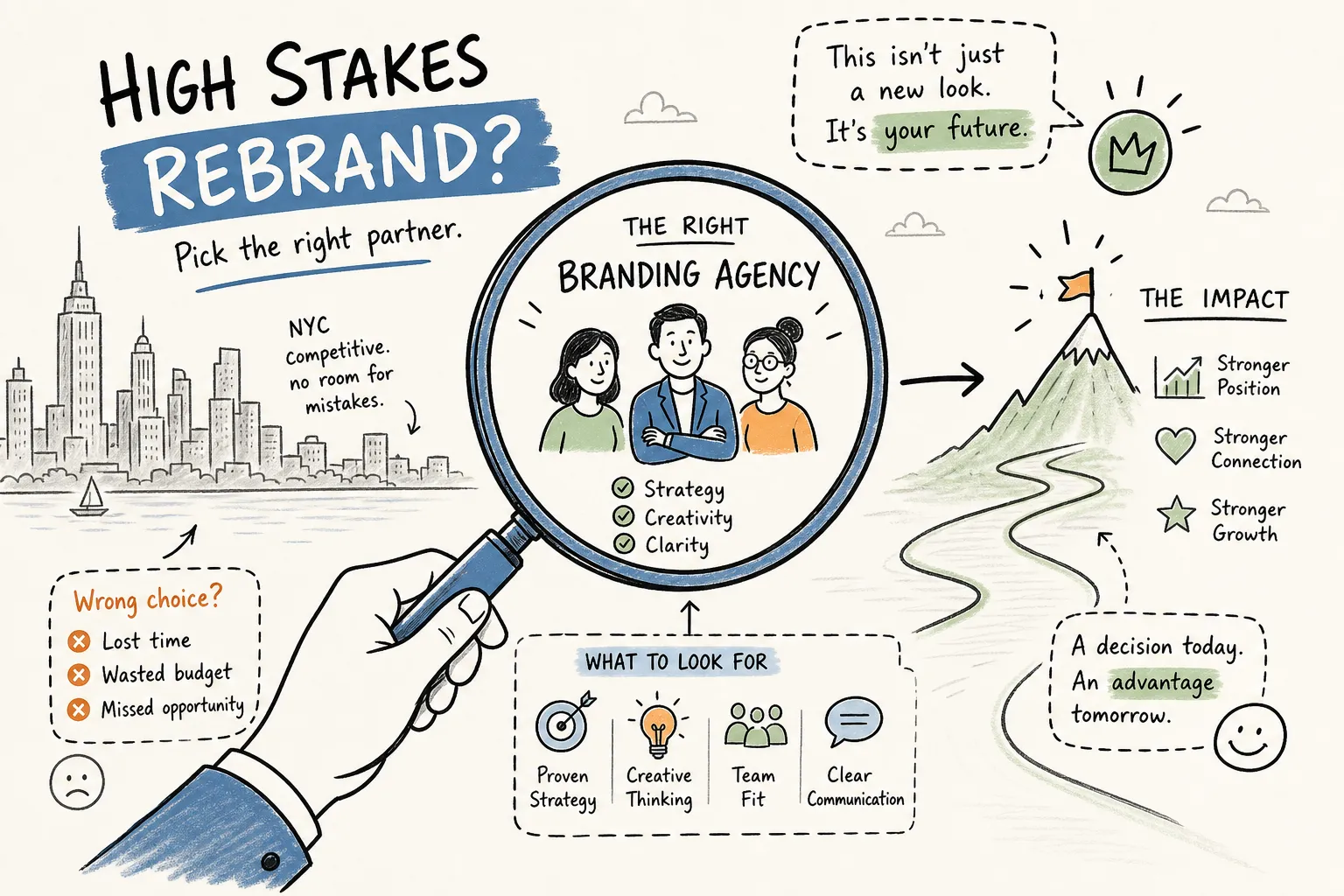
Before increasing budget, launching a rebrand, or expanding campaign activity, leadership teams should ask a tougher set of questions. Is our market position clear, differentiated, and defensible? Do our audiences experience that position consistently across touchpoints? Are we asking marketing to solve a brand problem, or asking branding to solve a go-to-market problem?
Those distinctions matter because wasted investment often looks productive from the inside. Teams are active. Content is shipping. Media is running. Creative is approved. But if the underlying position is weak or disconnected from execution, volume does not create clarity.
The brands that outperform over time tend to share one advantage: they know what they mean in the market, and they express it consistently in ways people can feel. Their strategy is not trapped in a planning document. Their positioning is not trapped in a tagline. Both are embedded in the experience.
That is the real opportunity in marketing strategy and brand positioning. Not just to look sharper or sound more polished, but to create a brand people recognize, prefer, and trust because every interaction points in the same direction.
The most valuable brand work does not end when the positioning is approved. It begins when the organization decides to live it.