What a Brand Revitalization Agency Fixes

A company rarely says, “Our brand has stalled.” The signal shows up elsewhere. Sales teams start improvising the story. Product innovation moves faster than brand meaning. A merger closes, but the market still sees two companies. AI-generated summaries of your business become more influential than your own messaging. This is the point where a brand revitalization agency becomes useful – not to refresh surface expression, but to restore strategic clarity.
Brand revitalization is often misunderstood as a late-stage marketing exercise. It is not. It is a business response to drift. The brand no longer reflects the company you have become, the market you are entering, or the experience you intend to create. That gap carries operational consequences. It weakens differentiation, confuses customers, and makes growth more expensive than it should be.
When a brand revitalization agency is the right move
Most organizations do not need revitalization because the logo looks dated. They need it because the brand system no longer explains the business with enough precision to guide decisions.
That usually happens at a specific inflection point. A company expands into the U.S. and discovers its established narrative does not translate. An acquisition creates portfolio overlap and internal disagreement about what stays, what goes, and what the combined entity stands for. A business with strong momentum realizes the brand has outgrown the marketing department and now affects talent, product, culture, investor perception, and customer experience. Or leadership sees that AI systems are now shaping discovery and evaluation, while the company has done nothing deliberate to define how it should be interpreted in those environments.
In each case, the issue is not cosmetic fatigue. It is strategic misalignment. A capable partner helps leadership determine whether the answer is a repositioning, an architecture reset, a messaging overhaul, a verbal and visual evolution, or a more fundamental reconsideration of brand meaning.
What a brand revitalization agency actually does
The work starts by separating symptoms from causes. If awareness is flat, the problem may be positioning. If messaging is inconsistent, the problem may be unresolved strategy. If customer experience feels fragmented, the issue may be brand coherence rather than campaign quality.
A serious engagement examines the brand as an operating system. That means understanding how the organization is currently perceived, how it wants to be perceived, and where the distance between those two states is creating friction. It also means evaluating the business model, customer expectations, competitive frame, internal culture, and category pressures as one connected set of forces.
This is why methodology matters. Without it, revitalization becomes opinion-led. The loudest voice in the room decides what feels current, what looks premium, or what sounds differentiated. That is rarely enough. Senior leadership needs a process that can identify the brand’s underlying equity, determine what should be retained, and define what must change to support the next stage of growth.
At Starfish, that rigor comes from integrated disciplines built to answer different parts of the same problem: Brand Soul, Brand Coherence, and Brand Intelligence & Creative. Supported by ALBERT.ai discovery, the Brand Equity Evaluation Model, and the Conceptual Compass, the work is designed to move from diagnosis to decision to execution without losing strategic integrity.
Revitalization is not reinvention
One of the most expensive mistakes companies make is assuming a brand must become unrecognizable to become relevant again. That instinct usually destroys equity that took years to build.
The better question is narrower and more demanding: what still carries value, and what is now holding the company back? Sometimes the answer is to preserve the core idea and modernize its expression. Sometimes it is to sharpen a diluted position that has become too broad to be credible. Sometimes revitalization requires a structural change – simplifying a portfolio, clarifying naming logic, or redefining how the master brand shows up across business units.
Trade-offs matter here. A dramatic change can create internal momentum, but it may also introduce market confusion. An incremental change can preserve recognition, but it may not go far enough to reset perception. The right path depends on the condition of the existing equity and the scale of the business challenge. That judgment should come from evidence, not preference.
The questions leadership should ask a brand revitalization agency
The quality of the work is often visible in the quality of the questions. Leadership teams should expect a partner to press beyond communications and into business realities.
How has the category changed, and what new expectations now shape relevance? What does the market currently believe about the brand, and which of those beliefs help or hurt growth? Which elements of the existing brand hold real equity with customers, employees, and investors? Where is incoherence showing up across touchpoints, teams, and channels? How are AI-mediated environments summarizing, ranking, and interpreting the brand today?
These are not academic questions. They determine whether revitalization produces a memorable, transformative outcome or just a cleaner presentation of the same unresolved issues.
A credible partner should also define success in business terms. Better alignment across teams matters because it accelerates execution. Sharper positioning matters because it improves conversion and supports premium value. Clearer architecture matters because it reduces confusion and strengthens portfolio logic. Revitalization earns its place when it changes organizational behavior and market response, not when it simply produces new assets.
Why AI has changed the revitalization brief
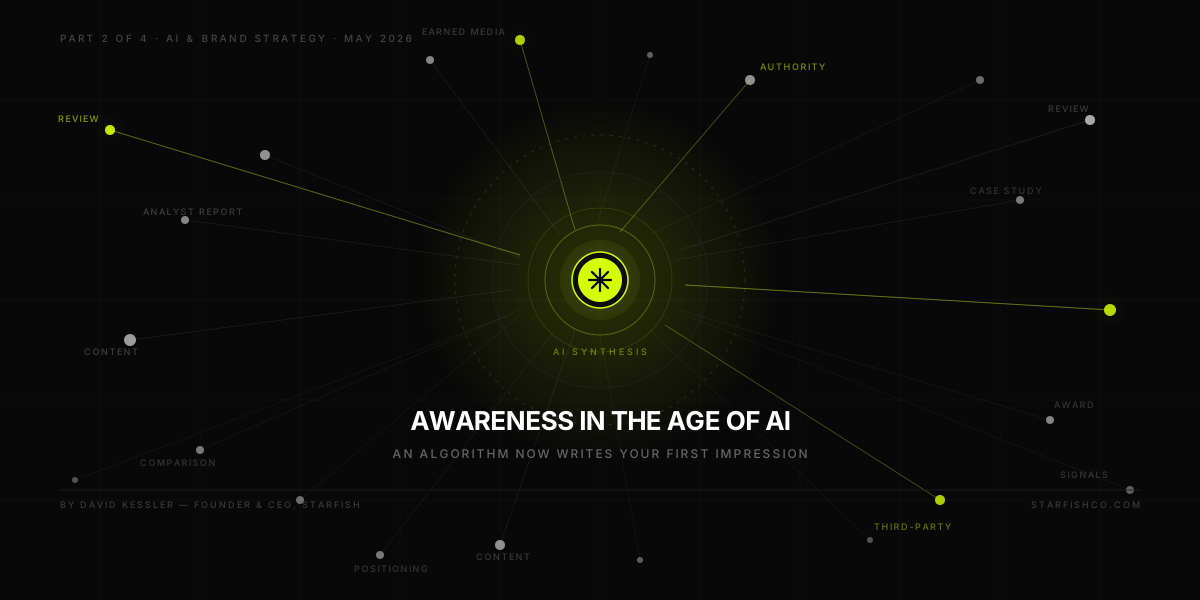
Brand leaders now operate in an environment where buyers increasingly encounter machine-mediated interpretations before they encounter a polished brand narrative. Search summaries, recommendation systems, large language models, review aggregation, and automated research workflows all shape first impressions.
That changes the brief for any brand revitalization agency. The task is no longer limited to what appears on a website, in a pitch deck, or in a campaign. It includes the underlying clarity and consistency that allow AI systems to interpret the business accurately.
If your company has grown through acquisition, launched new offers, shifted categories, or evolved its value proposition without updating the brand system, machine-mediated discovery will often expose the inconsistency faster than human researchers would. Conflicting descriptions, outdated positioning, and fragmented proof points get surfaced and repeated.
A modern revitalization effort should account for this. The brand must be coherent enough to travel through both human and AI channels without distortion. That requires stronger strategic foundations, not more promotional language.
What strong outcomes look like
A successful revitalization gives leadership something more useful than excitement. It creates a brand that can govern choice.
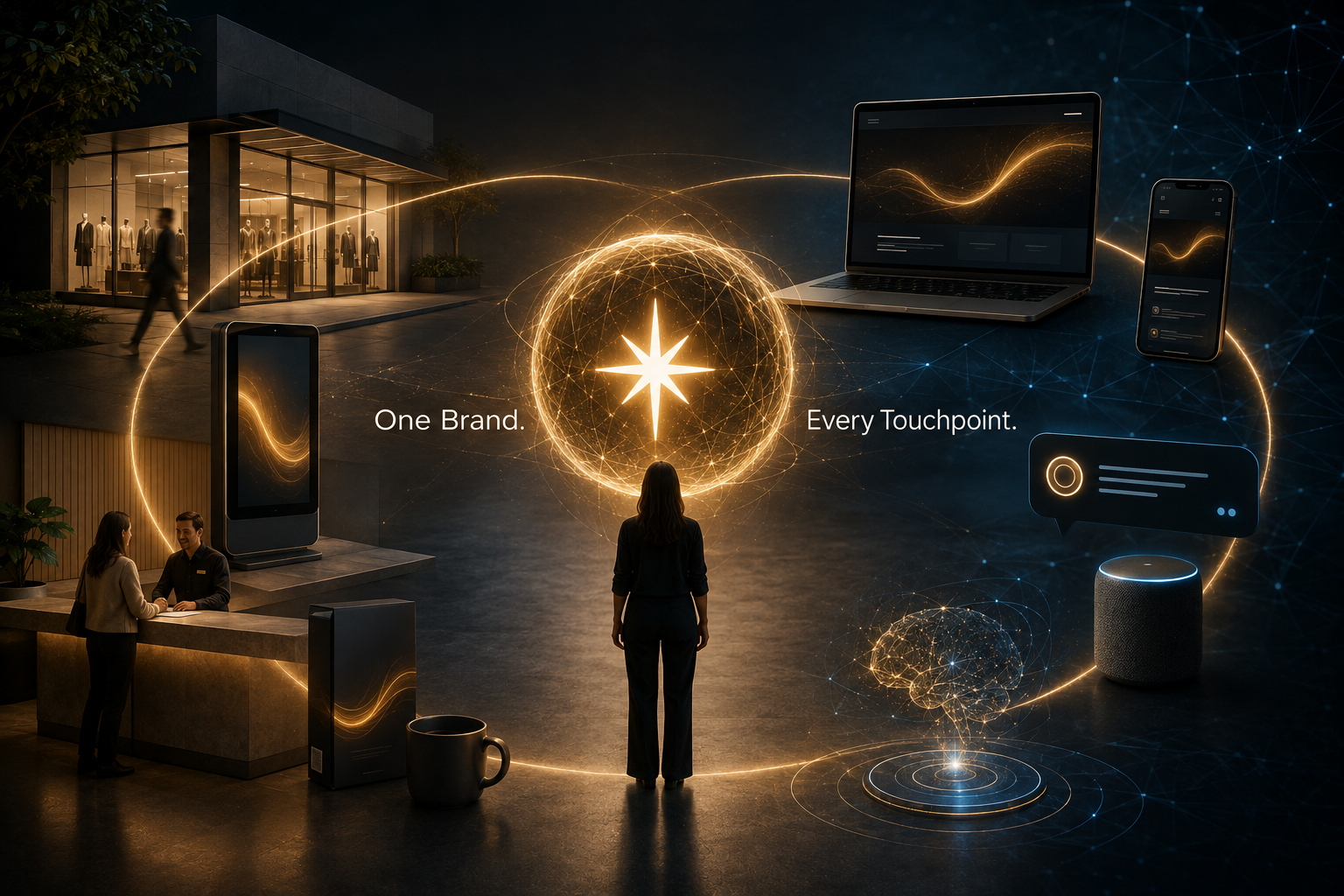
The organization knows what it stands for and what it does not. Teams can articulate the value proposition with consistency. The portfolio makes sense. Customer-facing experiences reinforce, rather than contradict, the intended position. Sales, marketing, talent, and product are working from the same strategic center. Creative expression becomes more distinctive because it is anchored in a clear idea, not because it is trying to compensate for the absence of one.
This is especially important for enterprise and mid-market organizations in transition. The larger and more complex the business, the more dangerous ambiguity becomes. A brand can survive a period of underinvestment. It struggles to survive internal disagreement about what the company is, where it is going, and why the market should care.
Choosing the right partner for the work
Not every firm is equipped for revitalization at this level. Some are built for launch velocity. Others are optimized for campaign production. Revitalization requires a different capability set: diagnosis, executive facilitation, strategic definition, architecture thinking, and disciplined implementation.
Leadership should look for evidence of pattern recognition across complex business moments – rebrands, post-M&A consolidation, market entry, brand portfolio evolution, and AI-era repositioning. They should also look for continuity between the people who sell the work and the people who do it. At this level, trust is built through substance, not theater.
The best partner will not begin by recommending change. They will begin by determining what kind of change is warranted, how much the market can absorb, and what the organization can sustain. That restraint is not caution. It is strategic discipline.
A brand does not need revitalization because it has aged. It needs revitalization when the experiences it creates, the story it tells, and the signals the market receives no longer add up. Fix that alignment, and growth gets clearer, faster, and more durable.