The Creative Branding Agency Model is Changing. Here’s What Comes Next.

Discover how the creative branding agency landscape is evolving from full-service to specialized. Why strategy-led creative outperforms creative-led strategy.
The Creative Branding Agency Model is Changing. Here’s What Comes Next.
The industry standard, the full-service agency model, is no longer sustainable. Under heavy attack, consolidations have been massive, if not historic. The agency brands that built “Madison Avenue” and ad communities in Europe, Asia, and South America are gone. And with it, far more than reputations, but the numbers of people, the reporting structures, the rate cards, all of it. day. These agencies were built for a different era and on the assumption that you need someone under one roof who can do everything. That assumption is no longer true.
We’re watching a creative branding agency landscape splinter into something more agile and intelligent. Instead of size and scope, the agencies winning right now are those built around deep expertise, strategic conviction, and a point of view on how brand and business are connected. The organizational structure is tighter. The thinking is sharper. And the creative work is getting better because it’s no longer competing for resources with seventeen other client priorities.
This shift isn’t accidental. It’s happening because clients and the industry are changing. Both have gotten smarter. Clients, in particular, have learned that hiring a big agency with vast capabilities doesn’t guarantee work that actually matters to their business. They’ve sat through countless pitches from generalist teams pretending to have specialized expertise. They’ve paid large fees and have gotten what they’ve paid for and agreed to. Now they want something different, conviction instead of capability.
From Full-Service to Specialized
The full-service model promised convenience. One call, one contract, one relationship. But that created organizations where generalists were forced to be experts in everything, which means they were really experts in nothing. A creative agency that tried to own strategy, design, digital, video, content, and media all under one roof inevitably got pulled in too many directions. The work suffered. Client relationships suffered. Margins got squeezed trying to staff for every possible contingency.
What we’re seeing now is specialization that makes sense. Some agencies have doubled down on brand strategy and visual identity. Others have positioned themselves as digital transformation partners. Still others focus on specific verticals, such as healthcare or financial services. This is healthier. It allows creative branding agencies to develop real expertise instead of just capability. They can hire the absolute best people in their chosen domain. They can build methodologies that actually work. They can deliver work that outperforms agencies three times their size because they’re focused, not fractured.
But here’s the thing that matters when looking at creative branding agencies. You want to align yourself with the one that starts with strategy, not service offerings. You don’t organize around what you can sell. You organize around how your clients’ businesses actually work and what they actually need. This is a fundamental reorientation. It means the agency’s entire structure, incentives, and resource allocation flow from strategic thinking rather than output maximization. The best creative branding agency work happens when the organization is aligned around the work, not around billable hours.
Strategy-Led Creative vs. Creative-Led Strategy
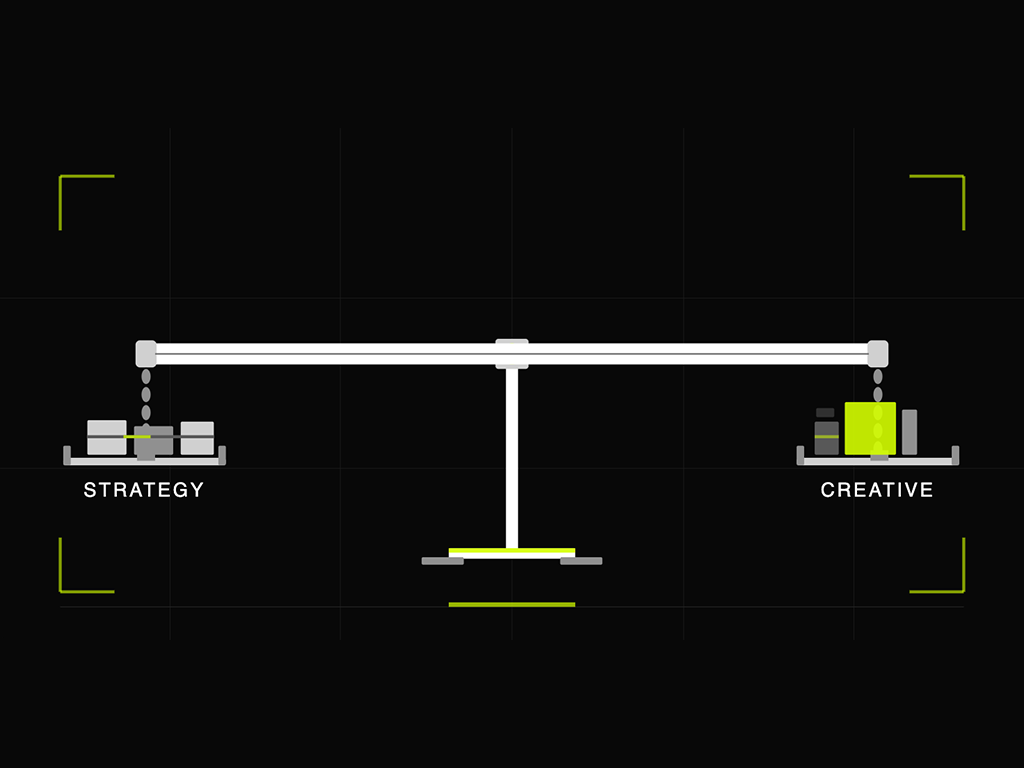
There’s a crucial distinction that separates winning creative branding agencies from the rest. On one side, you have teams that build strategy first and then find the creative expression for that strategy. On the other side, you have teams that fall in love with a creative idea and then retrofit the strategy to justify it. The difference is everything.
A strategy-led approach means starting with a clear, defensible position based on irrefutable insights. That position then shapes how the brand looks and sounds. The creative work serves the strategy. This is the model that builds brand equity over time because every decision is tethered to the brand’s soul.
The creative-led approach is seductive because the work often looks elaborately overcrafted. But it rarely builds lasting brand value because the work doesn’t actually move the business needle. So, when the next trend comes along, you chase it. Your brand becomes reactive instead of strategic. And in that scenario, your creative branding is a supplier of shiny objects instead of a strategic partner.
This distinction matters more now than ever before. Because now there are tools that can generate beautiful, creative work instantly. So the differentiator has moved decisively from ‘can you make something beautiful’ to ‘can you think strategically about what needs to be made and why.’ The creative branding agencies that are thriving are the ones that own strategy and creative design.
What Clients Should Look For Now
If you’re hiring a creative branding agency in 2026, you’re evaluating a fundamentally different landscape than you would have ten years ago. Size is no longer an asset. Scope is no longer a selling point. What matters is whether they have a coherent point of view on brand and business, whether they’ve done the kind of work you need, and whether they have the rigor to build strategy before they build creative.
Look for a creative branding agency that asks questions before they pitch ideas. Look for one that can articulate a clear competitive position for your business before they show you mood boards. Look for one that can connect its strategic framework directly to business outcomes. And look for one that treats the brand experience as the brand. They should be thinking about how strategy gets expressed across every touchpoint, not just how it looks on a logo or a website.
Pay attention to the people who show up to meet with you. In the old full-service model, the most senior people pitched and then disappeared. Now you want to see that the people in the room are the actual team that will do the work, as you want consistency and continuity with your team. You want to know that the strategy being articulated in a presentation is the strategy being executed in the actual work. When those two things diverge, something is wrong.
Also, in that first meeting, see if the conversation focuses on what you need and what you’re trying to accomplish. Or is it more about what the agency can do and its process? A creative branding agency worth hiring and partnering with will focus more on your business than on its own capabilities. They’ll want to understand your competitive position, your customers, and your market. Everything else flows from that understanding.
There are multiple forces at work when we talk about the evolution of the creative branding agency model. One, clients have learned to expect more on multiple levels. They’ve learned that a massive organization isn’t an asset if it means it layers of teams manage their work. They’ve learned that a promise to be great at everything can mean being mediocre at something. They’ve learned that what matters is strategic conviction combined with creative excellence. That combination is rare. And that’s why the market is shifting toward smaller, more focused firms.
Today and in the future, the creative branding agency model that’s winning is smaller, more focused, and infinitely more strategic. If you want to work with an agency and team that leads with strategic thinking and brings powerful creative support, then let’s talk about what comes next for your brand. Reach out to us at starfishco.com/contact.