The Marketing Funnel As We Know It Is Dead. The Hourglass Has Taken Its Place.
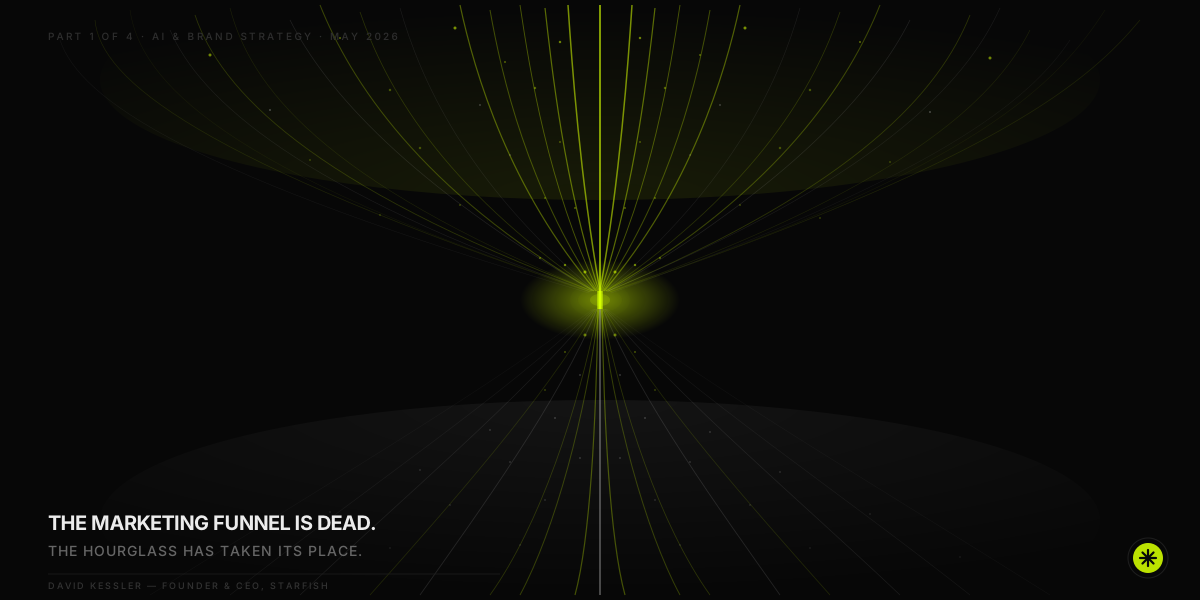
PART 1 OF 4 · AI & BRAND STRATEGY · MAY 2026
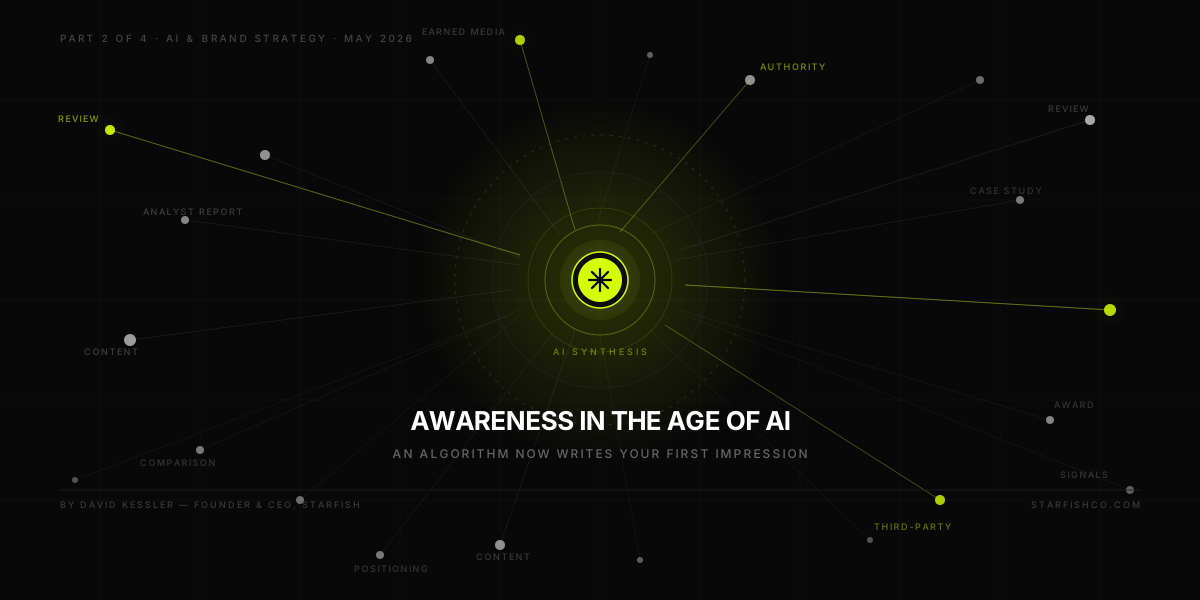
AI didn’t just tweak the marketing funnel; it tossed out the old playbook and started from scratch. Now, brand gravity is the force bending the universe of marketing in new directions. So, what’s really changed? Why does it matter? And what should every marketing leader know to stay not just relevant, but ahead?
By David Kessler — Founder & CEO, Starfish · May 2026
INTRODUCTION
The Model That Built Modern Marketing is Losing Relevance
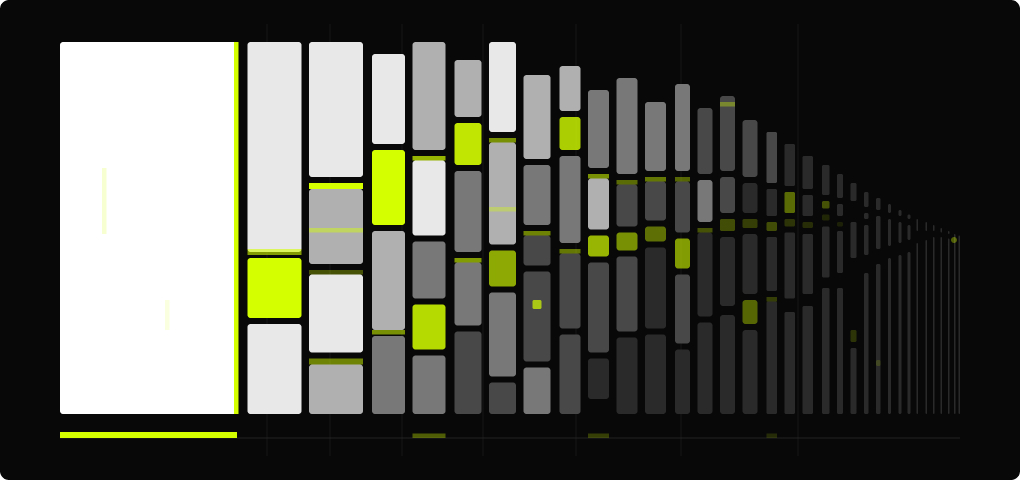
For almost thirty years, the marketing funnel was our North Star. Its familiar shape; wide at the top for awareness, narrowing through consideration, then cinching to conversion before opening up again into retention and advocacy has helped us bring order to the chaos.
Agencies, brand teams, and media planners built entire worlds around this tidy logic. Budgets, reports, and strategies all fell into line, following a neat, linear path through the wild, unpredictable reality of human decision-making. But the funnel was always just a sketch of a simplified map for a landscape full of zigzags and detours. Awareness is more than reach and frequency. Loyalty can’t be conjured with a few post-purchase emails. The funnel worked because, for a while, the tools, the media, and buyer behavior all played by the same rules.
That alignment is gone. The new model isn’t just a funnel with a twist or a clever loop. It’s a three-dimensional hourglass, and brand is the only thing that flows through both ends. Figuring out this new shape and why brand coherence is the golden thread has become the central challenge for CMOs, brand leaders, and agencies everywhere.
THE EVIDENCE
What the Research Is Telling Us
Bain & Company’s February 2025 research found that 80% of consumers now use AI-generated results for at least 40% of their searches. Notably, 60% of searches end on the results page without users visiting brand websites. This trend undermines the effectiveness of SEO-driven content marketing across an increasing share of buyer journeys.
Forrester’s analysis shows enterprise buyers are adopting AI-powered search at 3x the rate of consumers, with 90% of organizations now using generative AI in their purchasing processes. AI-generated B2B traffic is increasing by over 40% per month, making this channel an immediate priority.
McKinsey’s work on agentic commerce stated plainly that in an agentic world, a brand’s customer is just as likely to be an autonomous AI agent acting on a human’s behalf as the human themselves. That observation should fundamentally reframe how any marketing team thinks about who, or what, it is actually trying to reach.
Still, most marketing teams keep doubling down on paid media, content, and channel tweaks—even as those tactics reach fewer buyers every day. When the ground shifts beneath your feet, doing more of the same isn’t a strategy. It’s a rut. What’s needed now is a structural response.
THE MODEL
From Funnel to Hourglass: The New Shape of the Journey
The hourglass model captures the four big moments in the marketing journey: awareness, consideration, conversion, and, finally, loyalty and advocacy.
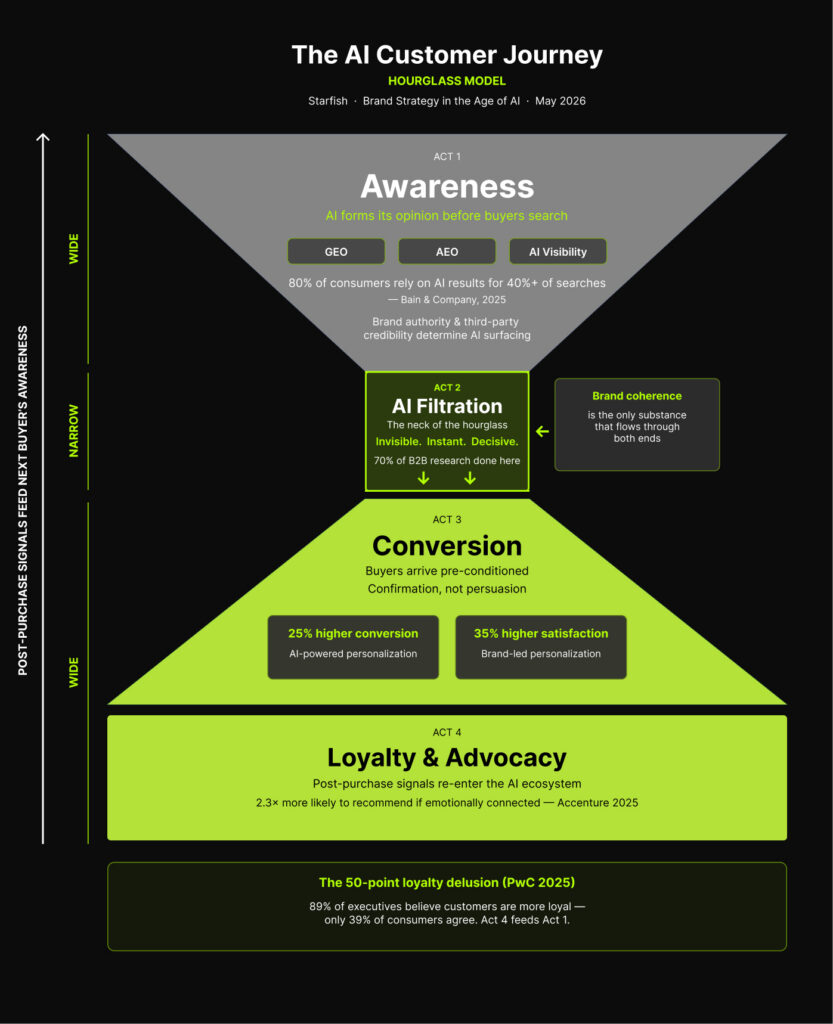
At the top (wide, blue), awareness is all about GEO, AEO, and AI visibility—the signals that determine whether your brand even appears before a buyer starts searching.
At the neck (narrow, purple), you hit the AI filter—the most crucial and least predictable stage. Most brands get sifted out here, never even seen.
At the bottom (wide, green), conversion and loyalty are all about pre-conditioned buyers and the post-purchase signals that matter most.
The dashed gold loop on the left is a key structural feature, as Act 4 directly informs Act 1 for the next buyer, accelerated by AI speed and scale.
The vertical gold spine running through the center stands for brand coherence—the only substance that flows through both ends of the hourglass. The callout makes sure the right people are named.ple.
The PwC 50-point delusion at the bottom anchors why Act 4 is so often overlooked, and why that’s a strategic risk in this looping model.
At the top, awareness is broad and powered by brand authority and the signals AI systems use to form opinions about your brand before any buyer even starts searching. The brands that win here aren’t the ones with the biggest impression share. They’re the ones whose identity, expertise, and reputation have been indexed as authoritative by the systems now running discovery.
Then the journey compresses radically at the neck. This is the AI-mediated moment where discovery, synthesis, and shortlisting now occur invisibly, in seconds, inside conversational tools that most brands have never optimized for. The neck is where the funnel used to live, the long middle of consideration, nurture, and persuasion. What used to take weeks of touchpoints now happens in a single query. If your brand hasn’t built the right kind of presence in AI training data and indexed content, you’re filtered out at the neck before any human ever sees you.
Then the hourglass opens up again at the bottom, into conversion and loyalty. Buyers arrive here already pre-conditioned by what AI has told them. Conversion isn’t about persuasion anymore; it’s about confirmation. And the loyalty that follows feeds straight back into the AI ecosystem as reviews, sentiment data, social content, and third-party references. Those signals are what the next buyer encounters at the top of the hourglass when they ask an AI about your category.
This feedback loop is the most important and most underestimated feature of the model. Every bad post-purchase experience becomes a negative awareness signal for the next buyer. Every exceptional experience becomes a positive one. The hourglass doesn’t end at loyalty; it flips and feeds the top again. In this model, customer experience isn’t a downstream function. It’s upstream brand infrastructure.
PwC’s 2025 Customer Experience Survey, which studied 5,511 consumers and 406 executives, uncovered a striking gap: 89% of executives think their customers have grown more loyal, but only 39% of consumers agree. That fifty-point gap is the delusion. Leaders are celebrating retention metrics and reporting NPS scores to their boards, while more than half their customers are one bad experience away from leaving. In the hourglass model, the stakes are even higher. Every churned customer and negative review re-enters the AI ecosystem as a signal that shapes what the next buyer hears about your brand before they’ve ever interacted with you. The loyalty delusion doesn’t stay downstream. It travels upstream, poisoning buyers’ awareness of your brand.
THE CENTRAL ARGUMENT
Contrary to Conventional Thinking, Brand Is What the Algorithm Runs On.
There’s a persistent belief in performance-driven marketing circles that brand is the intangible part, the art, the feeling, the story. At the same time, data and technology are the science that actually drives results. That’s always been a false choice. In the AI era, it’s not just wrong; it’s dangerous.
AI systems are trained on human preferences, human language, and human trust signals. Great brands are the source material for those systems. The mechanisms AI uses to evaluate, surface, and recommend a company are, at their core, measurements of brand quality; not just brand aesthetics, but brand substance. Consistency signals reliability. Specificity signals expertise. Third-party citations signal credibility. These are the brand attributes the algorithm runs on.
Accenture’s 2025 Consumer Pulse Survey of 18,000 consumers across 14 countries found that emotionally connected customers are 2.3 times more likely to recommend a brand and 1.7 times more willing to pay a premium. Half of active Gen AI users have already made a purchase based on an AI recommendation. The recommended brands are not the ones that spent the most on media. They are the ones with the most coherent, distinctive, and trustworthy signal in the AI’s training data.
“As third-party LLMs expand their influence from discovery to conversion, brands risk being misrepresented, or worse, left out of the consumer consideration set altogether.
— Jill Standish, Global Lead for Retail, Accenture”
As we describe in Protecting Your Brand’s Soul in the Age of AI, brand soul isn’t a soft aspiration. It’s the animating conviction that makes a brand irreplaceable—the thing it refuses to compromise on, no matter the pressure. And as explored in From Logo to Operating System, brand coherence is what gets you through the neck of the hourglass. Fragmentation, inconsistent positioning, vague expertise, and contradictory messaging across channels don’t just weaken a brand; they undermine it completely. In the AI era, that gets you filtered out.
SOURCES & FURTHER READING
Bain & Company: Goodbye Clicks, Hello AI — Zero-Click Search Redefines Marketing
Bain & Company: Consumer Reliance on AI Search Results Signals New Era of Marketing
McKinsey & Company: The Agentic Commerce Opportunity
McKinsey & Company: The State of AI in 2025
Forrester: AI Search Is Reshaping B2B Marketing
Accenture: Me, My Brand, and AI — Consumer Pulse Survey 2025
BCG: When Brands Meet AI Bots — CX in the Era of Agents
PwC: 2025 Customer Experience Survey